5-Axis Machining of a Cast & Welded Aluminum Frame (Zero Deformation)
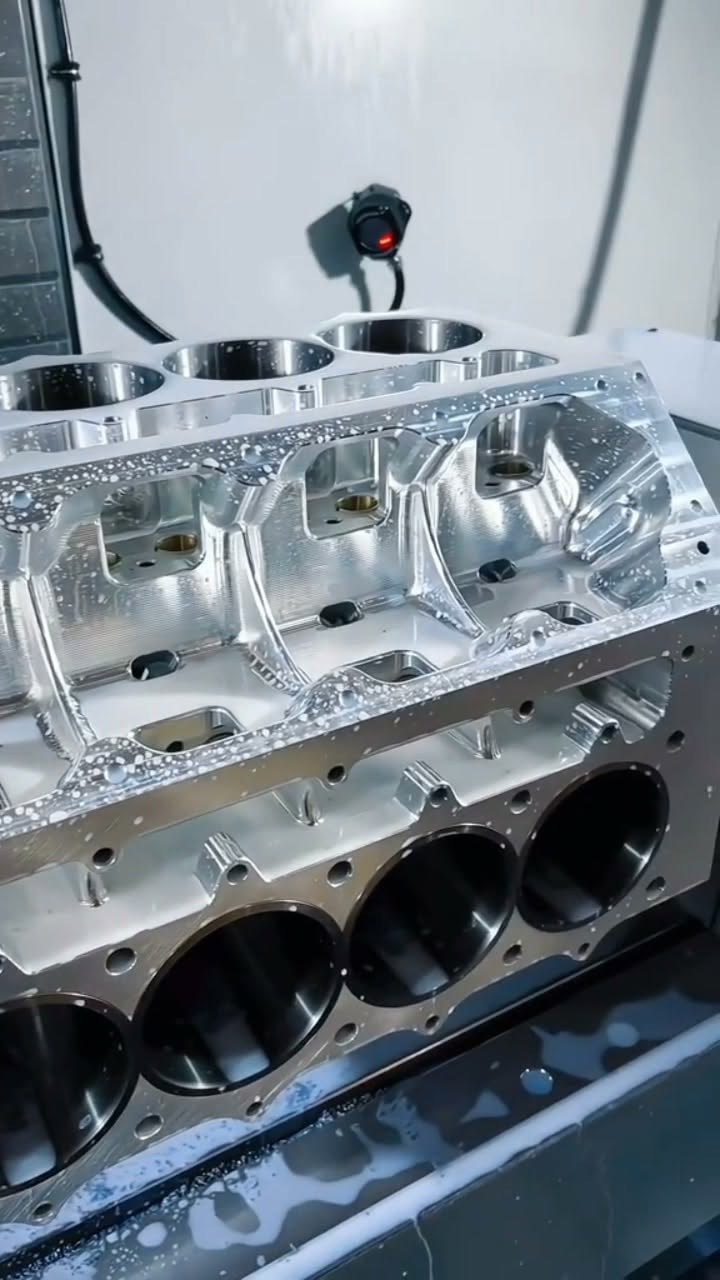
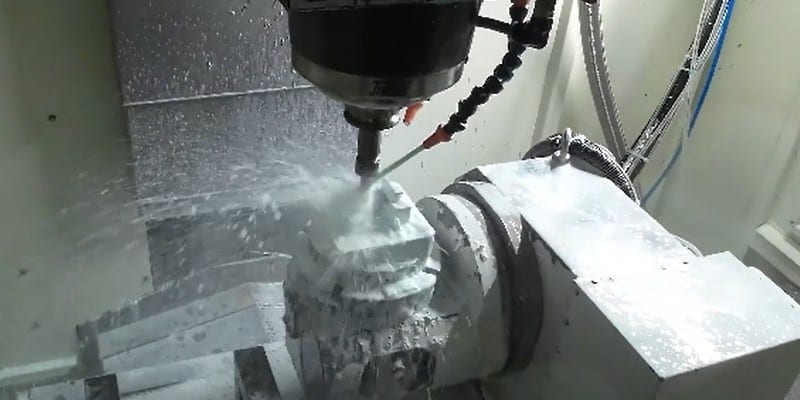
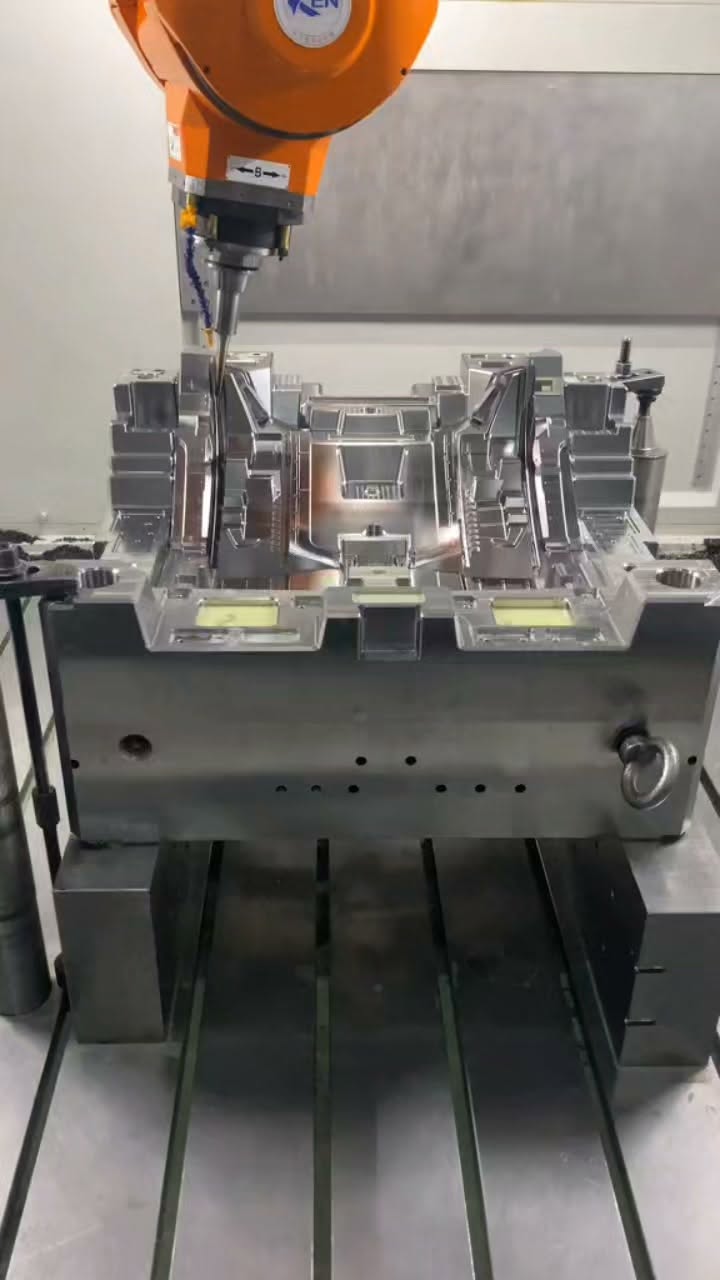
This reel shows a large cast-and-welded aluminum frame being finish-machined in a single setup on a 5-axis machining center — producing a rigid, ultra-light structural part with virtually zero deformation. Combining a welded aluminum weldment with one-setup 5-axis milling is how precise, lightweight frames are made for automation, robotics, and automotive equipment.
Key takeaways
- A cast & welded aluminum frame is finish-milled as one piece on a 5-axis center.
- One setup = one datum → tight true position and zero deformation across the whole frame.
- Aluminum keeps the frame ultra-light with a high strength-to-weight ratio.
- Backed by in-house CNC machining, thin sheet-metal fabrication, fixtures, and custom mold (OEM).
Have a frame, weldment, or large structural part? See our CNC machining and aluminum CNC machining services, or read 3- vs 4- vs 5-axis machining.
▶ Watch this 5-axis aluminum frame reel on Facebook
What you are watching
The part starts as an aluminum weldment — cast and/or extruded sections welded into a frame — which is then mounted once and finish-machined on a 5-axis center. Machining the mating faces, bores, and datums in a single setup removes the distortion that welding introduces and brings every critical feature into tolerance relative to one datum. The result is a stiff, dimensionally accurate, and very light structural frame.
How zero deformation is achieved
- Stress relief: welded aluminum frames are heat-treated / stress-relieved before finish machining so residual stress does not move the part later.
- One-setup 5-axis: machining all faces from a single datum eliminates the re-clamping stack-up error that causes distortion.
- Smart fixturing: low-stress workholding supports the frame without clamping it into a distorted shape.
- Balanced tool paths: symmetric material removal keeps stresses even across the structure.
Capabilities behind the part
| Capability | Detail |
|---|---|
| 5-axis CNC machining | One-setup finishing of large / complex frames |
| Aluminum welding | TIG / MIG weldments to AWS D1.2 practice |
| Sheet metal fabrication | Thin-metal panels, brackets, covers |
| Fixtures & custom molds (OEM) | Jigs, workholding, and tooling built in house |
Frames are typically machined in 6061 structural aluminum; welds follow the AWS D1.2 Structural Welding Code — Aluminum, and machined features are toleranced per ISO 2768.
Applications
- Automation & robotics — gantries, machine frames, actuator mounts
- Automotive & motorsport — subframes, brackets, lightweight structures
- Aerospace & equipment — rigid, low-mass structural assemblies
Frequently asked questions
Why machine a welded aluminum frame instead of one solid block?
How do you prevent distortion when machining welded aluminum?
What aluminum alloys do you use for frames?
Can Sendot handle welding, machining, sheet metal, and tooling together?
Need a machined weldment, frame, or structural part? Sendot Technology combines 5-axis CNC machining, sheet metal fabrication, and custom tooling — from prototype to OEM production. Request a quote.
Related manufacturing resources
Continue with the process or project stage most relevant to this topic: