Protecting Your IP When Outsourcing Manufacturing Abroad
TL;DR
Protecting IP when you outsource manufacturing abroad is layered, not a single document. Register your design or patent before you disclose anything, sign a written NDA, release only the geometry a shop needs to make each part, split the assembly across suppliers so no one sees the whole product, own your tooling, and keep export-controlled work onshore entirely.
- Register first: filing a design or patent after public disclosure is the single most expensive, and most common, mistake.
- An NDA is a floor, not a wall: it defines confidentiality but does not physically stop copying; enforceability varies by country.
- Release less: send the 2D features needed to cut a part, not full product context, firmware, or the assembly.
- Split the work: no single vendor should see every sub-component of a novel product.
- Own the tooling: molds and fixtures you paid for should be contractually yours.
- ITAR / export-controlled: must not go offshore at all — Sendot does not accept this work.
If you are handing a design to a machine shop on the other side of the world, the fear is rational: once a file leaves your building, you lose direct physical control of it. But “lose control” is not the same as “lose your IP.” The buyers who get burned are almost never the ones whose NDA had a weak clause. They are the ones who disclosed a novel design publicly before filing, sent the entire assembly to one shop, or never established who owned the mold. Those are operational and timing mistakes, and they are avoidable.
This guide walks through practical, layered protection for a hardware buyer — what each safeguard actually does, where it stops working, and how to sequence them. It is written by an engineer who runs these handoffs, not a lawyer. Every legal instrument mentioned here must be drafted or reviewed by a qualified IP attorney in the relevant jurisdiction, because enforceability varies enormously by country and by document. Read this to understand the moving parts and to ask your lawyer the right questions — not as a substitute for that advice.
The quick answer: protection is a stack, not a signature
There is no one thing that protects your intellectual property offshore. What works is a stack of overlapping safeguards, each covering the gaps in the others. Legal instruments (registration and contracts) define your rights on paper. Operational controls (what you disclose, to whom, and when) reduce how much anyone could copy in the first place. Commercial structure (owning tooling, staging payment and disclosure) keeps leverage on your side. If any one layer fails, the others still stand.
Here is the order that matters, because sequence is where most value is won or lost: register before you disclose, then contract, then control disclosure, then structure the commercial relationship. Do these out of order — disclose first, register later — and in many jurisdictions you may have destroyed your own ability to register at all. We will take the layers one at a time.
Know which kind of IP you actually have
“Protect my IP” means different things depending on what the IP is, and the right safeguard follows from the type. At a high level, four categories matter to a hardware buyer, and most products contain more than one.
- Patents (utility and design). A utility patent covers how something works — a mechanism, a process, a functional configuration. A design patent (called a registered design in many countries) covers how something looks — its ornamental shape. Both are registered rights: you apply, an office examines, and you get a time-limited monopoly in that jurisdiction. Crucially, most patent systems require novelty, and public disclosure before filing can forfeit it.
- Trade secrets. Information that has value because it is not known — a process parameter, a material formulation, an assembly trick, a jig design. Trade secrets are protected only as long as you take reasonable steps to keep them secret. There is nothing to register; the protection lives entirely in your operational discipline and your contracts. The moment a secret is public, it is gone forever.
- Copyright. Automatically covers original creative and written works — firmware source code, documentation, and in many jurisdictions the drawings themselves as artistic works. It protects the expression, not the underlying functional idea, so it rarely stops someone re-drawing a part from measurements.
- Trademarks. Your brand name, logo, and product identity. Less about the part geometry and more about stopping counterfeits carrying your name. Registered per jurisdiction.
Why does the taxonomy matter for outsourcing? Because it tells you what to guard. If your value is a clever mechanism, that is patent territory — and the clock starts the moment you disclose, so filing timing dominates. If your value is a process or a material trick, that is a trade secret — keep it in-house or with a separate vendor and never put it in a file you send to a machine shop. If your value is the look, a design registration is cheap relative to what it protects. Map your product against these four buckets before you send a single file. The World Intellectual Property Organization (WIPO) maintains plain-language overviews of each right and how international filing works, and is a sensible neutral starting point.
Register before you disclose — the single most expensive mistake
If you take one thing from this article, take this: in most patent systems, publicly disclosing your invention before you file can destroy your ability to patent it. Some jurisdictions offer a limited grace period; many do not. “Disclosure” can include a crowdfunding campaign, a trade-show demo, a public product page — and arguably sending a full design to a supplier without a confidentiality agreement in place.
The practical consequence for outsourcing is a hard rule: your registration strategy has to be decided before your sourcing timeline, not alongside it. Founders routinely rush to get quotes and samples, send files broadly, launch a pre-order page, and only then talk to an attorney — by which point the novelty needed for a patent may be gone. A confidential disclosure to a supplier under a signed NDA is generally treated differently from a public disclosure, which is exactly why the NDA has to be in place before the file moves, not after.
What to actually do, in order: talk to a qualified IP attorney about whether your product has patentable subject matter; if it does, get at least a priority filing on record before any public disclosure; keep all pre-filing supplier disclosures under written confidentiality. National IP offices publish the authoritative procedure and fees — for example the United States Patent and Trademark Office (USPTO) for US filings, and equivalent offices in your market. WIPO's Patent Cooperation Treaty route lets you file once and preserve the option to enter many countries later, which suits a hardware startup that does not yet know its final markets. None of this is legal advice; it is the sequence, and your lawyer fills in the substance.
What an NDA does — and what it does not
An NDA (non-disclosure agreement, also called a confidentiality agreement) is a contract in which the parties agree to keep defined information secret and to use it only for a defined purpose. For a manufacturing relationship you generally want a mutual NDA, because both sides may exchange sensitive information — you share the design, the shop may share proprietary process know-how.
A workable manufacturing NDA typically addresses: a clear definition of confidential information (broad enough to cover files, samples, and verbal discussion); a permitted-purpose clause that limits use to quoting and producing your parts and nothing else; an explicit no-reverse-engineering and no-reproduction term; return or destruction of files and tooling on termination; a duration that outlives the project (trade secrets can warrant indefinite terms); a no-subcontracting-without-consent clause so your files do not silently move to a fourth party; and the governing law and dispute-resolution forum. That last one is where many cross-border NDAs are weakest — a clause naming a court that has no practical reach over the supplier is decorative.
Now the honest part. An NDA is a floor, not a wall. It creates a contractual obligation and a basis to seek a remedy if that obligation is broken; it does not physically prevent anyone from copying a file, and a remedy is only as useful as your ability to detect a breach and enforce across borders. Enforceability varies significantly by jurisdiction, by how the agreement is drafted, and by which court or arbitration forum governs it. Whether any particular NDA would actually be enforceable in a given country is a legal question — a qualified IP lawyer in the relevant jurisdiction must draft or review it, and you should never assume a template found online “will protect” you. Treat the NDA as one necessary layer that raises the cost and clarity of misuse, then rely on the operational layers below to limit what a breach could even expose.
Release less: disclose only the geometry a shop needs
This is the layer engineers control directly, and it is the most underused. A machine shop needs to make a part. It does not need to understand your product. Those are very different disclosure levels.
To cut a bracket you need its features, dimensions, tolerances, material, and finish — the information on a 2D drawing or a single-part 3D model. You do not need to send the full assembly showing how that bracket mates with the sensor, the board, and the housing; you do not need the firmware; you do not need the industrial-design context that reveals what the product actually is. A supplier who receives twelve unrelated 2D part drawings has a much harder time reconstructing your product than one who receives the assembled CAD with every component in place.
Practical disclosure discipline:
- Send part files, not assemblies. Export individual parts. Strip the assembly tree, mate constraints, and neighbouring components before you send.
- Send 2D where 2D suffices. For many machined and sheet-metal features, a dimensioned drawing (STEP for the solid, PDF or DXF for the 2D) is enough to quote and cut, and it reveals far less than a rich native CAD file with feature history.
- Strip metadata and design history. Native files can carry feature trees, sketch relations, prior revisions, and author notes. Neutral formats like STEP or IGES carry the geometry without the recipe for how you arrived at it.
- Remove non-manufacturing context. Delete internal part numbers that map to your BOM, project codenames, and any note explaining function (“retains lidar module”). The shop needs a tolerance, not a purpose.
- Never send firmware or electronics IP to a mechanical shop. It has no reason to be in the package and no way to help them quote.
Sendot's own practice reflects this: you control which files and how much context you release. We can quote and machine from a 2D drawing plus a neutral 3D solid; we do not require your assembly or your product story to give you a price and a part. That is an operational safeguard, not a legal guarantee — but it is the layer that most directly limits your exposure.
Split the work and stage the disclosure
For a genuinely novel product, the strongest structural protection is that no single supplier sees the whole thing. If your competitive advantage lives in how components combine, spreading those components across vendors means no one shop can reproduce the product even if it wanted to.
- Split by sub-assembly. Machined housing from one shop, the custom sensor mount from another, final assembly in-house or with a trusted integrator. Each vendor sees its slice.
- Keep the crown jewel in-house or with a separate, vetted vendor. If one sub-component embodies your core innovation — a proprietary geometry, a tuned mechanism — do not send it to a general machine shop at all. Make it yourself, or place it with a dedicated supplier under stronger terms.
- Stage disclosure over the relationship. Start a new supplier with a non-critical part. Watch how they handle files, hit tolerances, respect the NDA, and communicate. Earn trust before you widen what you share. First-order files should be the least sensitive parts you have.
- Watermark and serialise drawings. Put a unique identifier or recipient name on each released drawing so that, if a file surfaces where it should not, you can trace which disclosure it came from. It does not prevent copying, but it creates accountability and a deterrent.
Honest trade-off: splitting work costs you consolidation savings, adds vendor-management overhead, and complicates tolerance-stack responsibility across the interfaces. For a commodity product it is overkill. For a novel one where the assembly is the IP, the overhead is cheap insurance. Match the effort to what is genuinely at stake — over-protecting a simple bracket wastes money you could spend protecting the part that matters.
Own your tooling and structure the commercial leverage
When you pay for a mold, a die, or a custom fixture, the contract should state plainly that the tooling is yours — that you own it, can audit it, and can have it transferred to another supplier. Buyers who skip this discover the hard way that a tool they paid for is being held as leverage, or that they cannot move production without re-paying for tooling. Ownership of tooling is also a practical trade-secret control: a proprietary mold that stays legally yours is one you can pull.
Commercial structure reinforces the legal and operational layers. Keep milestone payments tied to deliverables so leverage stays balanced. Require written consent before your supplier subcontracts any part of your job. Keep a clean paper trail of what you disclosed, when, and to whom — the same watermarking discipline that deters misuse also documents your reasonable steps to protect a trade secret, which matters if you ever need to assert one.
Export control: some designs must never go offshore
This is a hard line, not a preference. If your design is subject to export controls — ITAR (defence articles) in the US, EAR-controlled dual-use items, or the equivalent controls in other countries — then sending the technical data to a supplier abroad can itself be a controlled export, and doing it without authorisation is a serious violation regardless of any NDA. No confidentiality agreement makes an unauthorised export legal.
The practical guidance: if there is any chance your product touches defence, aerospace-controlled, or dual-use categories, determine its export classification before you source anything, and consult a qualified export-control specialist. Controlled designs must not be sent to an overseas machine shop. Sendot does not accept ITAR or export-controlled work — if your part falls into those categories, keep it with a domestic, appropriately cleared supplier. We would rather tell you that up front than put either of us in an untenable position. Authoritative starting points are your national export-control authority (for the US, the Directorate of Defense Trade Controls for ITAR and the Bureau of Industry and Security for the EAR).
Comparison: what each safeguard actually protects
No single row below is sufficient on its own. The point is that they cover different failure modes — and that the legal layers depend on a lawyer while the operational layers depend on you.
| Safeguard | What it protects against | Where it stops working | Who must set it up |
|---|---|---|---|
| Patent / design registration | Others copying a novel mechanism or appearance | Void if you disclosed publicly before filing; jurisdiction-limited | Qualified IP attorney |
| NDA (mutual) | Contractual misuse of shared information | Does not physically prevent copying; enforceability varies by country | Qualified IP lawyer to draft/review |
| Release only 2D / part files | A shop reconstructing your whole product | A determined party can re-draw a single part from a sample | You (engineering) |
| Split sourcing | Any one vendor seeing the full assembly | Adds cost and tolerance-stack complexity | You (sourcing) |
| Tooling ownership | Being locked in; loss of a proprietary mold | Only as strong as the written contract terms | You + lawyer |
| Watermark / serialise drawings | Untraceable leaks; deters casual misuse | Does not stop copying, only attributes it | You (engineering) |
| Keep export-controlled work onshore | Illegal export of controlled technical data | Non-negotiable — no NDA overrides it | You + export-control specialist |
A practical sequence for a first offshore handoff
Here is the order I would run for a hardware buyer sending a new design abroad for the first time. Sequence matters more than any single step.
- Classify your IP and your export status. Map the product against patent / trade secret / copyright / trademark, and confirm it is not export-controlled. If it is controlled, stop — it stays onshore.
- Register before disclosing. With your attorney, get any needed priority patent or design filing on record before any public disclosure or broad supplier distribution.
- Get a mutual NDA in place first. Have a qualified IP lawyer draft or review a mutual NDA with a permitted-purpose limit, no-subcontracting clause, and a realistic governing-law forum. Signed before any file moves.
- Decide what to keep in-house. Identify the one sub-component that embodies your core innovation and plan to make it yourself or place it with a separate vendor.
- Prepare a minimal disclosure package. Export individual parts as neutral STEP / 2D drawings, strip metadata and assembly context, remove functional notes, and add a watermark or recipient serial to each drawing.
- Start with a low-sensitivity part. Send a non-critical component first. Evaluate how the supplier handles files, hits tolerance, and communicates before widening disclosure.
- Lock tooling ownership in writing. Before you pay for any mold or fixture, confirm in the contract that you own it and can transfer it.
- Keep the disclosure log. Record which files, which revision, which recipient, and which date — both to trace any leak and to evidence your reasonable steps to protect trade secrets.
Common mistakes that cost buyers their IP
- Disclosing before filing. A crowdfunding launch or a full-assembly file blast that predates the patent filing. The most expensive mistake, and usually irreversible.
- Sending the whole assembly to quote one bracket. Convenient, and it hands a single shop your entire product. Export the part; hold back the context.
- Treating a downloaded NDA template as protection. An unreviewed template with a governing-law clause pointing at a court with no reach over the supplier is close to worthless. Have a lawyer draft or review it.
- Not owning the tooling. Paying for a mold and later learning you cannot move it. Fix it in the contract before the money moves.
- Assuming an NDA physically stops copying. It creates an obligation and a remedy; it does not disable a photocopier. Pair it with releasing less.
- Sending controlled technical data offshore. Assuming an NDA legalises it. It does not. Classify first.
- Over-protecting the trivial, under-protecting the crown jewel. Elaborate split-sourcing on a commodity washer while the one novel sub-component gets emailed to a general shop. Spend the protection where the value is.
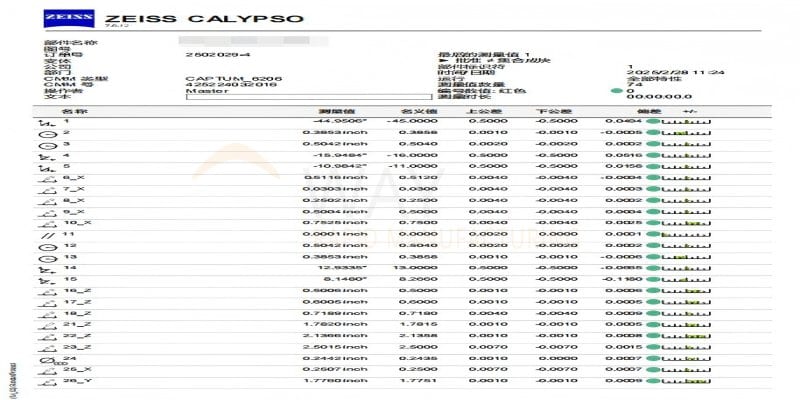
Choosing a supplier you can actually hold accountable is itself an IP control. A shop with traceable material certs, CMM and FAI reports, and a clear paper trail is one you can build a documented, staged relationship with. Our guide on how to vet an overseas CNC supplier covers the NDA and IP-handling questions to ask during that evaluation, and pairs naturally with this article.
Frequently asked questions
Should I file a patent before or after getting manufacturing quotes?
Is an NDA with an overseas supplier actually enforceable?
What files should I send — native CAD or neutral formats?
Can I send an ITAR or export-controlled design to an overseas shop under an NDA?
Who owns the mold or tooling I pay for?
KEY TAKEAWAYS
- IP protection offshore is a stack of layers, not one document — register, contract, control disclosure, structure the deal.
- Register your design or patent before disclosing; disclosure-before-filing is the most common and most expensive error.
- An NDA is a floor, not a wall: a qualified IP lawyer must draft or review it, and enforceability varies by country.
- Release only the geometry a shop needs — neutral part files and 2D drawings, not the assembly, firmware, or product context.
- Split sourcing, keep the crown jewel in-house, own your tooling, and watermark drawings you release.
- Never send ITAR or export-controlled designs offshore — Sendot does not accept that work.
- None of the above is legal advice; use it to ask your IP attorney better questions.
At Sendot we handle files confidentially, offer a mutual NDA on request, and let you decide which files and how much context to share — we can quote and run precision CNC machining from a STEP file and a 2D drawing without ever seeing your assembly. Those are sensible operational safeguards, not a legal guarantee: the registration and the contracts still need your own qualified IP attorney. If you would like an NDA before sending anything, just ask when you request a quote — and if you are still evaluating suppliers, our guide on vetting an overseas CNC supplier covers the IP-handling questions to raise before you disclose a single file.
Manufacturing next step
Apply this guidance to your part
Continue to the relevant service page for process scope and buyer inputs. If your design is ready, send the current files for engineering review and quotation.
Related manufacturing resources
Continue with the process or project stage most relevant to this topic: