Anodizing Types I, II & III: Colors, Specs & When to Use
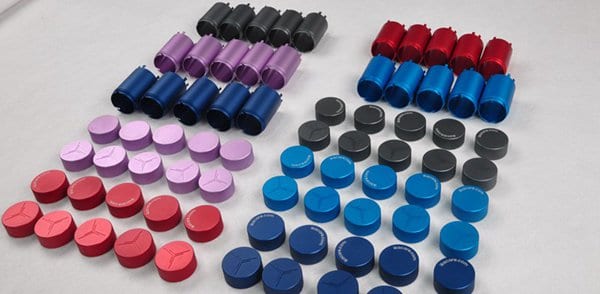
The three anodizing types are defined by MIL-A-8625: Type I is thin chromic-acid anodizing (aerospace, paint base), Type II is standard sulfuric-acid anodizing (decorative and colored parts), and Type III is hardcoat (thick, hard, wear-resistant for functional parts). All three grow a protective aluminum-oxide layer; they differ in thickness, hardness, color options and cost. Here's how to choose.
See our parts finishing service and aluminum machining guide, or start with what is anodizing.
Key takeaways
- Type I (chromic): thinnest (~0.5–7.5 µm), best corrosion protection per unit thickness, minimal dimensional change — aerospace and paint pre-treatment.
- Type II (sulfuric): the common decorative anodize (~5–25 µm), takes a wide range of colors — consumer, electronics, general parts.
- Type III (hardcoat): thick (~25–150 µm) and very hard for wear and abrasion resistance — functional and engineering parts.
- Anodizing only works on aluminum (and titanium); it grows into the metal, so it barely changes dimensions (Type III adds ~half its thickness per surface).
- Get anodized parts with your machining — request a quote.
Anodizing types at a glance
| Type | Process / acid | Typical thickness | Color | Best for |
|---|---|---|---|---|
| Type I | Chromic acid | 0.5–7.5 µm | Grey (limited) | Aerospace, paint base, tight tolerances |
| Type II | Sulfuric acid | 5–25 µm | Clear + wide color range | Decorative, electronics, general parts |
| Type III | Sulfuric (hardcoat) | 25–150 µm | Grey to black (dark) | Wear resistance, functional/engineering parts |
Type I — chromic acid anodizing
Type I uses chromic acid to grow a very thin, ductile oxide with excellent corrosion resistance for its thickness and minimal effect on part dimensions. It's favored in aerospace and for parts with tight tolerances or fatigue-critical features, and it's an excellent base for paint and primer. Color options are limited (typically grey).
Type II — sulfuric acid anodizing
Type II is the everyday decorative anodize. The porous sulfuric-acid oxide readily absorbs dye before sealing, so parts can be produced in black, red, blue, gold and many other colors. It balances corrosion resistance, appearance and cost, which makes it the default for consumer products, electronics enclosures and general machined parts.
Type III — hardcoat anodizing
Type III (hardcoat) is a thicker, denser and much harder oxide grown at low temperature. It dramatically improves wear, abrasion and corrosion resistance, making it ideal for functional parts like pistons, valves, gears and sliding surfaces. Because it's thick, it changes dimensions more than Type II (roughly half the coating thickness grows outward per surface), so account for it on tight-tolerance features. Colors are limited to greys and blacks. See our hardcoat anodizing guide.
Colors and sealing
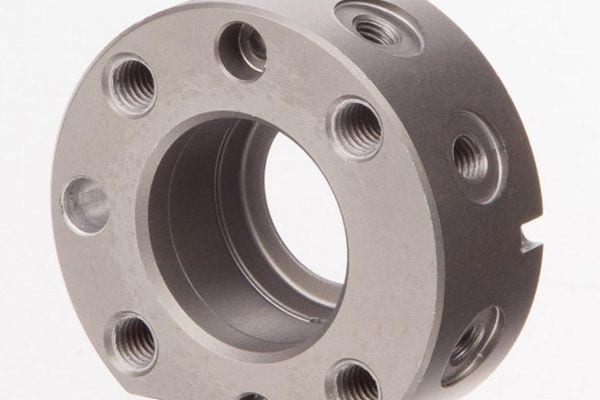
After anodizing, the porous oxide is dyed (for color) and then sealed (in hot water or nickel acetate) to lock in color and maximize corrosion resistance. Type II offers the widest color range; Type I and III are limited to darker, muted shades. For consistent color, keep the alloy consistent — different aluminum grades (e.g. 6061 vs 7075 vs 2024) can anodize to slightly different shades.
How to choose an anodizing type
- Aerospace / tight tolerance / paint base: Type I
- Color, appearance, general use: Type II
- Wear & abrasion resistance, functional parts: Type III
- Maximum corrosion resistance: Type II or III, properly sealed
Compare anodizing with plating in electroplating vs anodizing, or with a conductive option in chromate conversion coating.

Frequently asked questions
What is the difference between Type II and Type III anodizing?
Which anodizing type is best for outdoor or corrosive environments?
Does anodizing change part dimensions?
Can all aluminum alloys be anodized?
What colors can anodizing be?
Sources & further reading: Aluminum Anodizers Council · MatWeb — aluminum properties.
Manufacturing next step
Apply this guidance to your part
Continue to the relevant service page for process scope and buyer inputs. If your design is ready, send the current files for engineering review and quotation.
Related manufacturing resources
Continue with the process or project stage most relevant to this topic: