What to Do When Delivered Parts Are Out of Spec

TL;DR
When delivered parts appear out of spec, stop them from being mixed into production, preserve the receiving condition, and compare the disputed feature against the released drawing and agreed inspection method. Send a concise nonconformance report with photos, part and lot identity, measured values and measurement method. Then agree a written disposition—return, rework, replace, accept by concession, or sort—before anyone changes the parts. The supplier should investigate the manufacturing cause; the buyer still controls its own acceptance and downstream risk decision.
- Contain first: quarantine the lot and preserve labels, packaging and samples.
- Measure consistently: use the released revision, datum scheme and agreed gauge method.
- Decide in writing: do not rework, return or use a deviation without an authorised disposition.
This guide is for a buyer, quality engineer or sourcing manager who has received precision parts that may not meet the drawing, PO or approved first article. It is a practical communication and evidence workflow, not a substitute for the contract, product-safety obligations or legal advice that apply to your programme.
First: contain the suspected nonconforming parts
Do not let an unverified batch enter assembly, inventory or customer shipment. Segregate the affected containers, retain their labels and packing materials, and identify the exact part number, drawing revision, PO, shipment, lot or work-order references available to you. If only some pieces have been checked, label the status honestly: “suspected,” “measured nonconforming,” or “not yet inspected.”
This protects both sides. A supplier cannot investigate a traceability break if the sample, lot identity and receiving condition disappear; a buyer cannot make a defensible acceptance decision if conforming and suspect parts are mixed together. For the preventive controls normally agreed before production, see our quality-assurance process and inspection capabilities.
Confirm that the measurement is comparable
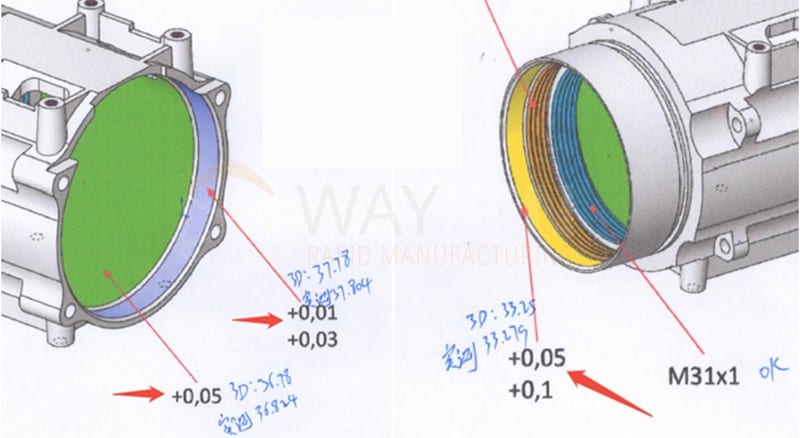
Before issuing a defect claim, compare the measured value with the released drawing—not an older PDF, quotation image or CAD screenshot. Confirm the characteristic, tolerance type, units, datum references, material condition and any inspection instruction. A hole position measured from an unagreed edge is not necessarily comparable to a GD&T position callout measured from specified datums.
| Check | Record in the NCR | Why it matters |
|---|---|---|
| Part identity | Part number, revision, PO, lot/work order, quantity and shipment reference | Connects the claim to the exact delivered goods. |
| Requirement | Drawing note or characteristic number, nominal and tolerance, units and datum reference | Prevents a dispute over which requirement applies. |
| Actual result | Measured value, quantity checked, pass/fail count and photos where helpful | Shows whether the issue is isolated or systemic. |
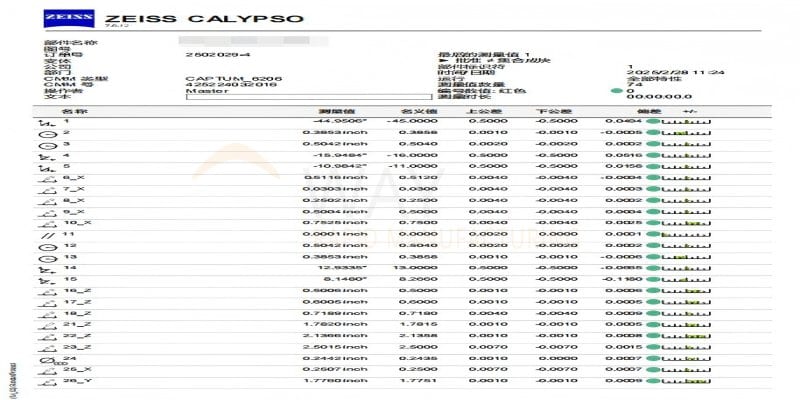
| Method | Gauge/CMM method, calibration status where relevant, setup and operator/date | Lets both parties compare measurement systems. |
| Impact | Fit, function, cosmetic, safety, assembly or schedule impact | Supports a proportionate disposition decision. |
If results differ from the supplier’s report, exchange the raw measurement evidence and agree whether to use a neutral lab, a shared gauge study or a joint re-measurement. “Our caliper says so” is not enough for a complex tolerance. A first-article inspection record and ballooned drawing are useful references when the issue relates to an approved production setup.

Issue a clear nonconformance report
A nonconformance report (NCR) is the shared factual record, not a blame document. Send it promptly to the supplier’s quality and project contacts. State what was found, what was measured, how many parts are affected, the immediate containment action, and the response date you need. Keep conclusions proportionate until the evidence is reviewed: “feature exceeds upper limit by 0.03 mm on 6 of 10 checked” is more useful than “the whole order is unusable.”
For recurring supplier governance, use the same fields in your machine-shop supplier scorecard: defect type, lot, response time, root cause, corrective action and effectiveness check. This makes a repeated failure visible instead of treating each shipment as a new conversation.
Choose a disposition before changing parts
There are several legitimate outcomes, but they are not interchangeable. The authorised buyer decision should be written and tied to the affected lot. A supplier may recommend an option after reviewing feasibility; it should not unilaterally rework or ship a deviation.
| Disposition | When it may fit | Control needed |
|---|---|---|
| Return / replace | Parts cannot safely or functionally meet the released requirement. | Written quantity, return handling, replacement scope and timing. |
| Rework | A documented method can restore the requirement without creating new risk. | Buyer approval, re-inspection criteria and traceability to the original lot. |
| Use-as-is concession | The buyer’s authorised engineering authority determines the deviation is acceptable for a defined use. | Written concession, quantity/lot scope and downstream configuration control. |
| Sort / screen | Conforming units can be objectively separated from nonconforming ones. | Sampling or 100% method, acceptance criteria and records. |
| Scrap | No safe or economical disposition is available. | Controlled identification and replacement/credit process under the agreement. |
Do not treat a supplier’s “it will assemble” statement as an engineering concession. The buyer’s design authority must decide whether a deviation is acceptable for the intended application. This is particularly important for safety, sealing, fatigue, medical, aerospace or regulated product use.
A seven-step out-of-spec parts workflow
- Quarantine the lot. Stop use, preserve packaging and record the count and identifiers.
- Check the released requirement. Confirm drawing revision, characteristic, units, datums and acceptance criterion.
- Measure and document. Capture values, sample size, gauge method, calibration context and photos where useful.
- Send the NCR. Share the factual pack with the supplier and state the requested response time.
- Agree the interim control. Decide whether to hold, sort or return the goods while the investigation proceeds.
- Approve a disposition. Authorise rework, replacement, concession, sorting or scrap in writing before altering parts.
- Close with corrective action. Review cause, corrective action, verification and whether the same risk affects open orders.
Ask for corrective action, not only a replacement
A replacement solves the immediate shortage; corrective action addresses whether the issue can recur. Ask the supplier to separate containment, root-cause analysis, corrective action and verification of effectiveness. The depth should match the risk and recurrence: a one-off packaging scratch needs a different response from a repeated datum-shift error across production lots.
Useful questions include: what process step created the variation; which detection control failed; which open or in-transit lots share the same setup, material or subcontract process; what change will prevent recurrence; and how will the result be checked on the next run? These questions align with the evidence-first approach in our CNC machining quality-control checklist.
Prevent the next dispute before the PO
The cheapest nonconformance is the one prevented in the RFQ and PO. Identify critical-to-function features, inspection method, report format, sampling expectations, packaging requirements and the response path for deviations before release. For a new supplier or complex part, agree a first-article checkpoint before volume production. Our overseas supplier-vetting checklist explains the evidence to request before a production commitment.
When you request a quote from Sendot, include the released drawing, critical characteristics, material/finish, inspection expectations and any required report format. We can review manufacturing and inspection requirements before production; the customer retains authority over drawing acceptance and any deviation decision. Use our request-a-quote form to start that discussion.
Frequently asked questions
What should I do first when delivered parts are out of spec?
What should an NCR for machined parts include?
Can a supplier rework parts without approval?
What is the difference between rework and a concession?
When should I ask for a corrective-action report?
Manufacturing next step
Apply this guidance to your part
Continue to the relevant service page for process scope and buyer inputs. If your design is ready, send the current files for engineering review and quotation.
Related manufacturing resources
Continue with the process or project stage most relevant to this topic: