Multi-Tool CNC Turning a Precision Metal Shaft
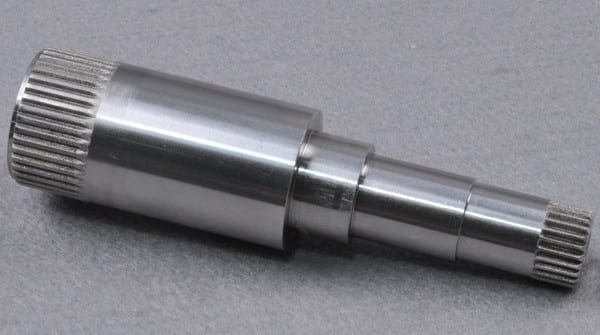
A metal shaft being turned to a perfect, precise form on a multi-tool CNC lathe — where several tools work in sequence to cut faster and hold tighter tolerances than single-point turning. It's how we produce precision shafts and industrial hardware in volume. See our CNC turning service, and send your CAD file for a fast quote.
▶ Watch this video on Facebook
Key takeaways
- CNC turning rotates the metal bar while cutting tools shape it — ideal for round parts like shafts, pins and bushings.
- Multi-tool turning (a turret / gang tooling) runs several tools in sequence — faster cycle times and tighter, more consistent tolerances.
- Precision turned diameters hold to ±0.01 mm; add live tooling (mill-turn) for flats, holes and slots in one setup.
- Great for industrial hardware produced in volume — steel, stainless, brass, aluminum, titanium.
- Send your CAD file for a fast quote.
What you're watching
In CNC turning, the workpiece spins in the lathe chuck while cutting tools move along it to remove material and form precise diameters, shoulders, grooves and threads. Using multiple tools — mounted on a turret or gang plate — the machine switches tools automatically to rough, finish, groove and part off without stopping. That cuts cycle time and, because each feature is machined in the same setup, keeps concentricity and diameters tightly controlled.
Why multi-tool CNC turning
- Faster production: tools change automatically, so roughing, finishing and grooving flow in one cycle.
- Tighter tolerances: machining features in one setup keeps diameters concentric and consistent part-to-part.
- Great surface finish: optimized finishing passes leave clean, low-Ra turned surfaces.
- Mill-turn option: live tooling adds flats, cross-holes, slots and flats without a second machine — see mill-turn machining.
Capabilities behind the part
| Capability | Detail |
|---|---|
| CNC turning & mill-turn | Shafts, pins, bushings, connectors, hardware |
| Tolerance | Per ISO 2768; ±0.01 mm on critical diameters |
| Materials | Steel, stainless, brass, aluminum, titanium |
| Volumes | Prototype to volume industrial production |
Turned parts are toleranced per ISO 2768. Explore CNC turning, precision machining, full CNC machining services, and the guide on CNC milling vs turning.
Applications
- Industrial hardware — shafts, pins, spacers, bushings, connectors, fasteners
- Automotive & machinery — drive shafts, pistons, valve parts
- Any round precision part made in quantity
Frequently asked questions
What is multi-tool CNC turning?
What tolerance can CNC turning hold on a shaft?
What is the difference between CNC turning and milling?
Need precision shafts or turned hardware? Get fast, accurate CNC turning and precision machining, prototype to volume. Request a quote.
Related manufacturing resources
Continue with the process or project stage most relevant to this topic: