Vacuum Forming Materials: PETG vs HIPS vs ABS vs PC
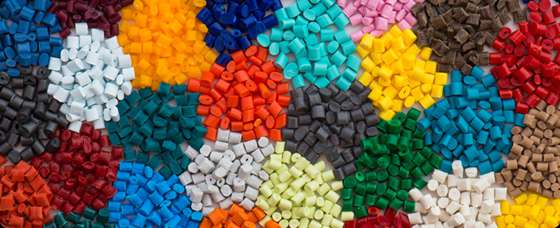
The best vacuum forming material depends on what matters most for your part: PETG for clear, tough parts; HIPS for low-cost rigid housings and trays; ABS for impact-resistant enclosures; and polycarbonate (PC) for high-heat, high-impact covers. Choosing the right thermoplastic sheet controls your part's clarity, strength, temperature resistance, finish, and cost — so it is worth getting right before you tool a mold (mould).
Key takeaways
- PETG — clear, tough, food-safe, easy to form. Best all-round choice for clear parts.
- HIPS — cheapest, rigid, easy to paint. Best for housings, trays, and mockups.
- ABS — impact-resistant and durable. Best for equipment and automotive enclosures.
- PC (polycarbonate) — highest impact and heat resistance, optically clear. Best for guards and light covers.
- Typical sheet thickness is 0.5–6 mm; thicker sheet needs more heat and a stronger vacuum.
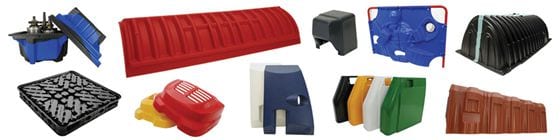
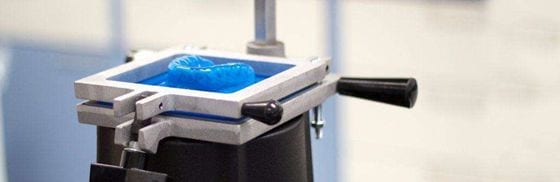
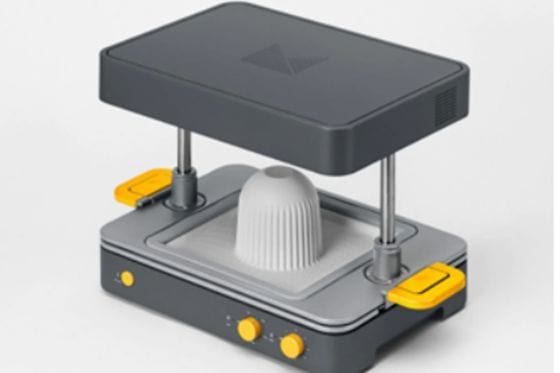
This guide compares the most common vacuum forming (vacuum moulding) materials and shows how to choose. To see how the process forms these sheets over a mold, read our vacuum forming guide, or get parts made with our custom vacuum forming services.
Vacuum forming materials compared
| Material | Clarity | Impact | Heat resistance | Cost | Typical use |
|---|---|---|---|---|---|
| PETG | Excellent (clear) | High | Medium (~70 °C) | Medium | Clear covers, trays, guards, medical |
| HIPS | Opaque | Medium | Low–medium | Lowest | Housings, trays, mockups, packaging |
| ABS | Opaque | Very high | Medium (~85 °C) | Medium | Enclosures, automotive interior |
| PC | Excellent (clear) | Highest | High (~120 °C) | High | Machine guards, light covers, visors |
| HDPE / PP | Opaque/translucent | High | Medium | Low | Trays, liners, chemical & outdoor parts |
| PMMA (Acrylic) | Excellent (clear) | Low (brittle) | Medium | Medium | Displays, lenses, signage |
PETG
PETG (glycol-modified PET) is the most popular all-round vacuum forming material. It is optically clear, impact-resistant, food-safe, and forms easily with crisp detail and minimal pre-drying. PETG is the default choice for transparent covers, retail trays, machine guards, and medical packaging where you need clarity and toughness without the cost of polycarbonate.
HIPS
High-impact polystyrene (HIPS) is the lowest-cost thermoforming sheet and forms very easily, which makes it the go-to for opaque housings, internal trays, packaging, and prototype mockups. It paints and bonds well, but it has lower heat and chemical resistance, so it suits indoor, non-structural parts. For early prototypes, HIPS keeps tooling and material costs down.
ABS
ABS is prized for its impact strength and durability, making it ideal for equipment enclosures, automotive interior trim, and rugged covers. It has better heat resistance than HIPS, paints and textures well, and holds up to repeated handling. ABS is a strong choice when the part must survive drops, vibration, or daily use.
Polycarbonate (PC)
Polycarbonate offers the highest impact resistance and heat resistance of common thermoforming plastics, while staying optically clear. It is the right material for safety guards, light covers, face shields, and high-temperature parts. PC costs more and needs careful drying and higher forming temperatures, but nothing else combines its clarity with its strength.
HDPE, PP and PMMA
HDPE and polypropylene (PP) are flexible, chemical-resistant, and inexpensive — good for trays, liners, and outdoor or chemical-contact parts, though they can be harder to form and bond. PMMA (acrylic) gives the best optical clarity and UV stability for displays, lenses, and signage, but it is brittle and less impact-resistant than PETG or PC.
How to choose a vacuum forming material
- Need a clear part? Choose PETG (tough) or PC (toughest, heat-resistant); PMMA for the best optics if impact is not a concern.
- Need the lowest cost? Choose HIPS for opaque parts and prototypes.
- Need impact resistance? Choose ABS, or PC for the most demanding parts.
- Need heat resistance? Choose PC, then ABS.
- Need chemical resistance or flexibility? Choose HDPE or PP.
Sheet thickness also matters: most vacuum formed parts use 0.5–6 mm sheet. Thicker sheet is stronger but needs more heat and a stronger vacuum, and deep parts thin out at the corners — something to plan for in mold design. If you are weighing vacuum forming against molding, see our comparison of overmolding and consider urethane vacuum casting for production-like plastic parts.
Conclusion
There is no single best vacuum forming material — match the sheet to your priorities for clarity, impact, heat, chemical resistance, and budget. PETG is the safe all-round pick, HIPS wins on cost, ABS on durability, and PC on strength and heat. Not sure which to use? Send us your CAD and requirements and we will recommend a material in a free DFM review.
Get your parts vacuum formed. Sendot Technology offers custom vacuum forming and thermoforming services in PETG, HIPS, ABS, PC, HDPE and more — prototype to low-volume production, shipped worldwide. Request a quote.
Frequently asked questions
What is the best material for vacuum forming?
Can you vacuum form ABS?
How thick can a vacuum forming sheet be?
Is vacuum forming the same as thermoforming?
Manufacturing next step
Apply this guidance to your part
Continue to the relevant service page for process scope and buyer inputs. If your design is ready, send the current files for engineering review and quotation.
Related manufacturing resources
Continue with the process or project stage most relevant to this topic: