Advantages and Disadvantages of Vacuum Forming Explained
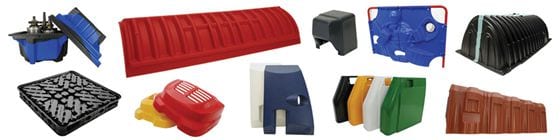
The main advantages of vacuum forming are low tooling cost, fast lead times, design flexibility, and material efficiency, which make it ideal for large, thin-walled plastic parts in low-to-mid volumes. Its disadvantages are uneven wall thickness on deep parts, the need for draft, detail on only one side, and higher per-part cost at very high volumes.
Key takeaways
- Pros: cheap tooling, fast turnaround, large parts, design flexibility, low material waste.
- Cons: wall thinning on deep draws, single-sided detail, draft required, not the cheapest at very high volume.
- Best for 1–1,000+ large, thin-walled parts; injection molding wins for small, detailed, high-volume parts.
This article weighs the pros and cons so you can decide if vacuum forming fits your part. For the full process and materials, see our vacuum forming guide and materials guide, or get a part made with our custom vacuum forming services.
Advantages of Vacuum Forming
1. Low tooling cost
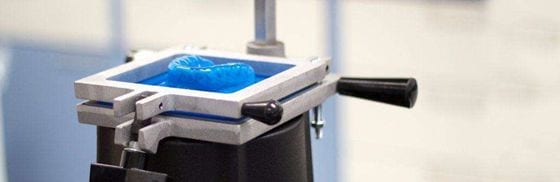
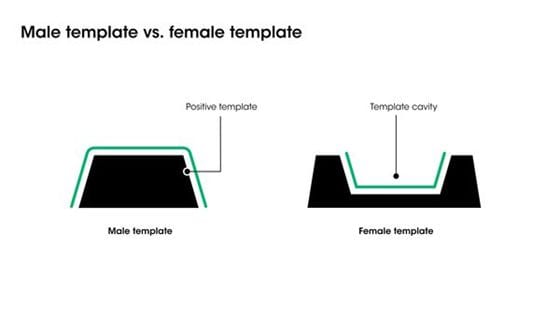
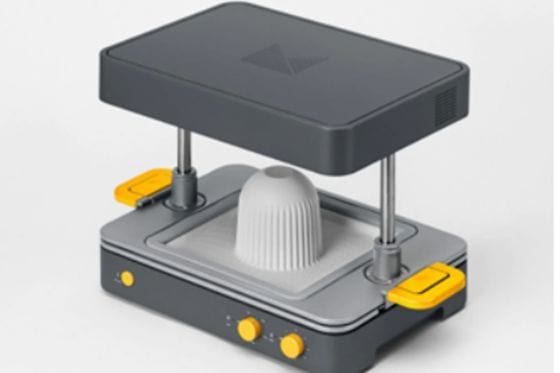
Vacuum forming uses a single-sided mold (mould) made from wood, resin, 3D print, or aluminum, so tooling is often 10–20× cheaper than an injection mold. This is the biggest reason it wins for prototypes and low-to-mid volume production.
2. Fast lead times
Because the tooling is simple, molds can be ready in days rather than weeks, so you get formed parts quickly and can iterate fast.
3. Large, thin-walled parts
Vacuum forming easily makes large parts — enclosures, panels, trays, and covers — that would be expensive to injection mold.
4. Design flexibility and quick changes
Mold changes are cheap and fast, so design revisions during development cost far less than re-cutting a steel injection mold.
5. Material efficiency and choice
The process forms standard thermoplastic sheet (PETG, HIPS, ABS, PC, HDPE) with little waste, and trimmed offcuts of many materials can be recycled.
Disadvantages of Vacuum Forming
1. Uneven wall thickness
As the sheet stretches over the mold, it thins at corners and deep areas. Deep parts need a thicker starting sheet or pre-stretching to keep walls strong.
2. Detail on only one side
Vacuum forming uses single-sided tooling, so fine detail and texture appear on only one face of the part — unlike two-sided injection molding.
3. Draft and geometry limits
Parts need draft angles to release from the mold, and very sharp internal corners or undercuts are hard to form. Pressure forming improves detail but adds cost.
4. Trimming is a separate step
Formed parts come out with an excess flange that must be trimmed by hand, CNC, or laser, adding a finishing operation.
5. Higher per-part cost at very high volume
At very high volumes, injection molding's low per-part cost overtakes vacuum forming, despite its high tooling cost.
Vacuum Forming vs Injection Molding: which to choose
Choose vacuum forming for large, thin-walled parts in low-to-mid volumes when you need low tooling cost and fast lead times. Choose injection molding for small, detailed parts in high volumes where the lowest per-part cost matters. For mid-volume parts that need molded quality without steel tooling, consider urethane vacuum casting.
Conclusion
Vacuum forming trades some part-level precision for big wins in tooling cost and speed. If your part is large, thin-walled, and needed in prototype-to-low-volume quantities, its advantages usually outweigh its disadvantages.
Not sure if vacuum forming fits your part? Send your CAD to Sendot Technology for a free DFM review and a quote on custom vacuum forming services. Request a quote.
Frequently asked questions
Is vacuum forming cheaper than injection molding?
What are the main disadvantages of vacuum forming?
Get vacuum formed parts from Sendot. Vacuum forming.
Manufacturing next step
Apply this guidance to your part
Continue to the relevant service page for process scope and buyer inputs. If your design is ready, send the current files for engineering review and quotation.
Related manufacturing resources
Continue with the process or project stage most relevant to this topic: