Prototype Material Inputs Before a 3D Printing RFQ
This checklist is for mechanical and product engineers preparing prototype material requirements for an RFQ. It maps to the 3D printing service and narrows one part of the quotation package: the material and material-dependent evidence. For the complete package, use the broader machining RFQ checklist.
Direct answer: what material inputs belong in a prototype RFQ?
Give the supplier a material requirement, not just a familiar label. Include: what the prototype must prove; whether the material must match, approximate or deliberately differ from the intended production material; relevant mechanical behavior; heat, chemical, moisture, UV or other exposure; appearance and touch; critical interfaces; quantity and revision; and the inspection or test evidence required by the order.
ISO/ASTM 52901 treats order exchange for additive parts as more than a model hand-off: its scope covers part definition, feedstock, final characteristics and properties, inspection and acceptance. See the official ISO/ASTM 52901 record. The standard record is a framework reference; project requirements still belong in the RFQ, drawing and purchase order.
Vague request
“Quote this in an ABS-like material.” The supplier cannot see what the resemblance must cover.
Controlled input
“This fit-check build needs a rigid opaque surface, threaded inserts at the marked interfaces and buyer review against the assembly envelope.”
Prototype material RFQ decision table
| Input field | Why it matters | Example of a usable entry |
|---|---|---|
| Prototype objective and stage | Prevents unnecessary fidelity and identifies the decision this build supports. | Assembly fit check for revision C before a functional verification build. |
| Production-material relationship | Clarifies whether chemistry, stiffness, thermal behavior or appearance must be representative. | Geometry surrogate only; no claim of equivalence to the intended molded resin. |
| Mechanical behavior | Directs the review toward the relevant mode rather than a generic “strong” material. | Rigid housing for repeated hand assembly; latch flex is not evaluated in this build. |
| Environment | Exposure can rule out otherwise plausible candidates. | Indoor bench use at stated project conditions; no chemical or outdoor exposure. |
| Appearance and touch | Separates cosmetic learning from structural or dimensional learning. | Opaque black, visible A-side identified, texture reference supplied for buyer comparison. |
| Critical interfaces | Threads, seals, bearings, fasteners and mating datums may need special treatment. | Insert locations and mating surfaces marked on the drawing; mating part supplied as reference. |
| Quantity and revision | Connects the material review to the correct build and iteration. | Requested quantity for revision C; do not mix with earlier fit-check files. |
| Evidence and acceptance | Makes the requested inspection or test output explicit instead of assuming a default report. | Buyer requests dimensional results for the listed characteristics; acceptance per the released order. |
Replace each example with project facts. Do not infer price, availability, schedule, inspection reports or performance from a generic material family; those items require supplier review and order agreement.
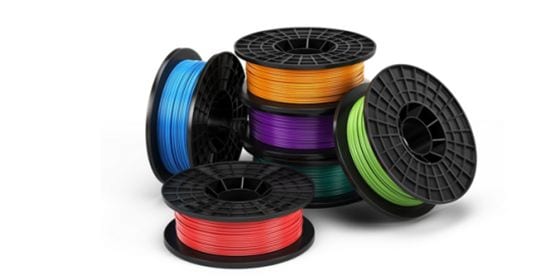
A material name is not a complete requirement
Terms such as “ABS-like,” “nylon-like” or “rubber-like” can describe a commercial positioning, but they do not establish equivalence to a production grade. A printed part’s behavior can depend on the actual material, process, build orientation and post-processing. Review the relevant supplier data and, when the decision is material-dependent, define an agreed test or evidence request.
Current guides from Formlabs, Xometry and Fictiv organize candidates by material and application properties. Use those as neutral research starting points, then validate the exact candidate and evidence with the selected supplier.
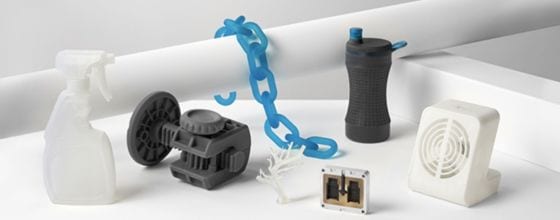
Turn the material need into quote-ready inputs
- Define the learning objective. State the decision this prototype must support.
- Describe service conditions. List only relevant loads, exposures, duration and interfaces, with units where applicable.
- Rank required behavior. Separate must-have properties from preferences and cosmetic goals.
- Identify interfaces and evidence. Mark critical drawing characteristics and specify any inspection or test output requested.
- Review supported options with the supplier. The supplier can explain manufacturability, available processes and documented material data for the project.
- Release the buyer decision. The buyer approves the final material, drawing revision, deviations and acceptance criteria before the order proceeds.
Keep the CAD and drawing revision aligned. If file hand-off is a separate concern, use the CNC quote file-format guide for revision-control principles that also help prototype sourcing. For method-level differences among polymer printing routes, compare SLS, SLA and FDM.
Match material inputs to the process review
Material selection and process selection are coupled. Geometry, section thickness, support-sensitive surfaces, post-processing, critical interfaces and quantity all affect which supported combinations deserve review. The supplier should confirm what it can quote for the actual files. The buyer should confirm whether the candidate is a visual surrogate, a fit-check material or a functional-test material; those are different evidence claims.
A directly adjacent industry feed, 3DPrint.com’s additive manufacturing coverage, was checked for recent developments within the last 90 days. News coverage provides freshness context, not proof of a material’s suitability or Sendot capability.
Watch a prototype-order planning discussion
Material input hand-off checklist
- Part number, CAD and drawing revision.
- Prototype stage and the decision the build must support.
- Required material or required production-material relationship.
- Relevant mechanical behavior and operating environment.
- Cosmetic zones, color/texture references and touch requirements.
- Threads, inserts, seals, mating datums and supplied reference parts.
- Requested quantity for this revision.
- Inspection or test evidence explicitly requested for the order.
- Buyer approver for substitutions, deviations and final acceptance.
For a broader engineering-verification context, see design and engineering verification parts. Submit the project-specific inputs for review; no material inventory, report package or result is assumed until confirmed for the order.
Frequently asked questions
Do I need to choose an exact 3D printing material before requesting a quote?
Is an “ABS-like” printed material equivalent to molded ABS?
Which environmental conditions should a prototype RFQ include?
Should inspection or test reports be assumed with a prototype order?
Who approves a material substitution suggested during DFM review?
Have the material inputs ready? Share the current CAD, drawing, prototype objective, required behavior and evidence request for project review.
Manufacturing next step
Apply this guidance to your part
Continue to the relevant service page for process scope and buyer inputs. If your design is ready, send the current files for engineering review and quotation.
Related manufacturing resources
Continue with the process or project stage most relevant to this topic: