
Pneumatic Clamping Fixture for Long-Part CNC Production
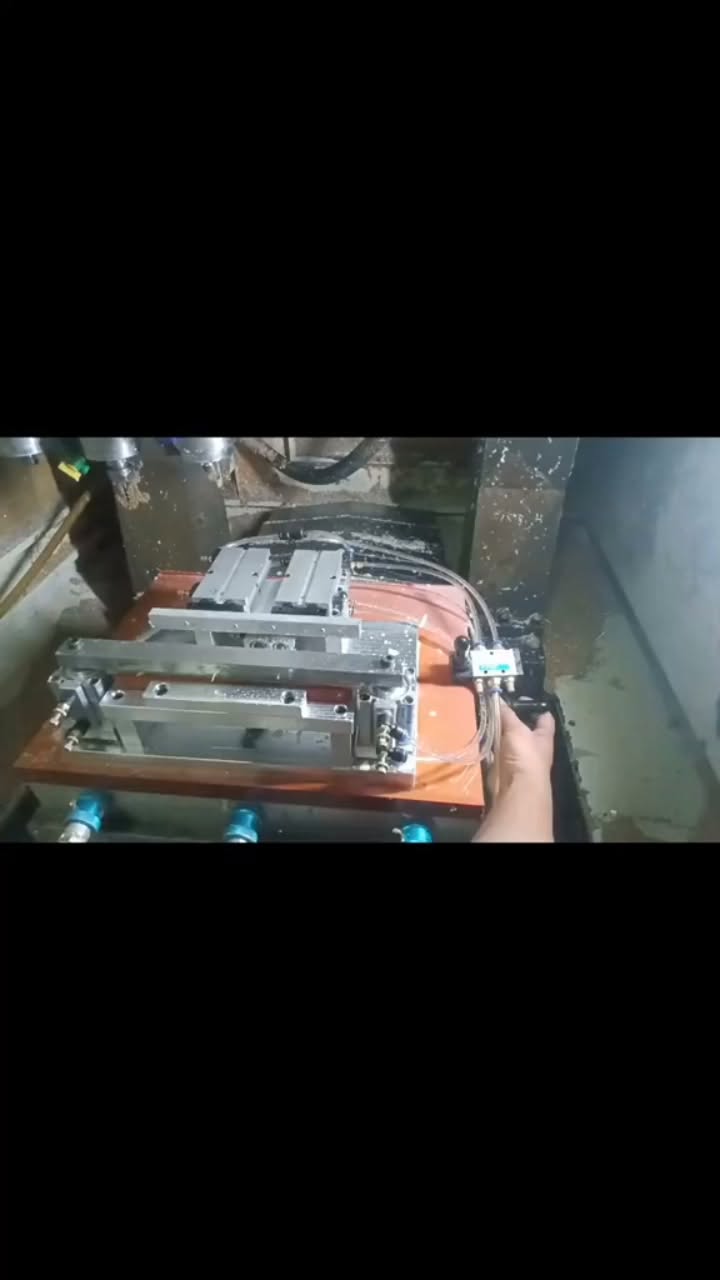
This video shows a pneumatic clamping fixture supporting a long workpiece for repeat CNC production. Its useful engineering detail is the fixture layout: locating points, workpiece support, clamps and tool-access space are arranged around a specific part family. Buyers considering dedicated workholding should provide part data, datum strategy, operation sequence, expected quantity and acceptance method so the fixture can be designed and validated for the actual machining route. Loading and inspection access should be reviewed at the same project stage.
Direct answer
What should a buyer define for a long-part pneumatic CNC fixture? Define the workpiece datums, operation sequence, cutting access, clamp-safe areas, support needs, machine envelope, expected quantity and validation method. A dedicated pneumatic fixture should be designed around the real part and machining route so locating, support and clamping work together without blocking the required tools or inspection access.
What the pneumatic fixture video shows
The long part rests across multiple supports and is held by pneumatic clamps within a dedicated workholding assembly. The layout is relevant to repeat production where loading, locating and cutter access need to follow the same planned sequence.
Design locating, support and clamping as one system
Locators establish the datum reference, supports resist machining loads and clamps hold the part against those elements. Their positions must leave the required tools and probes clear. Buyers sourcing the individual machined parts can review the jig and fixture components manufacturing page. Use design verification for the layout review and low-volume manufacturing for the repeat-production discussion.
Explore similar manufacturing options
For a custom production fixture, the closest Sendot routes cover machining, design review and repeat manufacturing:
- Design and Engineering Verification — DFM and design verification route
- CNC Machining Services — Primary manufacturing service
- Low-Volume Manufacturing — Repeat and batch production route
Technical specifications and sourcing inputs
| Attribute | Current video or sourcing definition | Source and scope |
|---|---|---|
| Fixture type | Pneumatic clamping fixture | Original Reel description and footage Video-specific |
| Workpiece form | Long part | Original Reel description and footage Video-specific |
| Production context | Repeat CNC production | Original Reel description Video-specific |
| Datums and clamp-safe zones | Define from the controlled part drawing | Customer drawing Project input |
| Machine and tool-access envelope | Define for the intended operation | Buyer process package Project input |
| Fixture validation | Define in the project acceptance plan | Buyer quality requirement Project input |
Dedicated pneumatic fixture vs manual general-purpose clamping
| Decision factor | Dedicated pneumatic fixture | Manual general-purpose clamping |
|---|---|---|
| Part family | Designed around defined geometry and datums | Adapted to varied workpieces |
| Loading method | Uses planned pneumatic clamp sequence | Uses operator-set manual clamps |
| Engineering input | Requires fixture design and validation | Requires a documented setup method |
| Best fit | Repeat work with stable part definition | Prototype or changing geometry |
Custom fixture development flow
- Define the operation: Release part data, machining sequence, datums and machine constraints.
- Design the layout: Position locators, supports and clamps around cutting and probe access.
- Review safety and loading: Confirm clamp sequence, part handling and clearances.
- Build and prove: Manufacture the fixture and run the defined validation setup.
- Approve: Review first-part results and release the workholding instructions.
Fixture design inputs for a buyer
- Provide the workpiece model, drawing and operation sequence.
- Identify locating datums, clamp-safe zones and unsupported spans.
- State machine envelope, tool paths and loading constraints.
- Define quantity, changeover needs and any part-family variants.
- Agree how the fixture and first machined parts will be validated.
Frequently asked questions
When is a dedicated pneumatic fixture useful?
What prevents a long part from moving or deflecting?
Can one fixture support several part variants?
What data is needed for a fixture quote?
How is a new machining fixture accepted?
Related videos and guides
- One-Setup 5-Axis CNC Aluminum Machining
- CNC Machining From 3D Model to Metal Part
- Robot-Joint Hole Machining
- GD&T Guide
- CNC Machining Service Guide