
Complex Aluminum Part CNC Machining in Action
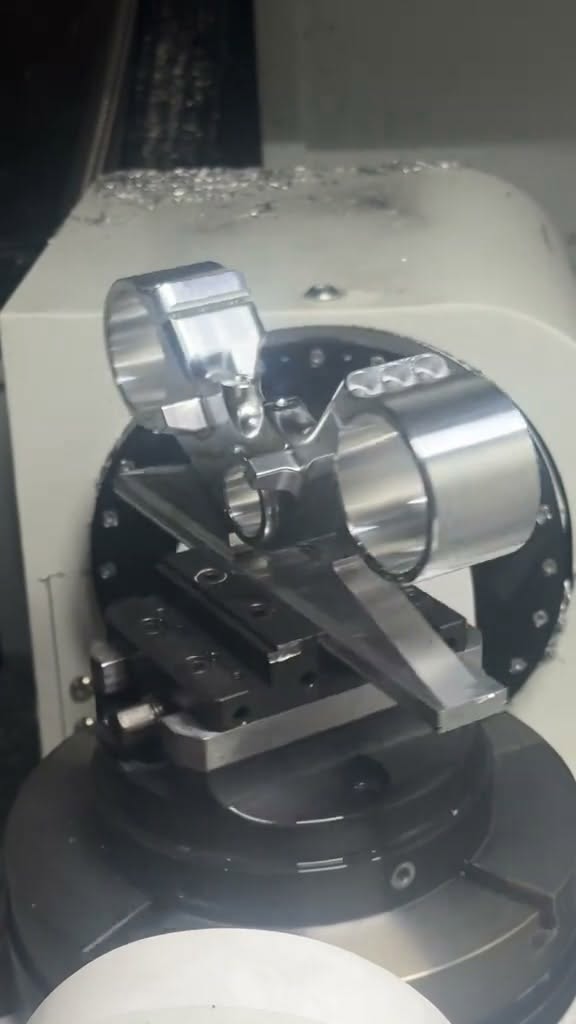
This Reel shows CNC machining of complex aluminum parts under coolant, with several components held on an indexed fixture. For buyers, the useful lesson is that visible geometry is only one part of a quotable package. Material grade and condition, controlled dimensions, datum strategy, finish, quantity and inspection deliverables all affect process planning. The footage demonstrates a machining stage, while the project drawing and purchase requirements govern the finished component. Submit both CAD and a controlled drawing so tool access, workholding, critical features and measurable acceptance criteria can be reviewed together.
Direct answer
What makes a complex aluminum part ready for a CNC machining quote? A quote-ready package combines the 3D model with a controlled drawing, aluminum grade and condition, quantity, finish, critical features and inspection deliverables. The supplier can then review tool access, datum strategy, workholding and operation sequence. Any suggested design change or deviation remains subject to the buyer's documented approval.
What the aluminum machining footage shows
The Reel shows active cutting under coolant and several complex aluminum components held around an indexed fixture. The setup illustrates why feature access and workholding should be discussed early when sourcing CNC aluminum machining.
How buyers turn visible geometry into a controlled RFQ
Provide the model for geometry and a drawing for datums, tolerances, threads, finishes and inspection requirements. A design and engineering verification review can identify open manufacturing questions while leaving final design release and deviation approval with the buyer.
Explore similar manufacturing options
Use these Sendot routes for design review, aluminum machining, and acceptance planning:
- CNC Aluminum Machining — Primary material-focused service
- CNC Machining Services — Primary manufacturing service
- Design and Engineering Verification — DFM and design-review route
Technical specifications and sourcing inputs
| Attribute | Current video or sourcing definition | Source and scope |
|---|---|---|
| Process shown | CNC machining under coolant | Original Reel footage Video-specific |
| Workpiece material | Aluminum | Original Reel description Video-specific |
| Workholding shown | Multiple components on an indexed fixture | Original Reel footage Video-specific |
| Material grade and condition | Define in RFQ and drawing | Buyer project package Project input |
| Dimensions, datums and threads | Define on the controlled drawing | Customer drawing Project input |
| Finish and inspection deliverables | Agree per quote and order | Buyer and supplier agreement Project input |
Visible machining footage vs quote-ready project data
| Decision input | Machining footage | Controlled project package |
|---|---|---|
| Process context | Shows cutting, coolant and workholding | Defines the requested part and revision |
| Material | Identifies aluminum in the Reel description | Defines grade, condition and restrictions |
| Critical features | Shows visible geometry | Defines datums, tolerances, threads and priorities |
| Acceptance | Shows a manufacturing stage | Defines finish, inspection and agreed deliverables |
Complex aluminum-part sourcing flow
- Package: Release the model, drawing, revision, material, quantity and finish.
- Review: Evaluate feature access, datums, stock, workholding and inspection needs.
- Resolve: Document assumptions and route design changes to the buyer for approval.
- Produce: Machine, deburr and finish to the agreed project requirements.
- Verify: Inspect agreed characteristics and provide ordered deliverables.
What to define for a complex aluminum-part quote
- Material grade, condition and any substitution restrictions.
- Controlled model and drawing revision, datums and critical features.
- Quantity, finish sequence and protected cosmetic or sealing surfaces.
- Threads, inserts, deburring and edge-condition notes.
- Inspection characteristics, sampling and requested deliverables.
Mark priorities on the controlled drawing so engineering feedback can be assessed without changing buyer-owned design intent.
Frequently asked questions
Is a 3D model enough to quote a complex aluminum part?
Why does aluminum grade need to be stated?
How does workholding affect complex geometry?
Who approves a DFM-driven geometry change?
What inspection information belongs in the RFQ?
Related videos and guides
- One-Setup 5-Axis CNC Aluminum Machining
- CNC Machining from 3D Model to Metal Part
- CMM Inspection of an Aluminum Motor Housing
- CNC Quote File Formats
- GD&T Guide