Shipping Machined Parts Worldwide: Air vs Ocean vs Express
TL;DR
Pick the freight mode by weight, deadline and value, not by headline per-kg cost. A small, urgent, high-value box of prototype parts almost always goes express courier; a heavy production batch with a flexible date goes ocean; air freight fills the middle for shipments too big for a courier but too urgent to float.
- Express (DHL/FedEx/UPS): door-to-door, ~3–7 days typical, they clear customs, best under ~70–100 kg
- Air freight: airport-to-airport, ~5–10 days typical, you arrange clearance, ~100–500 kg sweet spot
- Ocean LCL/FCL: port-to-port, ~30–50 days typical door-to-door, cheapest per kg on heavy volume
- Chargeable weight (volumetric vs actual) is what light, bulky boxes actually pay on
- Sendot makes the parts and packs them for freight; we work with your forwarder, we are not a licensed forwarder or broker
- Ranges vary by lane, season and customs—confirm current schedules with your carrier
You have a box of finished CNC parts sitting on our floor in Guangzhou and one decision left before they reach your dock: how do they travel? Get this wrong and you either pay three times too much to fly a heavy jig that could have floated, or you save a few hundred dollars on ocean freight and miss a production start by three weeks. This guide walks through express courier, air freight and ocean freight the way a sourcing manager actually has to weigh them—on real transit-time ranges, how cost behaves against weight and volume, and the crossover points where each mode becomes the cheap one.
The quick answer: match the mode to the shipment, not the other way around
There is no "best" freight mode, only the best mode for a specific box on a specific deadline with a specific budget. Three variables decide it almost every time:
- Weight and volume — how heavy is it, and how much space does it take? A crate of solid steel fixtures and a crate of thin-wall aluminium housings can weigh the same and cost wildly different amounts to move.
- Deadline — do you need parts on a bench next week, or on a line next month?
- Value and risk tolerance — a $12,000 batch of prototype parts justifies spending to protect the schedule; a $1,200 batch of low-value brackets usually does not.
Run those three through the decision block further down and the mode picks itself. First, understand what you are actually choosing between.
The three modes, in plain terms
Express courier (DHL, FedEx, UPS)
Express is the integrated door-to-door service you already know from receiving samples. One waybill covers pickup in Guangzhou, the flight, customs clearance in the destination country and delivery to your door. The courier acts as the customs broker for the shipment and handles the paperwork; you pay duties and taxes either on account or on delivery. Typical door-to-door transit runs about 3–7 days depending on lane and clearance—fast because the courier controls every leg. The catch is cost behaviour: express is priced per kilogram at the highest rate of the three modes, and it climbs steeply as weight grows. It is unbeatable for small boxes and quietly ruinous for heavy ones.
Air freight
Air freight moves your box in the cargo hold of a commercial or freighter aircraft, but only airport-to-airport by default. A forwarder consolidates your shipment, books the flight, and hands it off at the destination airport—where you (or your nominated customs broker) are responsible for clearing it and arranging the final truck leg to your door, unless you buy a door-to-door air service. Typical transit is roughly 5–10 days once you count booking, consolidation, the flight, clearance and delivery. Per-kilogram it is cheaper than express, and its cost curve is flatter, so it overtakes express as the economical choice once a shipment gets past roughly 70–100 kg. Air is the workhorse for mid-size batches that are too heavy for a courier but cannot wait for a ship.
Ocean freight — LCL and FCL
Ocean is the cheapest way to move mass, and the slowest. You choose between two service types:
- LCL (Less than Container Load): your pallets share a container with other shippers' cargo. You pay for the space you use. Good for volumes from about one pallet up to roughly half a container. LCL adds consolidation and deconsolidation handling at both ends, which eats into the savings and adds days.
- FCL (Full Container Load): you book a whole 20ft or 40ft container. Once you have enough volume to fill—or nearly fill—a container, FCL is cheaper per unit than LCL and handles more cleanly because the box is sealed at our facility and not opened until it reaches you.
Door-to-door ocean transit typically runs about 30–50 days from Guangzhou to a US, UK, EU or Australian destination once you include trucking to port, sailing, customs clearance and final delivery. That range moves with sailing schedules, port congestion and season—Chinese New Year and the pre-holiday peak both stretch it. Ocean is port-to-port unless you buy door-to-door; clearance is on you or your broker.
Why chargeable weight decides more than you think
Here is the detail that catches first-time importers of machined parts: carriers do not always bill on how much your box weighs. They bill on chargeable weight, which is the greater of the actual (gross) weight and the volumetric (dimensional) weight. Volumetric weight converts the space a box occupies into a billable weight using a standard divisor. Air and express carriers commonly use a divisor around 5,000 cm³ per kg (equivalently 6,000 for some, 167 kg per m³ as a rule of thumb)—confirm the exact divisor with your carrier, as it varies.
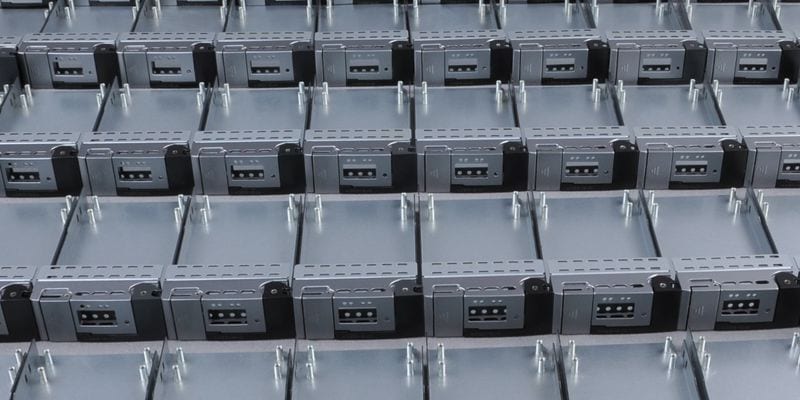
Machined parts split into two camps here. Dense parts—solid steel dies, stainless fixtures, brass fittings—are almost always billed on actual weight; they are heavy for their size. But light, bulky parts—thin-wall aluminium enclosures, large plastic-moulded housings, sheet-metal chassis—can be billed on volumetric weight, meaning a 6 kg box that fills a lot of space might be charged as if it weighed 15 kg. The fix is partly in packing: tight, well-designed packaging that removes dead air lowers the volumetric weight without risking the parts. This is exactly why packaging precision parts for freight is a cost lever, not just a protection question. Ask your supplier for both the gross weight and the packed carton dimensions before you request freight quotes—without dimensions, any air or express quote is a guess.
Cost behaviour: the weight and volume crossovers
Think of each mode as a line on a cost-versus-weight chart. Express starts low for tiny shipments but rises steeply. Air starts higher at the very bottom (there are minimums and handling fees that make small air shipments uneconomical) but rises more gently. Ocean has the highest fixed entry cost—origin charges, documentation, destination handling—but the flattest slope, so on heavy freight its per-kilogram cost is a fraction of the others.
The practical crossovers, as ranges rather than hard lines because they move with lane and fuel:
- Up to ~70–100 kg: express usually wins on total cost and speed, because door-to-door handling and clearance are bundled and small air shipments carry disproportionate fixed fees.
- ~100 kg to a pallet or two: air freight typically becomes the cheaper airborne option; the per-kg rate advantage over express overtakes express's convenience.
- Multiple pallets to a container: ocean—LCL first, then FCL once you approach container fill—wins decisively on cost if the schedule allows the 30–50 day window.
These numbers are directional. A high fuel surcharge season, a congested lane, or an awkwardly bulky shipment can shift them. Always get live quotes for the actual box against the actual deadline. Freight is one line in your total landed cost for imported CNC parts—evaluate it there, alongside duties, insurance and your inventory cost of the extra weeks, not in isolation.
Freight mode comparison table
| Mode | Typical transit (door-to-door) | Main cost driver | Best for | Who clears customs |
|---|---|---|---|---|
| Express courier (DHL/FedEx/UPS) | ~3–7 days | Chargeable weight, steep per-kg rate | Small, urgent, high-value boxes (samples, prototypes) under ~70–100 kg | Courier acts as broker; bundled |
| Air freight | ~5–10 days | Chargeable weight, flatter per-kg rate + fixed handling | Mid-size batches ~100–500 kg, too big for courier, too urgent for ocean | You / your nominated broker (unless door-to-door bought) |
| Ocean LCL | ~30–50 days | Volume (cbm) + consolidation handling both ends | One pallet up to ~half a container, flexible date | You / your broker |
| Ocean FCL | ~30–50 days | Per-container flat, lowest per-unit on full loads | Container-scale production batches, flexible date | You / your broker |
Transit ranges above are typical, not guarantees; they vary by lane, season, port congestion and customs. The ICC Incoterms rules govern who is responsible for each leg—a separate question from which mode moves the box, covered next.
Mode is what moves it; Incoterm is who's responsible
Choosing a freight mode is not the same as agreeing who pays for and controls each leg. That is what the Incoterm does. If you agree EXW, you (or your forwarder) organise everything from our door; if you agree FOB, we get the parts to the port and loaded, and you take over from there; if DAP, we arrange transport to your destination but import duties and clearance remain yours. Two shipments on the same aircraft can carry completely different responsibility splits depending on the Incoterm on the invoice. Read the companion piece, Incoterms for custom parts, before you finalise a quote—it maps each term to who books freight, who clears customs and where risk transfers. One hard rule worth repeating: Incoterms allocate responsibility; they do not change the duty owed. Switching from DAP to FOB changes who arranges clearance, not the tariff your goods attract.
How to decide for your shipment: a step-by-step
- Get the real numbers first. Ask your supplier for gross weight and packed carton or pallet dimensions. Compute or ask for the volumetric weight. Without dimensions you cannot get an honest air or express quote.
- Fix your hard deadline. Separate "nice to have next week" from "the line stops if it's not here by the 20th." A genuine hard deadline is worth paying for; a soft one is not.
- Band the shipment by chargeable weight. Under ~70–100 kg, start with express. From ~100 kg to a pallet or two, price air. Multiple pallets upward, price ocean LCL, then FCL as you approach a container.
- Value the time, not just the freight. Put a number on the weeks. If three ocean weeks delay a product launch or idle an assembly line, that cost may dwarf the air premium. If the parts will sit in a warehouse anyway, ocean's savings are pure profit.
- Get at least two live quotes for the real box. Quote the actual weight, dimensions, origin and destination against the deadline. Compare total door-to-door cost, not per-kg headline rates.
- Confirm who clears customs and who holds each leg. Match the mode to an Incoterm so nobody assumes the other side booked the truck. This is where shipments strand at a port.
- Add duties, taxes and insurance to compare landed cost. The cheapest freight can lose once you add clearance fees and the risk of an unprotected part arriving dented. Decide on landed cost, not freight cost.
Common mistakes that cost real money
- Flying a heavy jig that could float. The single most expensive error we see: a client air-freights a batch of solid steel fixtures on a soft deadline because "air is faster." On a flexible schedule that batch belonged on a ship at a fraction of the cost.
- Ignoring volumetric weight on bulky parts. Requesting an air quote by weight alone, then being surprised the invoice bills a light box as if it were three times heavier. Always supply dimensions.
- Choosing ocean without counting the door-to-door tail. The sea leg is not the whole journey. Trucking to and from port, consolidation, deconsolidation and clearance add days and dollars the port-to-port headline hides.
- Assuming the courier's clearance covers everything. Express bundles clearance, but you still owe the duties and taxes—sometimes billed after delivery with a handling fee. Budget for them.
- Booking freight before agreeing the Incoterm. Both sides think the other arranged transport; the parts sit finished on our floor while the shipment stalls. Agree the term when you agree the price.
- Under-packing to save volumetric weight. Stripping packaging to shave dimensional weight and arriving with dinged critical surfaces. Protect the parts first, optimise volume second—a rejected part is 100% waste.
Where Sendot fits
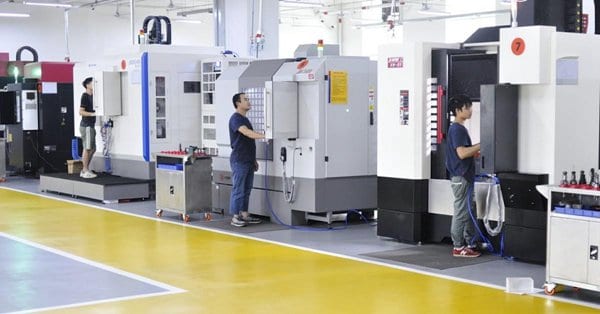
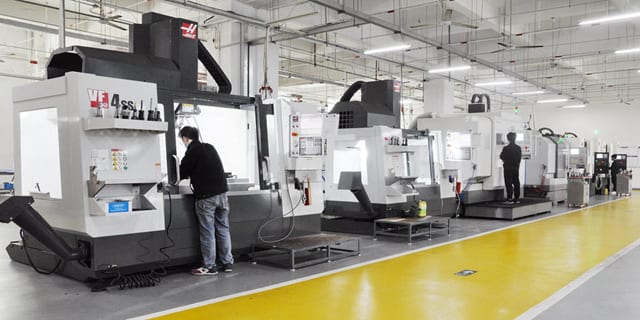
We make and finish your parts in Guangzhou, minutes from Shenzhen and Hong Kong ports and Guangzhou airport, and we pack them properly for whichever mode you choose—with the gross weight and carton dimensions documented so your freight quotes are accurate, not guesses. We are ISO 9001 certified, and every batch can ship with the CMM reports, first-article inspection and material certificates your customs and quality processes may need. We work with your freight forwarder or customs broker; we are not a licensed forwarder or broker ourselves, so for the transport contract, duties and clearance you will nominate your own or ask us to recommend forwarders we ship with regularly. For current schedules and rates, consult your carrier or forwarder directly—see for example DHL Freight or your national customs authority, such as U.S. Customs and Border Protection or HMRC import/export guidance. Rates and rules change and must be confirmed at the time of shipment.
Frequently asked questions
Which freight mode is cheapest for machined parts?
How long does shipping from China take?
What is chargeable (volumetric) weight and why does it matter?
Who handles customs clearance for each mode?
When should I choose ocean over air for a production batch?
KEY TAKEAWAYS
- Match the mode to weight, deadline and value—not to the headline per-kg rate.
- Small, urgent, high-value box: express wins on cost and speed under ~70–100 kg.
- Mid-size batch too big for a courier: air freight, roughly 100–500 kg.
- Heavy batch, flexible date: ocean—LCL, then FCL as you approach a container.
- Chargeable weight punishes light, bulky parts—supply carton dimensions with weight.
- Transit ranges vary by lane and season; the Incoterm sets responsibility, not the duty owed.
Ready to move parts? Send us your CAD and we will quote within 12 hours, machine to ±0.05 mm on critical features across 30+ materials with no MOQ, and pack your batch for freight with documented weight and dimensions so your forwarder can price any mode accurately. Request a quote and tell us your destination and deadline—we will flag which mode makes sense before you book.
Manufacturing next step
Apply this guidance to your part
Continue to the relevant service page for process scope and buyer inputs. If your design is ready, send the current files for engineering review and quotation.
Related manufacturing resources
Continue with the process or project stage most relevant to this topic: