Common Injection Molding Defects & How to Fix Them
Most injection molding defects trace back to a few causes: non-uniform wall thickness, wrong temperature or pressure, poor venting, or moisture in the resin. Sink marks and warping come from thick/uneven walls; short shots and flow lines from low pressure/temperature; flash from too much; burn marks from trapped air. Here's a defect-by-defect guide with causes and fixes.
See our rapid tooling & injection molding service and the design guide.
Key takeaways
- Sink marks / warping → uneven or thick walls; fix with uniform thin walls, correct ribs, balanced cooling.
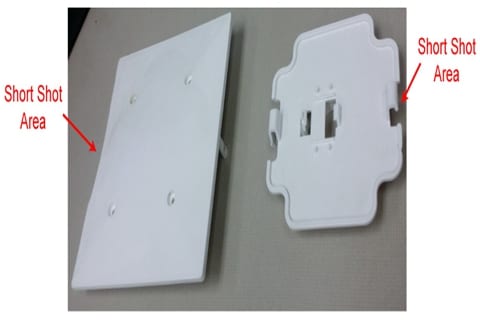
- Short shots → not enough material fills the cavity; raise injection pressure/speed/temperature, improve venting.
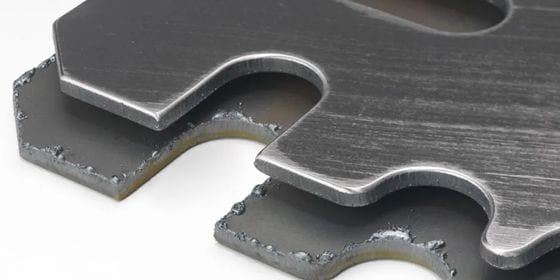
- Flash → material seeps at the parting line; lower pressure, check clamp force and mold fit.
- Weld/flow lines → flow fronts meet or cool unevenly; adjust gate location, temperature and speed.
- Burn marks / voids → trapped air or moisture; add venting, dry the resin, slow the fill.
- Good part design prevents most defects — get a free DFM review with your quote.
Injection molding defects, causes & fixes
| Defect | Typical cause | How to fix |
|---|---|---|
| Sink marks | Thick sections/ribs cool & shrink | Uniform thin walls; ribs ≤60% wall; adjust packing |
| Warping | Uneven cooling / internal stress | Uniform walls; balanced cooling; correct gate |
| Short shot | Cavity not fully filled | ↑ pressure/speed/temp; improve venting; larger gate |
| Flash | Material escapes the parting line | ↓ pressure; check clamp force & mold fit |
| Flow lines | Uneven flow/cooling near gate | ↑ temp/speed; relocate/resize gate |
| Weld (knit) lines | Two flow fronts meet & weld weakly | Move gate; ↑ temp; add flow leaders/vents |
| Burn marks | Trapped air overheated (diesel effect) | Add venting; slow fill; lower temp |
| Voids / bubbles | Trapped gas or moisture | Dry resin; ↑ packing; add venting |
Design vs process vs material
Defects come from three levers, and it's worth checking them in order:
- Design: uniform walls, correct ribs/bosses, draft and radii prevent sink, warp and short shots before they start — see the design guide.
- Process: injection pressure, speed, melt and mold temperature, packing and cooling time are dialed in to eliminate flow, fill and flash issues.
- Material: the right resin, properly dried, avoids splay, brittleness and voids. Moisture-sensitive resins (nylon, PC, ABS) must be dried.
The most common defects
Sink marks appear over thick ribs/bosses — fix with the wall-thickness rules. Warping is uneven shrinkage — balance walls and cooling. Short shots leave the part incomplete — add pressure, heat or venting. Flash is excess at the split line — reduce pressure and check the tool. Flash, weld lines and burn marks each have a clear cause in the table above.

Frequently asked questions
What are the most common injection molding defects?
How do you fix sink marks?
What causes a short shot?
What is a weld line and is it a problem?
Are molding defects a design or process problem?
Sources & further reading: MatWeb — plastic material properties · ISO 2768 general tolerances.
Manufacturing next step
Apply this guidance to your part
Continue to the relevant service page for process scope and buyer inputs. If your design is ready, send the current files for engineering review and quotation.
Related manufacturing resources
Continue with the process or project stage most relevant to this topic: