China+1: Reliable Primary Supplier for Dual Sourcing

TL;DR
China+1 for machined parts does not require abandoning China. It means keeping a qualified China primary where it fits while developing a second source for the risk you actually need to reduce. The primary supplier earns that role through verifiable engineering response, portable quality records, disciplined change control, and candid capacity communication — not through a promise that nothing will ever go wrong.
- 1 primary + 1 qualified alternate: design the sourcing model around a specific part family, not a country headline.
- 12-hour CAD-to-quote response: use the first RFQ to test whether engineering communication is actually usable.
- 3 evidence records on request: ask for FAI, CMM inspection data, and material certificates before you need them.
- 1 revision log: make every drawing, deviation, and approved change traceable across both sources.
- 0 vague capacity claims: require a transparent answer about constraints, assumptions, and the next review point.
If you are building a China+1 strategy for machined parts, the practical question is rarely “China or somewhere else?” It is usually: which supplier can remain a dependable primary while we qualify an alternate? That is a procurement-execution question, not a political one. A resilient plan preserves options without pretending that a second source appears overnight or that one factory can promise uninterrupted supply in every circumstance.
This guide is for sourcing and engineering teams that have decided to dual-source and now need a China primary supplier they can verify. It explains what to ask for, how to structure qualification, and how to keep drawings and documentation portable. We write from a China supplier’s perspective, so the standard here is deliberately evidence-based: you should be able to test every important claim before it becomes a production dependency.
What China+1 means for a machined-parts buyer
China+1 is a dual-sourcing strategy in which a buyer keeps China in the supply base and adds an alternate source for selected risk, parts, or volumes. It is not a rule that every part must move, and it is not a verdict on any country or supplier. For a complex machined component, replacing an established process can require time for drawing review, fixturing, first articles, inspection alignment, and commercial approval. The right scope is the part family whose disruption would hurt you most, not the whole spend file.
For many teams, a working starting point is a deliberate split such as 70/30 while the alternate is being qualified. That is a planning example, not a universal ratio or a promise of supply. The split should follow your part complexity, lead-time exposure, tooling ownership, regulatory documentation, and the amount of requalification work your engineering team can actually absorb. The U.S. International Trade Administration’s supply-chain resources similarly frame resilience as risk management and diversification rather than a one-size-fits-all location decision.
A China primary can be a rational part of that model where it can demonstrate engineering depth and document control. If you are still comparing the landed-cost and execution trade-offs by part type, start with whether China is still cheaper after tariffs. This article addresses the next step: how to make the primary relationship auditable enough to coexist with a second source.
Primary supplier versus alternate: assign different jobs
A sound dual-sourcing plan does not ask two factories to be identical. The primary is normally the source that owns the established engineering rhythm for the part: CAD review, manufacturability feedback, controlled first article, production documentation, and communication around changes. The alternate is qualified against the same defined requirements so it can take the agreed scope if the buyer chooses. Both need to meet the drawing; their commercial role and current allocation can be different.
| Decision area | China primary supplier | Qualified alternate supplier | What the buyer controls |
|---|---|---|---|
| Current work | Runs the approved scope and flags constraints early | Builds evidence through agreed qualification work | Which parts or volumes are allocated |
| Engineering package | Reviews CAD, drawing revision, material, finish, and critical features | Reviews the same controlled package | One source of truth for files and approvals |
| Quality evidence | FAI, CMM data, and material certificates on request | Provides equivalent evidence for its own output | Acceptance criteria and record retention requirements |
| Change control | Does not proceed on a changed requirement without documented approval | Uses the same revision and approval process | Who may approve a drawing, process, or material change |
| Capacity conversation | States known limits, dependencies, and planning assumptions | Does the same during qualification | Forecast horizon, buffers, and escalation path |
The table matters because it removes an easy failure mode: treating the second source as a secret backup with a different drawing, incomplete inspection requirements, or no record of process decisions. That does not create resilience; it creates two incompatible versions of the same part. A supplier that is comfortable being measured against the same package is easier to qualify than one that asks the buyer to rely on verbal assurances.
How a China primary earns the role: evidence before assurances
Buyers do not need a supplier to claim perfection. They need a supplier that makes its work visible early enough to act on. For precision parts, the useful proof is usually mundane and specific: the CAD review identifies assumptions; the quote states what is included; the first article references the correct revision; and the inspection evidence can be matched to the critical dimensions on the drawing.
1. Test the CAD-to-quote handoff
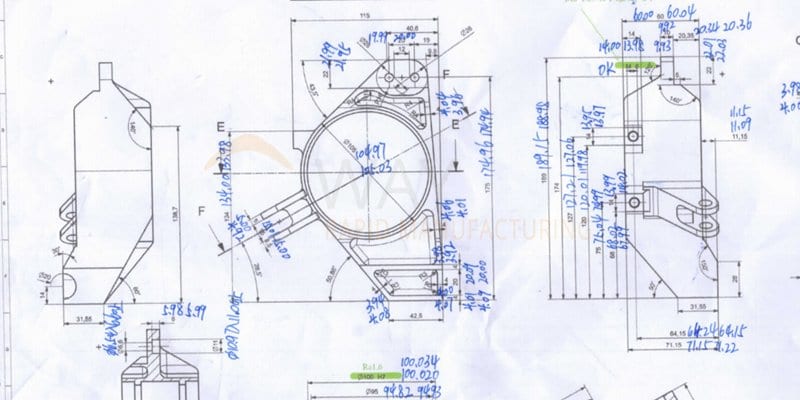
Start with a complete RFQ and judge the reply as an engineering artifact, not only a price. At Sendot, the stated response is a CAD-to-quote reply within 12 hours. Use that clock as a practical test of whether the supplier can keep a project moving; more importantly, check whether the reply identifies material, finish, critical tolerances, quantity assumptions, or DFM questions that need your decision. A fast number with no understanding of the part is not a qualification result.
For a deeper supplier screen, use our overseas CNC supplier vetting checklist. It separates items you can verify before an order from performance you can only measure once work begins.
2. Ask for records that travel with the part
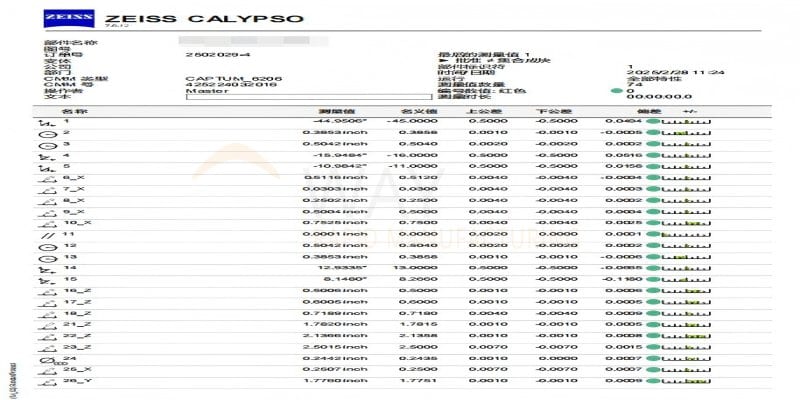
For a new or revised precision part, ask what quality evidence is available on request: a first article inspection (FAI) report, CMM inspection data for agreed critical dimensions, and material certificates traceable to the material supplied. These records do not guarantee an outcome or replace your own acceptance process. They give your team a factual basis for approving a part, comparing sources, and investigating a deviation without reconstructing the story from email.
The terminology matters. The International Organization for Standardization describes ISO 9001 quality management as a framework for consistent processes and continual improvement; it is not a substitute for checking a supplier’s current certificate, scope, and actual part records. Treat a certificate as one verification item, then ask for the work-specific documents that prove what was made for your job.
3. Make change control a condition of trust
Dual sourcing turns informal changes into a serious risk. If the primary updates a toolpath, material source, process route, or drawing interpretation without an approval trail, the alternate cannot be compared fairly and the buyer loses traceability. The fix is simple in principle: one named drawing revision, one change log, and a written approval before a requirement changes. The controlled drawing should govern; a chat message saying “make it like the last batch” should not.
This is especially important when engineering and suppliers work across time zones. Our guide to managing an offshore machine shop across time zones shows how a complete written handoff prevents a clarification from becoming a lost day or, worse, a superseded drawing becoming a finished part.
4. Ask for capacity transparency, not a blanket promise
Capacity is not a badge a factory gives itself; it is a live planning discussion. Ask the primary to identify the assumptions behind its response: process route, outside operations if any, material lead-time dependencies, current constraints it already knows about, and the date when the plan should be reviewed again. Then compare that answer with your own forecast and release cadence.
A credible supplier can say “we need to confirm this before committing” and give you the information needed to decide. That is more useful than a broad statement that all volume will always be covered. Do not ask any supplier to promise uninterrupted supply; ask for timely visibility into constraints so your sourcing plan has time to work.
A six-step qualification workflow for dual sourcing
- Define the part-family risk. List the parts, annual demand pattern, critical customer commitments, tooling or fixtures, and the specific failure you are reducing: single-site exposure, long replenishment time, documentation gaps, or something else. A second source is useful only when its purpose is explicit.
- Create one controlled qualification package. Release the same CAD, PDF drawing, revision, material specification, finish, critical dimensions, acceptance criteria, and required evidence to both suppliers. Keep a buyer-owned change log so no factory is working from a private version.
- Run an engineering review before comparing price. Ask each supplier to identify manufacturability questions, datum assumptions, inspection approach, and quoted scope. Compare what they understood, not just their unit price. For a production-ready RFQ checklist, see how to vet an overseas CNC supplier.
- Qualify the first article against named criteria. Agree in advance whether you need an FAI, CMM data on specified features, material certificates, finish samples, or a fit check. Record the result and the revision. A passed part is evidence for that defined package, not a transferable promise for every future part.
- Score performance after the first order. Track what actually happened: clarity of communication, documentation completeness, change handling, and delivery performance against the confirmed date. Our machine-shop supplier scorecard gives a practical monthly structure so you do not replace evidence with memory.
- Set allocation and review points in writing. Decide what remains with the primary, what the alternate is qualified to make, which changes trigger requalification, and when you will revisit the allocation. Keep the plan reversible: a sourcing split should respond to evidence and changing risk, not become an unexamined rule.
Build a portable second-source package
The most valuable output of qualification is not a spreadsheet score; it is a package another capable supplier can understand without relearning the part from scratch. Make the package buyer-owned and keep it current. It should contain the released revision, revision history, material and finish callouts, critical dimensions and measurement method, required inspection records, approved deviation history, first-article results, packaging needs, and the person authorized to approve changes.
That package helps the primary too. When expectations are written, the primary spends less time guessing what a buyer meant and more time highlighting real manufacturability risks. It also keeps the dual-source relationship fair: no supplier is asked to quote an incomplete file while another has accumulated undocumented context.
What to watch after qualification
Qualification is not a one-time pass/fail ceremony. A primary supplier remains primary only while it continues to make itself easy to assess. Review the evidence at a sensible cadence: did the quote assumptions match the order, did requested documentation arrive in the agreed form, were changes surfaced before work proceeded, and did the supplier communicate constraints when the plan changed?
Keep the conversation operational rather than adversarial. If a score falls, ask what changed and what evidence will show improvement. Some corrective work may be on the buyer’s side: late drawings, unclear acceptance criteria, and changing forecasts create instability at both sources. A dual-sourcing model works best when it rewards disclosure, not when it teaches suppliers to hide a problem until it is too late to solve.
Frequently asked questions
Does China+1 mean I should stop using my China supplier?
What should I ask a China primary supplier to prove?
What is a second-source package?
Is a 70/30 sourcing split the right China+1 ratio?
Can a supplier guarantee continuous production capacity?
KEY TAKEAWAYS
- China+1 is a dual-sourcing design, not an instruction to abandon a proven China supplier.
- Choose a primary on evidence: CAD review, 12-hour quote response, FAI/CMM/material records on request, controlled changes, and capacity transparency.
- Give primary and alternate suppliers the same buyer-owned qualification package; two undocumented versions of a part are not resilience.
- Use a first article and ongoing scorecard to measure performance after the sales process ends.
- Do not accept blanket continuity promises. Demand early, specific visibility into assumptions and constraints instead.
If you are qualifying a China primary supplier alongside an alternate, send the CAD, drawing revision, target quantity, material, finish, and the documents you need to see. Sendot can return a CAD-to-quote response within 12 hours and can provide FAI reports, CMM inspection data, and material certificates on request for the agreed scope. Start with our CNC machining services, then request a quote with the same controlled package you intend to use for both sources.
Manufacturing next step
Apply this guidance to your part
Continue to the relevant service page for process scope and buyer inputs. If your design is ready, send the current files for engineering review and quotation.
Related manufacturing resources
Continue with the process or project stage most relevant to this topic: