Is China Still Cheaper in 2026? Landed Cost After Tariffs
TL;DR
Yes for complex, tight-tolerance, multi-process parts — no longer automatically for simple, high-volume commodity parts. After 2026 tariffs, China still wins on total landed cost where its supplier ecosystem and NPI speed matter, but the decision has to be made on landed cost, not unit price. Run the full number before you switch.
- Decide on landed cost, not unit price: unit + freight + duty + compliance + management + scrap/rework — not the quote alone.
- Where China still wins: complex geometry, tight tolerances, multi-process parts, deep tooling supply, fast prototype-to-production.
- Where the math may now favor elsewhere: simple, low-precision, high-volume commodity parts.
- Levers a real factory controls: factory-direct (no trading-company markup), shipment consolidation, and clear Incoterms.
- The tariff itself is not the whole story — a 30-item stack of small savings often outweighs it on precision work.
- This is a sourcing framework, not tax advice — confirm current duty with the official tools and your customs broker.
The honest question on every procurement manager’s desk in 2026 is not “are Chinese parts cheap?” It is “after the tariffs, is China still the lowest total cost for this part?” Those are different questions, and the answer is genuinely “it depends” — not as a dodge, but because the answer flips depending on what you are buying.
We are a China-based manufacturer, so treat this as a view from the supply side that tries hard to be fair rather than a sales pitch. The most useful thing we can do is give you the framework we watch buyers use to decide, be blunt about the parts where the math no longer favors us, and point you at the official tools so you can run your own number. If you take one idea away: stop comparing unit prices, and start comparing landed cost.
The quick answer
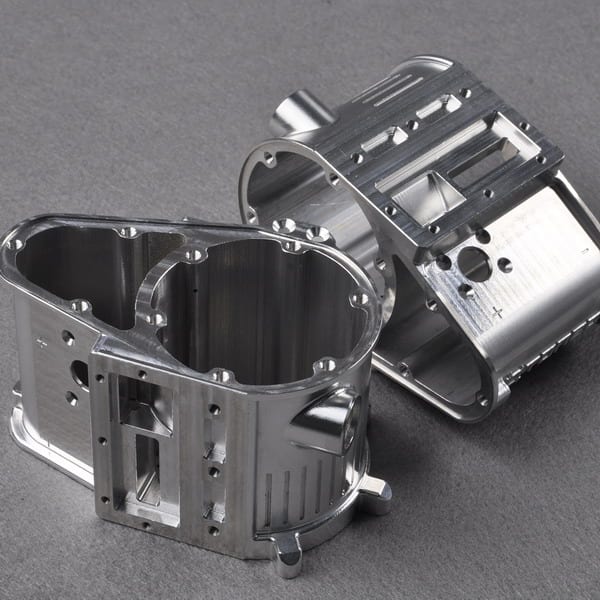
After the 2026 tariff changes, China remains the lowest total landed cost for complex, tight-tolerance, multi-process parts — the work where a deep supplier ecosystem, in-house secondary operations, and fast iteration outweigh a duty line. For simple, low-precision, high-volume commodity parts, the gap has narrowed enough that a nearshore or domestic option can win, especially once you value shorter lead times and lower logistics risk. The tariff did not make China “expensive” across the board; it raised the bar the part has to clear to still be worth importing.
Why unit price stopped being the right comparison
For years a low unit price was a good enough proxy for “cheapest,” because freight was cheap and most manufactured goods entered under low or manageable duty. Two things changed that. First, tariff stacking (Section 301 layers plus newer measures) raised the duty component on many Chinese-made goods. Second, the long-standing $800 de minimis exemption ended, so even small sample and prototype shipments are now dutiable and need formal entry — a detail that hits hardware startups first. We cover that specific change in what the end of de minimis means for prototype and sample orders.
The result is that the duty line is now large enough that it has to be modeled explicitly, and the only comparison that survives contact with reality is total landed cost — the all-in cost to get a good part onto your shelf. We break the full formula down in total landed cost of imported CNC parts; here is the short version of the six buckets.
The six buckets of landed cost
- Unit price — the quoted part cost. Only one input, and no longer the decisive one.
- Freight — ocean, air, or express, plus insurance. Ocean is volatile in 2026 (routing around the Red Sea keeps Asia–Europe transit and rates elevated); air rates rose too. Model a realistic buffer.
- Duty & import tax — determined by the part’s classification (HS/HTS code), declared customs value, and the importing country’s rules. Find yours with the official tools in our companion post, import duties on machined parts.
- Compliance — documentation and traceability (material certs, origin, and for US aluminum/steel, forced-labor due diligence; for EU buyers, CBAM data). A supplier that supplies the paperwork removes cost and delay here.
- Management overhead — the hours your team spends on communication, quality follow-up, and logistics. Real money, usually uncounted.
- Scrap & rework risk — the expected cost of parts that come back out of spec. This is where supplier quality either saves or destroys the whole calculation.
Notice that four of the six buckets have nothing to do with the tariff. That is the point: on a precision part, disciplined execution across freight consolidation, first-pass quality, and low management friction routinely outweighs the duty. On a simple commodity part, there is little execution advantage to capture, so the duty dominates and the answer can flip.
Where China wins, and where it does not (2026)
Here is the comparison we would actually stand behind, framed by part type rather than by slogan.
| Factor | Simple, high-volume commodity part | Complex, tight-tolerance, multi-process part |
|---|---|---|
| Duty as % of landed cost | High — dominates the decision | Lower share — outweighed by execution |
| Value of supplier ecosystem | Low | High (in-house finishing, tooling, materials) |
| Prototype-to-production speed | Not decisive | Decisive — China’s cluster is fast |
| Lead-time sensitivity | Often favors nearshore | Manageable with planning |
| 2026 verdict | May favor nearshore/domestic | China still lowest landed cost |
We would rather tell you honestly that a simple bracket in high volume might now be cheaper nearer home than win that job and disappoint you. That candor is also self-interested in the right way: the work where we genuinely add value is the tight-tolerance, multi-process part, and we would rather compete for that. For the deeper onshore-versus-offshore picture, see domestic vs overseas CNC machining.
How to run the number yourself — step by step
- Classify the part. Get a candidate HS/HTS code and confirm the current duty with the official tool for your country (links in the import duties post) and your customs broker. Never assume a rate.
- Quote factory-direct. A trading-company markup is pure landed-cost fat. Confirm you are talking to the actual factory — it removes a layer of margin the tariff never touches.
- Add every freight line. Main carriage, insurance, inland, and a realistic transit buffer. Ask your forwarder for a lane estimate rather than guessing.
- Add compliance cost. What documentation does this part need, and can the supplier provide it without a project of its own? Missing paperwork is a hidden cost and a delay.
- Price your own time. Estimate the management hours per order and cost them. A low-friction supplier is cheaper than a cheap one that needs babysitting.
- Add a scrap/rework reserve. Use the supplier’s real first-pass yield if you can. This line is where quality either pays for itself or sinks the deal.
- Compare landed cost, not quotes. Normalize every option to cost-per-good-part delivered to your door, then decide. Consolidating shipments and choosing the right Incoterm (see Incoterms for custom parts) are levers you can pull on either side.
Common mistakes
Reacting to the tariff headline instead of the part. “Tariffs went up” is not a sourcing decision. The duty’s share of landed cost is what matters, and it varies enormously by part type.
Comparing a Chinese unit price to a domestic landed cost. If you compare a bare China quote against an all-in domestic number, China looks artificially cheap; do it the other way and it looks artificially expensive. Normalize both.
Leaving a trading company in the middle. Paying a broker markup and the tariff is the worst of both worlds. Buy factory-direct.
Assuming a rate. Duty depends on classification and can change month to month. Treat any number in a blog (including this one, which quotes none) as illustrative and confirm with the official source and a broker.
Ignoring the four non-tariff buckets. Freight, compliance, management overhead, and scrap risk are where the real spread lives on precision work.
Frequently asked questions
Is China still cheaper than the US or Mexico after 2026 tariffs?
What is total landed cost?
Do tariffs make importing from China not worth it?
How can I lower landed cost without changing suppliers?
Where do I find the current duty rate?
KEY TAKEAWAYS
- After 2026 tariffs, China still wins landed cost on complex, tight-tolerance, multi-process parts; simple commodity parts may now favor nearshore.
- Compare total landed cost — unit + freight + duty + compliance + management + scrap — never unit price alone.
- Four of the six landed-cost buckets are unrelated to the tariff; on precision work they decide the outcome.
- Buy factory-direct, consolidate freight, and pick the right Incoterm — levers that recover cost the tariff added.
- Confirm every duty rate with the official tool and a customs broker; this is a sourcing framework, not tax advice.
If you want to pressure-test the math on a real part, send us the CAD and target quantity and we will return a quote within 12 hours, factory-direct, and we are happy to quote it on more than one Incoterm so you can see the landed-cost delta for yourself. Explore our CNC machining services to see the materials, tolerances, and secondary operations that make complex parts worth importing — and if a part is genuinely better made nearer home, we will say so.
Manufacturing next step
Apply this guidance to your part
Continue to the relevant service page for process scope and buyer inputs. If your design is ready, send the current files for engineering review and quotation.
Related manufacturing resources
Continue with the process or project stage most relevant to this topic: