Powder Coating vs Wet Paint for Metal Parts
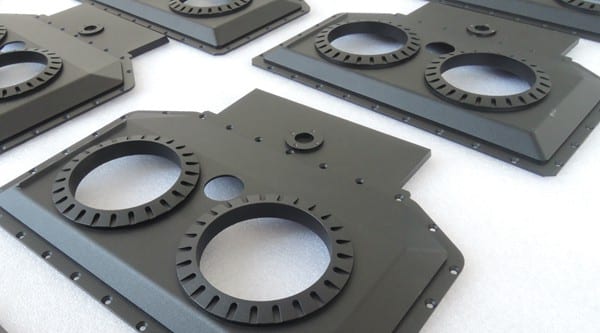
Powder coating applies a dry, electrostatically charged powder that's baked into a thick (50–150 µm), tough, uniform colored finish — the most durable and eco-friendly option. Wet paint sprays a thinner liquid film (15–50 µm) that offers a wider gloss and color range and finer detail, and suits heat-sensitive parts and small runs. Here's how to choose for metal parts.
See our parts finishing service, or the general powder coating finish guide.
Key takeaways
- Powder coating: dry powder, electrostatically applied and oven-cured; thick 50–150 µm, very durable, no solvents (low VOC).
- Wet paint: liquid sprayed; thinner 15–50 µm, widest color/gloss range, finer detail, good for heat-sensitive materials.
- Powder is tougher and more eco-friendly; wet paint is more flexible for fine finishes, small runs and complex color matches.
- Both add measurable thickness — mask threads and mating faces, or account for the buildup on tight tolerances.
- Get coated parts with your machining — request a quote.
Powder coating vs wet paint — comparison
| Attribute | Powder coating | Wet paint |
|---|---|---|
| Application | Dry electrostatic powder, oven-cured | Liquid sprayed (air/HVLP) |
| Thickness | 50–150 µm (thicker) | 15–50 µm (thinner) |
| Durability | Excellent — hard, chip & corrosion resistant | Good — softer, easier to touch up |
| Color & gloss range | Wide, but fewer custom matches | Widest; any color, gloss and special effects |
| Environment | Low VOC, overspray reclaimable | Solvent-based VOCs (unless waterborne) |
| Heat-sensitive parts | No — needs ~200°C cure | Yes — cures at low/ambient temperature |
| Best for | Rugged, high-durability metal parts, volume | Fine finishes, small runs, plastics, color matching |
Powder coating
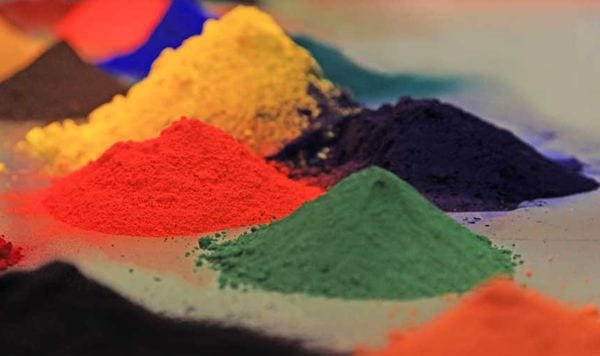
In powder coating, a dry polymer powder is given an electrostatic charge and sprayed onto a grounded metal part, then cured in an oven (~180–200 °C) where it melts and flows into a continuous film. The result is a thick, hard, uniform coating with excellent chip, wear and corrosion resistance. Because there are no solvents and overspray can be reclaimed, it's the more environmentally friendly and efficient choice for durable, colored metal parts at volume.
Wet paint
Wet painting sprays a liquid coating (solvent- or water-based) that dries or cures, often at low temperature. It goes on thinner, captures fine detail, and offers the widest range of colors, gloss levels and special effects — plus precise color matching. It's the right choice for heat-sensitive parts (including plastics), small production runs, and finishes that powder can't match. The trade-offs are lower durability and solvent VOCs (unless waterborne).
Which should you choose?
- Maximum durability, outdoor/rugged metal parts, volume: powder coating.
- Fine finish, exact color match, small runs: wet paint.
- Heat-sensitive parts or plastics: wet paint (powder's cure temperature is too high).
- Lowest environmental impact: powder coating (or waterborne paint).
Other finishing options: anodizing for aluminum, or bead blasting for a matte texture.

Frequently asked questions
Is powder coating better than paint?
How thick is powder coating vs wet paint?
Can powder coating be any color?
Which is more environmentally friendly?
Can you powder coat plastic parts?
Sources & further reading: Products Finishing — coatings reference · ASTM International.
Manufacturing next step
Apply this guidance to your part
Continue to the relevant service page for process scope and buyer inputs. If your design is ready, send the current files for engineering review and quotation.
Related manufacturing resources
Continue with the process or project stage most relevant to this topic: