Die Casting vs CNC Machining vs Investment Casting

TL;DR
Choose die casting for high volumes of thin-walled aluminum, zinc, or magnesium parts, where a steel die's upfront cost is spread across thousands of shots. Choose CNC machining when you need tight tolerances, a material die casting cannot cast, or volumes too low to justify tooling. Choose investment casting for complex near-net shapes in steel, stainless, or superalloys — the alloys neither of the other two can reach economically.
- Tooling is the deciding variable: die casting needs a hardened steel die, investment casting needs a wax pattern die, CNC machining needs no tooling at all.
- Volume decides economics: CNC wins from 1 part up; die casting starts to pay at roughly 1,000–3,000 pieces — Sendot's die casting MOQ, depending on tooling cost.
- Material decides feasibility: die casting is non-ferrous only (aluminum, zinc, magnesium); investment casting handles steel, stainless and superalloys; CNC machines almost anything.
- Tolerance decides the finishing step: die casting holds ±0.1–±0.5 mm as-cast; CNC machining holds ±0.05 mm — which is why cast parts are routinely CNC machined afterwards on critical features.
- Lead time flips with tooling: CNC starts immediately; die casting needs 7–20 days for the die first, then 7–20 days after T1 samples.
- They are not exclusive: the common production answer is casting for the shape plus CNC machining for the features that must be accurate.
These three processes get compared as if you must pick one, but they answer different questions. Die casting is about cost per part at volume. CNC machining is about precision and starting tomorrow. Investment casting is about complex shapes in alloys the other two cannot reach. This guide gives you the decision rule.
See our die casting services and CNC machining services, or read what is die casting first.
Side-by-side comparison
| Die casting | CNC machining | Investment casting | |
|---|---|---|---|
| Tooling | Hardened steel die — highest upfront cost; built in 7–20 days | None | Wax pattern die + ceramic shell — moderate |
| Volume sweet spot | 1,000–3,000 pieces and up (Sendot MOQ) | 1 to low volume | Low to mid volume |
| Cost per part at volume | Lowest | Highest (machining time per part) | Moderate |
| Materials | Non-ferrous only: aluminum (ADC12, A380), zinc (Zamak 3/5), magnesium (AZ91D, AM60B, AM50A, AS41B, AE42, AJ62A) | Almost any metal or plastic | Steel, stainless, superalloys, aluminum |
| Tolerance | ±0.1–±0.5 mm as-cast; machined afterwards where tighter is needed | ±0.05 mm at Sendot | Better than sand casting, looser than CNC |
| Wall thickness | Thin — 1.0–6.0 mm | Limited by part rigidity and workholding | Moderate |
| Geometry | Complex, but must draw from a two-part die | Limited by tool access — no true internal cavities | Very complex, including shapes a die cannot draw |
| Time to first part | Die first (7–20 days), then 7–20 days after T1 samples | Fastest — straight from CAD | Pattern and shell first |
| Typical defects | Porosity, flash, cold shut | None inherent — accuracy limited by setup | Shell inclusions, shrinkage |
When die casting wins
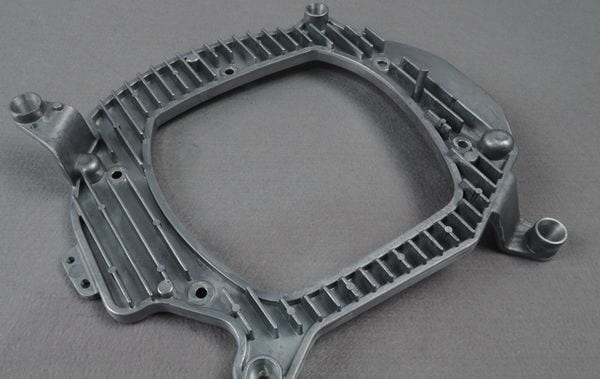
Die casting wins on cost per part once the volume is high enough to amortise the die. That is the whole argument. A hardened steel die is a serious upfront investment, but it is reusable for hundreds of thousands of shots, and each shot takes seconds and produces a near-net-shape part with a good as-cast finish and walls thinner than machining could economically produce.
It fits when all of the following hold:
- The part is aluminum, zinc, or magnesium — die casting cannot cast steel.
- You need 1,000–3,000 pieces or more, not dozens.
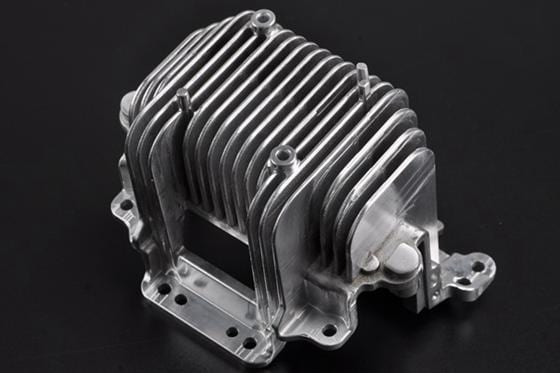
- The geometry is thin-walled and complex — housings, brackets, heat sinks, enclosures, pump bodies.
- The design is stable — changing a steel die is expensive and slow.
The last point is the one that catches teams out. Die casting punishes design churn. If the design is still moving, machine or use rapid tooling until it settles, then cut the die.
When CNC machining wins
CNC machining wins on precision, material freedom, and time to first part. There is no tooling, so the first part can be running as soon as the CAD is reviewed, and changing the design means changing a program rather than cutting steel.
- You need tight tolerances — Sendot machines to ±0.05 mm and surface finishes to Ra 0.2 µm, tighter than either casting process delivers as-cast.
- The material is not castable by die casting — steel, stainless, titanium, copper, or engineering plastics.
- Volumes are low, or the design is still changing.
- You need parts now — no tooling means no tooling lead time.
The trade-off is cost per part: every part costs machining time, so the curve stays flat rather than falling with volume. See aluminum CNC machining for the direct alternative to aluminum die casting at low volume.
When investment casting wins
Investment casting (lost-wax casting) wins on alloy range and geometric complexity. A wax pattern is built, coated in a ceramic shell, melted out, and the cavity filled with metal. Because the shell is expendable and formed around the pattern, it can produce shapes that could never be drawn out of a two-part steel die — and it handles the high-melting-point alloys die casting cannot touch.
- The alloy is steel, stainless steel, or a superalloy.
- The geometry is too complex to draw from a die.
- Volume is low-to-mid — the pattern die costs less than a die casting die.
- You want a near-net shape with better accuracy than sand casting.
The trade-offs: a longer process chain per part, and a cost per part that does not fall as steeply as die casting at high volume.
The decision rule
Which process should I use?
- Aluminum, zinc or magnesium + 1,000–3,000 pieces+ + stable design → die casting.
- Tight tolerances, or a non-castable material, or low volume, or design still moving → CNC machining.
- Steel/stainless/superalloy + complex near-net shape → investment casting.
- Not sure yet, but heading for volume → machine or rapid tool the first parts, prove the design, then cut the die.
- Cast shape + a few critical accurate features → cast and machine. This is what most production parts actually do.
The answer is often "both"
The framing of "die casting vs CNC machining" is mostly false in production. A die cast housing whose sealing face and bearing bores must hold ±0.05 mm is die cast for the shape and CNC machined afterwards on those features only. You get the casting's cost per part and the machining's accuracy where it matters.
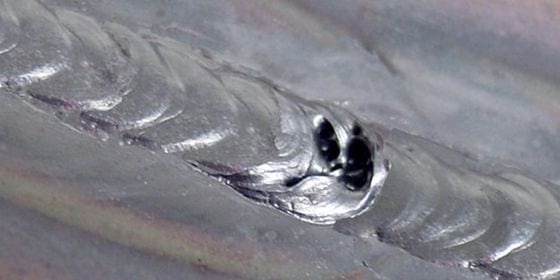
This is worth designing for deliberately: mark which features are cast-to-size and which are machined, leave machining stock on the machined ones, and remember that machining into a gas-porous region will expose the porosity — so the critical region needs its porosity controlled at the casting stage. See die casting defects for how that is done.
Die casting and machining at Sendot Technology
Sendot Technology runs die casting and CNC machining under one roof, so a cast-plus-machined part does not have to be split across two suppliers — and if the right answer turns out to be machining rather than casting, that is the same conversation and the same quote.
- Die casting: 100–4,000 T machines — cold-chamber, hot-chamber and vacuum; aluminum (ADC12, A380), zinc (Zamak 3/5), magnesium (AZ91D, AM60B, AM50A, AS41B, AE42, AJ62A); tooling in house in 7–20 days; MOQ 1,000–3,000 pieces
- CNC machining: 3-to-5-axis milling and turning of 30+ materials to ±0.05 mm — no MOQ, from a single prototype
- Finishing in house: powder coating, anodizing, plating, painting
- CMM inspection, ISO 9001 quality system, 20+ years (founded 2003, Guangzhou)
- Free DFM review with every quote — including an honest "this should be machined, not cast" if that is the answer
Frequently asked questions
Is die casting cheaper than CNC machining?
Can you die cast steel or stainless steel?
Which process gives the tightest tolerances?
Can die cast parts be CNC machined afterwards?
What if my design is not finished yet?
How do I decide which process is right for my part?

Manufacturing next step
Apply this guidance to your part
Continue to the relevant service page for process scope and buyer inputs. If your design is ready, send the current files for engineering review and quotation.
Related manufacturing resources
Continue with the process or project stage most relevant to this topic: