Titanium CNC Machining: Grades, Tips & Applications
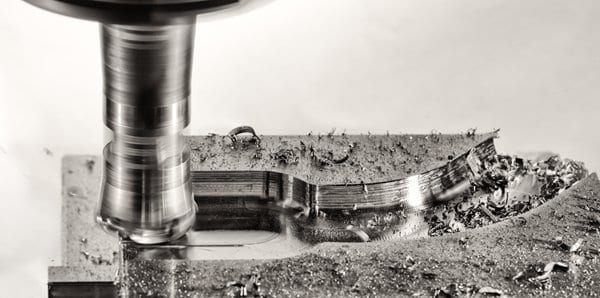
Titanium CNC machining produces strong, lightweight, corrosion-resistant and biocompatible parts, but titanium is genuinely difficult to cut — it work-hardens, conducts heat poorly (concentrating heat at the tool edge) and is chemically reactive. The keys are sharp carbide tooling, lower cutting speeds with firm feeds, rigid setups and heavy flood coolant. Grade 5 (Ti-6Al-4V) is by far the most machined titanium alloy.
See our titanium materials hub and CNC machining services for capabilities.
Key takeaways
- Titanium has the best strength-to-weight ratio of common metals — as strong as many steels at ~55% of the weight.
- It is corrosion-resistant and biocompatible, ideal for aerospace, medical implants and marine parts.
- Grade 5 (Ti-6Al-4V) covers most work; commercially pure Grade 2 is softer and more corrosion-resistant; Grade 23 (Ti-6Al-4V ELI) is the medical-implant grade.
- Titanium is hard to machine: low thermal conductivity + work hardening put heat into the tool, so run slower speeds, higher feeds, sharp tools and flood coolant.
- Fine titanium chips are flammable — control chips and coolant carefully.
- Expect titanium to cost and machine 5–7× slower than aluminum — quote your part to see the real price.
Why machine titanium?
Titanium is chosen when a part must be strong, light and durable in a demanding environment. It has an outstanding strength-to-weight ratio, excellent corrosion resistance (it forms a stable oxide layer), performs well at elevated temperatures, and is biocompatible — the body tolerates it, which is why it dominates orthopedic and dental implants. Those same properties make it the difference-maker in aerospace, where every gram matters.
Titanium grades for machining
Titanium alloys are grouped as commercially pure (CP) grades and alloyed grades. The most relevant for machined parts:
| Grade | Type | Key traits | Typical uses |
|---|---|---|---|
| Grade 1–4 (CP) | Commercially pure | Softer, very corrosion-resistant, more formable; strength rises from Gr.1 to Gr.4 | Chemical, marine, medical hardware |
| Grade 5 (Ti-6Al-4V) | Alpha-beta alloy | Highest use; excellent strength-to-weight, heat-treatable | Aerospace, motorsport, general structural |
| Grade 23 (Ti-6Al-4V ELI) | Extra-low interstitial | Higher purity, better toughness & ductility | Medical & dental implants |
| Grade 9 (Ti-3Al-2.5V) | Alpha-beta alloy | Good strength, more formable than Gr.5 | Tubing, aerospace, bike frames |
For a deeper look at the metallurgy, see types of titanium alloys.
Is titanium hard to machine?
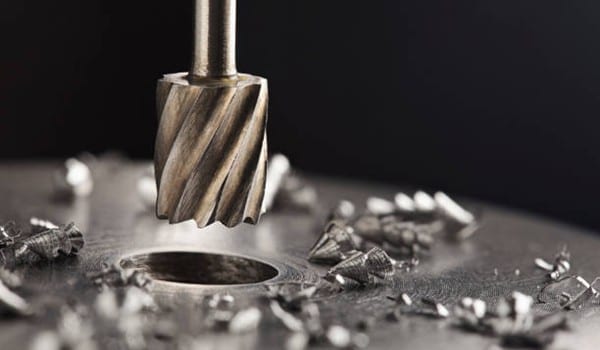
Yes — titanium is one of the more challenging engineering metals to machine, for a few connected reasons:
- Low thermal conductivity: heat does not flow into the chip and part as it does with aluminum, so it builds up at the cutting edge and shortens tool life.
- Work hardening: like stainless, titanium hardens if the tool rubs instead of cutting.
- Low modulus / springback: the material deflects away from the tool, causing chatter on thin walls.
- Chemical reactivity: at high temperature titanium reacts with tools; fine chips can ignite.
Titanium machining tips
- Use sharp, coated carbide tools and change them before they dull.
- Run lower cutting speeds with a firm, constant feed — never let the tool dwell or rub.
- Apply high-pressure flood coolant to pull heat away and clear chips.
- Keep setups rigid and minimize tool overhang to fight deflection and chatter.
- Prefer climb milling and generous radii; avoid thin, unsupported features where possible.
- Manage chips for fire safety — avoid fine dry swarf accumulation.
Applications of machined titanium
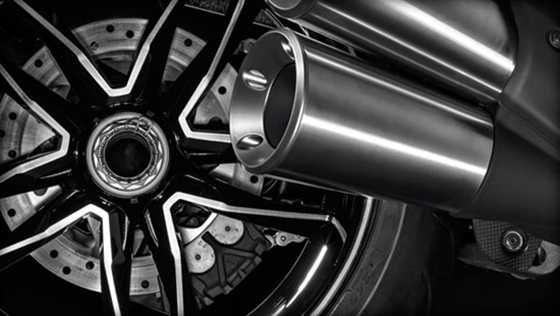
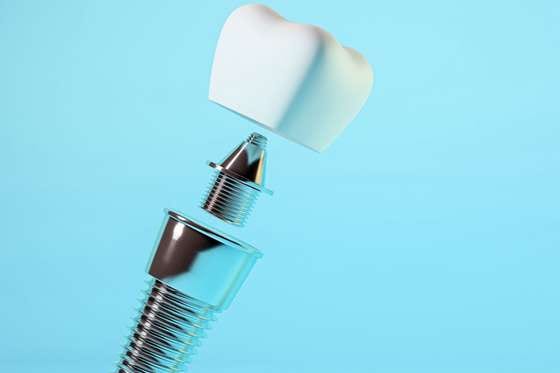
Aerospace: airframe structure, brackets, engine parts and fasteners, where strength-to-weight is decisive. Medical: orthopedic and dental implants, surgical instruments — thanks to biocompatibility and corrosion resistance (usually Grade 23). Marine and chemical: components exposed to saltwater and aggressive media. Motorsport and high-performance: lightweight, high-strength parts.

Finishing titanium parts
Machined titanium takes several finishes: bead blasting for a uniform matte surface, polishing, and — uniquely — anodizing that produces color without dye (the oxide layer thickness sets the color). Medical parts are typically passivated to a clean, biocompatible surface.
Titanium machining cost
Titanium parts cost significantly more than aluminum, driven by expensive raw stock, slow cutting speeds, higher tool wear and the rigid setups required. Expect machine time to run several times longer than an equivalent aluminum part. To control cost, machine titanium only where its properties are needed, keep geometry as simple as the function allows, and loosen non-critical tolerances. Compare options in our titanium vs aluminum guide.

Frequently asked questions
What is the best titanium grade for CNC machining?
Why is titanium so hard to machine?
Is titanium machining expensive?
Can titanium be anodized?
Is titanium machining a fire risk?
Sources & further reading: MatWeb — titanium alloy properties · ASTM B265 titanium sheet/plate standard · ISO 2768 general tolerances.
Manufacturing next step
Apply this guidance to your part
Continue to the relevant service page for process scope and buyer inputs. If your design is ready, send the current files for engineering review and quotation.
Related manufacturing resources
Continue with the process or project stage most relevant to this topic: