Managing an Offshore Machine Shop Across Time Zones

TL;DR
Treat the time-zone gap as a 24-hour production cycle, not a delay. China sits at UTC+8, so a question you send at the end of your day is answered while you sleep. Make it work with a written daily handoff, batched decisions, one weekly sync call in your real overlap window, and strict drawing-revision control so both sides build from the same file.
- Overlap window: US Eastern buyers get a live window around 8:00-9:00 PM ET (China 8:00-9:00 AM); Australia shares most of the working day.
- 24-hour cycle: a complete written handoff turns 8 sleeping hours into one full production step per day.
- Quote speed: Sendot returns a CAD quote within 12 hours, so pricing never costs you a full cycle.
- English support: English-speaking engineers remove the translation lag that stalls async threads.
- Document control: lock every message to a drawing revision (REV C, not \"the latest file\") so nobody machines a superseded print.
- Urgent issues: schedule a call. The fix for a genuinely urgent problem is a real-time conversation, not more messages.
You already found an overseas machine shop, signed off on the first parts, and now you run the relationship every week. The distance stopped being about price the moment production started — now it is about a clock. Your supplier is asleep when you are awake, and the gap between \"I asked a question\" and \"I got an answer\" can quietly stretch a two-week job into five.
It does not have to. The same offset that feels like a wall is the engine behind the phrase \"we worked on it overnight.\" China Standard Time is UTC+8, roughly half a day ahead of North America and a few hours ahead of Europe. Handled well, your project moves one full step forward every single night. Handled badly, it stalls a full day on every clarification. This piece is about the difference between those two outcomes, written from the buyer's desk — not the shop floor.
The short answer: run a 24-hour cycle, not a chat thread
Stop treating messages as a conversation and start treating each day as one production cycle. Write a complete handoff at the end of your working day so every open question is answered by the time you wake up; batch your decisions so the shop can advance one full step overnight instead of waiting on the next reply; and reserve one weekly live call for the overlap window when both clocks are awake.
Three things make that cycle actually run: a fast quote so pricing never costs you a night (Sendot returns a quote within 12 hours of receiving CAD), English-speaking engineers so nothing is lost in translation between messages, and strict drawing-revision control so both sides always build from the same file. Everything below is how to put those into practice, plus an honest note on where the async model breaks and you simply have to pick up the phone.
Why the time-zone gap is an asset, not a tax
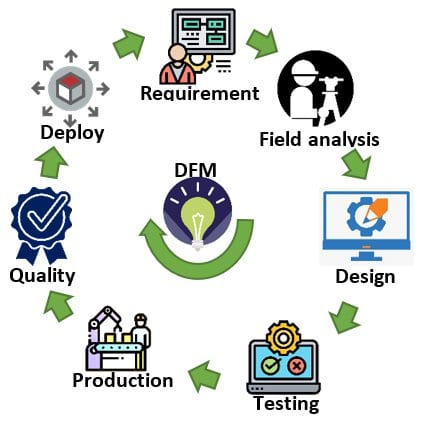
Think of the offset as a second shift you are not paying for. When your day ends in New York, the Guangzhou day is beginning. If you hand off cleanly at 6:00 PM, your parts are being programmed, cut, or inspected while you sleep, and a status update is waiting when you open your laptop. That is the follow-the-sun model that global engineering teams use on purpose, and a manufacturing relationship gets it for free — but only if the handoff is good enough that the shop never has to stop and wait for you.
The failure mode is the opposite: you send a one-line question, go home, and the shop reads it, has a follow-up question, and now they wait until your morning to ask it. That is two nights burned on one clarification. The entire discipline of managing across time zones is removing those round trips. Each avoided round trip is a full calendar day saved on a schedule that already has an ocean in it.
This is a different problem from squeezing cost out of a program or catching defects on the floor — for that angle see our note on how to control production cost in CNC project management. Here the lever is purely communication latency. And it is worth being honest about the ceiling: the offset gives you speed on anything that can be written down, and gives you nothing on anything that needs a genuine back-and-forth. Knowing which is which — and not trying to solve a real-time problem with more asynchronous messages — is most of the skill. If you are still deciding whether the offshore relationship is the right call at all, our comparison of domestic vs. overseas CNC machining covers the trade-offs the clock alone does not capture.
How to run the overnight cycle
Four habits turn the offset from a liability into a 24-hour engine: a written handoff, batched decisions, a fixed cadence, and document control. None of them is complicated. All of them fail the first time you skip them.
1. The end-of-day written handoff
A handoff is not \"any update.\" It is a single message, sent at the close of your day, that contains everything the shop needs to work an entire shift without you. A weak handoff says \"looks good, go ahead.\" A strong one is closer to a short work order. In practice it contains:
- The exact drawing revision the message applies to (\"This all refers to REV C dated 2026-07-18\").
- Decisions made, stated as decisions — \"Approved: switch pocket floor to 1.5 mm. Rejected: the alternate radius, keep 0.5 mm.\"
- Answers to every open question from their last update, numbered to match their numbering.
- Anything you are not deciding yet, with the specific information you are waiting on and when it will arrive.
- One clear \"what I need back tomorrow\" line, so the next update lands ready to move.
The test is simple: could the shop advance the job for eight hours using only this message, without messaging you back? If yes, you have bought a full production step overnight. Dating your revisions in a fixed, unambiguous format — the ISO 8601 style of 2026-07-18 rather than 07/18/26 — removes one more source of cross-border confusion, since day-month order differs by country.
2. Batch decisions so the project advances a whole step per day
The instinct in a fast relationship is to fire off questions as they occur to you. Across a 12-hour gap that instinct is expensive: five questions sent one at a time can cost five nights. Instead, hold them. Collect the day's open items, resolve everything you can on your own side, and release them together in the handoff. The shop then works the whole batch in one shift and comes back with one consolidated update rather than five partial ones.
Batching also forces you to distinguish real blockers from nice-to-knows. Most \"questions\" are things you can decide yourself with the drawing in front of you; only a few genuinely need the shop's input. Sending only the real blockers — clearly flagged as blocking — means the shop knows exactly what to prioritize in the hours you are offline.
3. A cadence both sides can rely on
Rhythm beats reaction. Agree on two fixed touchpoints and stop improvising:
- A daily asynchronous update from the shop, sent at a fixed time in their day (say end of their shift), so it is waiting in your inbox each morning. Same structure every day: what moved, what is blocked, what they need from you.
- One weekly live sync in the overlap window — 20 to 30 minutes to walk through anything that genuinely benefits from talking: a finish that is hard to describe in text, a tolerance trade-off, a first-article review. The table below shows when that window actually is for each region.
The reason to fix these is that a predictable cadence eliminates the anxious \"any update?\" messages that add noise without adding information. When you know a structured update lands every morning, you stop poking the thread, and the shop stops context-switching to reassure you. A supplier with English-speaking CNC machining engineers makes both touchpoints work: the daily written update is actually readable, and the weekly call does not stall on translation.
4. Document control: one revision, one source of truth
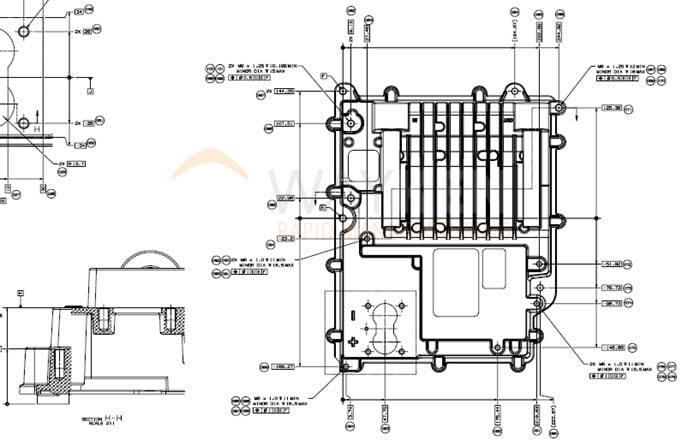
The single most damaging cross-time-zone mistake is not a slow reply — it is two sides machining from different files. When you cannot tap someone on the shoulder to confirm, \"use the latest drawing\" is a trap, because \"latest\" means different things at 6:00 PM your time and 6:00 AM theirs. Every message, every approval, every change must name a specific revision.
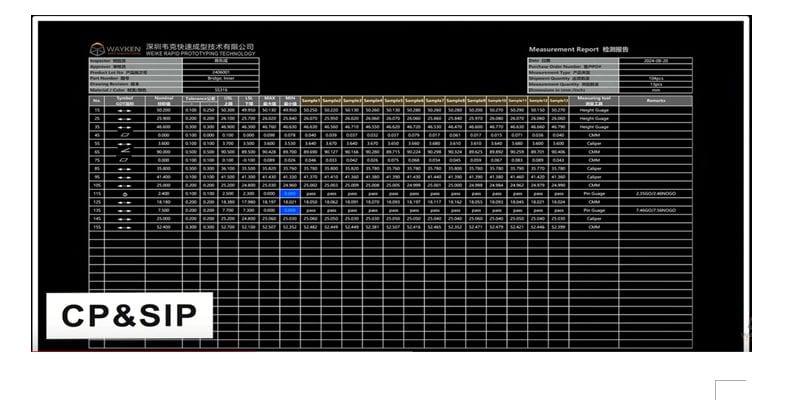
Practical rules that hold up across a 12-hour gap: bump the revision letter on any geometry or tolerance change, never edit a file in place under the same name; keep a one-line change log so both sides can see what moved between REV B and REV C; and treat the drawing — not the CAD model or an email sentence — as the controlling document, dimensioned and toleranced to a recognized standard such as ASME Y14.5 so a tolerance means the same thing on both continents. When the shop's first-article inspection and CMM report come back, they should cite the same revision you approved. If they cite a different one, you caught a problem before it became scrap.
Overlap windows: when China (UTC+8) actually meets your clock
You do not need all-day overlap. You need to know the one window each week when a live call is painless, and to schedule around it deliberately. The table below uses standard time; shift it by an hour during your own daylight-saving period, since China does not observe DST. A converter such as timeanddate.com is worth a bookmark for the weeks the clocks change.
| Buyer region | Offset vs. China (UTC+8) | Real daily overlap | Best call time |
|---|---|---|---|
| US Eastern (New York, Toronto) | China is 12-13 hours ahead | Your evening / China's next morning | 8:00-9:00 PM ET = 8:00-9:00 AM China (next day) |
| US Pacific (Los Angeles, Vancouver) | China is 15-16 hours ahead | Your late afternoon / China's next morning | 5:00-6:00 PM PT = 8:00-9:00 AM China (next day) |
| UK (London) | China is 7-8 hours ahead | Your morning / China's afternoon | 9:00-10:00 AM UK = 4:00-5:00 PM China |
| Germany / Central Europe (Berlin, Paris) | China is 6-7 hours ahead | Your morning / China's mid-afternoon | 9:00-10:00 AM CET = 3:00-4:00 PM China |
| Australia East (Sydney, Melbourne) | China is 2-3 hours behind | Most of the shared working day | 10:00 AM AEST = 8:00 AM China |
Two things to read out of this. First, North American buyers have to give up a slice of personal time for the live call — early morning or evening — but only once a week, which is a fair trade for a nightly production shift. Second, European and especially Australian buyers overlap during normal business hours, so for them the discipline is less about finding a window and more about not wasting the generous one they already have on chatter that a written handoff would carry just as well.
A day in the cycle, step by step
- Send the CAD and a scope statement. A good scope statement names the part, quantity, material and temper, the critical dimensions and their tolerances, the surface finish, the file format (STEP preferred; IGES, X_T, DWG, PDF, STL and DXF for 2D laser parts also work), and what \"done\" looks like — FAI report, material certificate, CMM data. Ambiguity here is what generates the questions that eat your nights.
- Receive the quote within 12 hours. A fast quote means pricing and feasibility questions are resolved inside a single cycle instead of stalling for a day. Read the quote for what the shop changed or flagged — a good supplier returns design-for-manufacturing notes, not just a number.
- Write the end-of-day handoff. Approvals, decisions, answers to every open question, all bound to a named revision. Close with the one thing you need back tomorrow.
- Let the shop work your overnight. This is the payoff. With a complete handoff, the shop programs, cuts, or inspects for a full shift without needing you awake.
- Read the morning update and batch your replies. One consolidated update greets you. Resolve everything on your own side, collect only the real blockers, and hold them for tonight's handoff.
- Hold the weekly sync in the overlap window. Use the table above. Keep it to the few items that genuinely need voice — a first-article review, a finish call, a tolerance trade-off — and send an agenda beforehand so nobody burns the window improvising.
- Escalate genuinely urgent issues to a scheduled call, not a message storm. When something is truly time-critical — a hold on production, a dimension that will scrap a batch — do not fire twenty messages into a gap. Send one message that says \"this is blocking, I am proposing a call at [time in both zones], confirm.\" A 15-minute call closes what fifty messages across two nights cannot.
Common mistakes that cost a full day each
Every one of these is something an experienced buyer has done once and never again.
- Drip-feeding questions. Sending items one at a time as they occur to you converts one night of delay into five. Batch them into the handoff.
- \"Use the latest file.\" Across a 12-hour gap, \"latest\" is undefined. Name the revision every time, or you will eventually pay for a batch cut from a superseded print.
- Trying to talk through a text problem — or text through a talking problem. A finish or a fit issue that needs voice will churn for days in a chat thread; a decision that could have been one written line does not need a call. Match the channel to the problem.
- Ambiguous dates and units. 07/08 is two different days on two continents, and a loose \"about 3 thou\" is not a tolerance. Use ISO dates and explicit units on both sides.
- Forgetting daylight saving. China does not shift; you do. Twice a year your \"best call time\" moves by an hour. Reconfirm the window in the two weeks around each change.
- Expecting instant replies as reassurance. A predictable daily update is worth more than a fast one. Poking the thread for comfort just fragments the shop's attention and slows the real work.
Frequently asked questions
What is the best time to call a Chinese machine shop from the US?
How do I keep a project moving when the shop is asleep during my workday?
How often should I have a live call versus written updates?
Does a language barrier make async communication with an overseas shop worse?
How do I make sure both sides are working from the same drawing?
KEY TAKEAWAYS
- Treat each day as one production cycle; a complete end-of-day handoff buys a free overnight shift.
- Batch decisions instead of drip-feeding questions — five separate questions can cost five nights.
- Fix the cadence: a daily written update plus one weekly live sync in the real overlap window.
- Name a drawing revision in every message; \"use the latest file\" is undefined across a 12-hour gap.
- For a genuinely urgent issue, schedule a call — that is what real-time is for, not more messages.
- A 12-hour quote and English-speaking engineers are what make the async cycle actually run.
The clock is the first thing a new offshore buyer fights and the last thing an experienced one thinks about — because by then it is just the rhythm of the work. If you are still choosing a partner, read how to vet an overseas CNC supplier before you commit, then bring us a drawing. Send your CAD to our CNC machining team and you will have a quote within 12 hours — inside a single cycle, before your day is over.
Manufacturing next step
Apply this guidance to your part
Continue to the relevant service page for process scope and buyer inputs. If your design is ready, send the current files for engineering review and quotation.
Related manufacturing resources
Continue with the process or project stage most relevant to this topic: