Overmolding vs Insert Molding: Differences & Applications
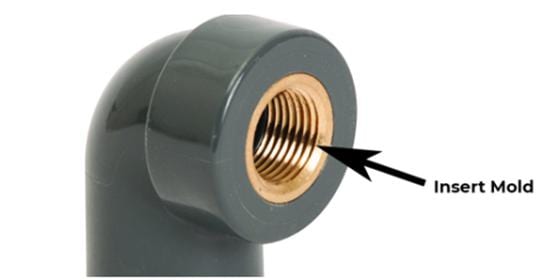
Insert molding molds plastic around a pre-placed insert (usually a metal part like a threaded bushing or terminal). Overmolding molds a second material over an already-molded plastic part (typically a soft TPE grip over a rigid base). Both create a single integrated part in the mold — insert molding adds a non-plastic component; overmolding adds a second plastic layer.
See our rapid tooling & injection molding service, and the guide to overmolding.
Key takeaways
- Insert molding = plastic molded around a pre-placed insert (metal threads, pins, terminals) — one shot.
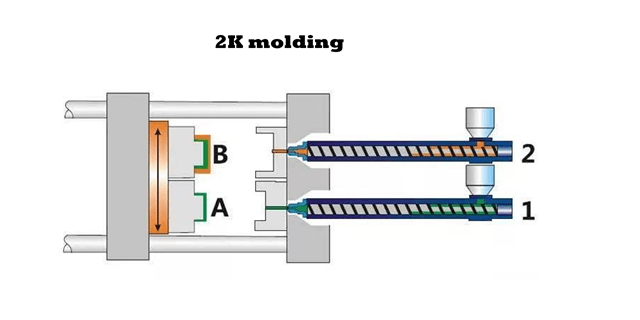
- Overmolding = a second material molded over an existing molded part (e.g. soft-touch grip over rigid handle) — usually two shots.
- Both eliminate assembly and glue, creating a strong, integrated part.
- Overmolding needs material compatibility (bonding) between substrate and overmold; insert molding needs the insert located and retained.
- Have a multi-material part? Get a quote and DFM review.
Insert molding vs overmolding — comparison
| Attribute | Insert molding | Overmolding |
|---|---|---|
| What's added | A pre-made insert (often metal) | A second molded material (usually plastic/TPE) |
| Process | One shot around the placed insert | Usually two shots (substrate, then overmold) |
| Typical use | Threaded bushings, terminals, pins in plastic | Soft grips, seals, 2-color parts |
| Key requirement | Insert located & retained in the mold | Material bond compatibility |
| Benefit | Strong metal-in-plastic features, no post-assembly | Ergonomics, sealing, aesthetics in one part |
Insert molding
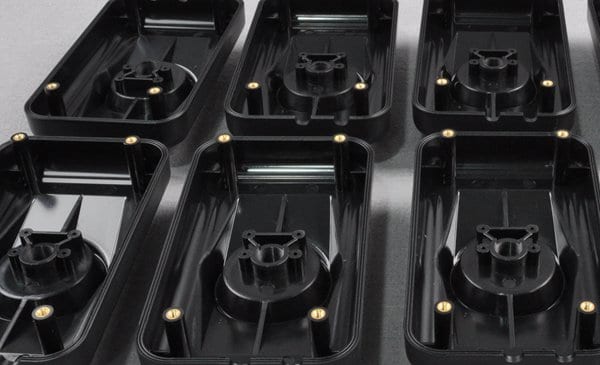
In insert molding, a pre-made component — most often a metal insert such as a threaded bushing, pin, terminal or stud — is placed into the mold, and molten plastic is injected around it to lock it in place. The result is a single part with strong, precise metal features (threads that won't strip, electrical contacts, load-bearing bosses) without any secondary assembly. The insert must be accurately located and retained so it doesn't shift during injection.
Overmolding
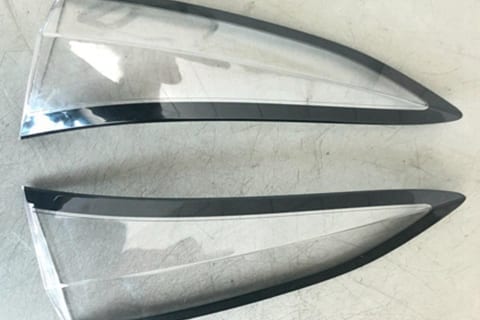
Overmolding molds a second material over an existing (already-molded) substrate. The classic example is a soft thermoplastic elastomer (TPE) grip molded over a rigid plastic handle for comfort and grip; it's also used for seals, 2-color parts and protective layers. It's usually a two-shot process (mold the substrate, then the overmold), and the two materials must be chemically compatible so the overmold bonds to the substrate. See overmolding principles & methods.
How to choose
- Need metal features (threads, contacts) in a plastic part: insert molding.
- Need a soft grip, seal, or second color/material: overmolding.
- Replacing an assembly + fasteners/glue: either — both integrate parts and cut assembly.
Applications
- Insert molding: electronics (terminals/contacts), threaded inserts, automotive connectors, medical devices.
- Overmolding: tool & toothbrush handles, seals/gaskets, wearables, 2-color consumer products.

Frequently asked questions
What is the difference between insert molding and overmolding?
Is overmolding a two-shot process?
What materials are used for overmolding?
Why use insert molding instead of assembling afterward?
Can you overmold onto metal?
Sources & further reading: MatWeb — polymer & elastomer properties · ISO 2768 general tolerances.
Manufacturing next step
Apply this guidance to your part
Continue to the relevant service page for process scope and buyer inputs. If your design is ready, send the current files for engineering review and quotation.
Related manufacturing resources
Continue with the process or project stage most relevant to this topic: