Chromate Conversion Coating (Chem Film / Alodine) Explained
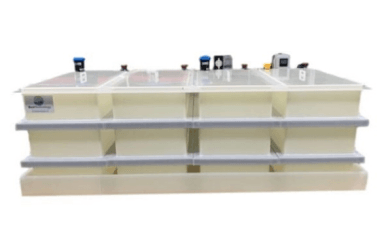
Chromate conversion coating — commonly called chem film, Alodine or Iridite — is a thin chemical coating for aluminum that adds corrosion resistance while staying electrically conductive. It's specified by MIL-DTL-5541, comes clear or gold, and is often used as a paint primer or where a part must be both protected and grounded.
See our parts finishing service and aluminum machining guide, or compare with anodizing.
Key takeaways
- Chromate conversion coating (chem film / Alodine / Iridite) is a very thin conversion layer on aluminum — it barely changes dimensions.
- Unique benefit: it's corrosion-resistant AND electrically conductive (unlike anodizing, which insulates) — ideal for grounding and RF/EMI parts.
- Specified by MIL-DTL-5541: Type I (hexavalent chromium, gold) and Type II (trivalent, RoHS-friendly, clear); classes for corrosion (1A) or conductivity (3).
- Excellent paint/primer base; much cheaper and faster than anodizing but less durable/abrasion-resistant.
- Get chem-film-finished parts with your machining — request a quote.
What is chromate conversion coating?
Chromate conversion coating is applied by immersing or brushing a chemical solution onto aluminum, which reacts with the surface to form a thin protective film (typically well under 1 µm). Because it's a conversion of the surface rather than a deposited layer, it adds essentially no measurable thickness — important for tight-tolerance parts. The brand names Alodine and Iridite are the same process; chem film is the generic aerospace term.
Why use it — corrosion resistance + conductivity
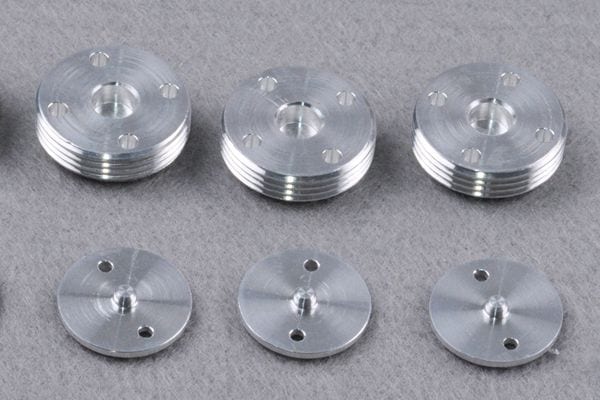
The stand-out property is that chem film protects aluminum from corrosion while remaining electrically conductive. Anodizing, by contrast, forms an insulating oxide. That makes chromate conversion coating the go-to for electrical enclosures, grounding points, RF/EMI housings and any part that must be both corrosion-protected and electrically bonded. It's also an excellent primer base, improving paint adhesion.
MIL-DTL-5541 types and classes
| Designation | Meaning |
|---|---|
| Type I | Hexavalent chromium — gold/yellow, highest corrosion resistance |
| Type II | Trivalent chromium — clear, RoHS/REACH-friendly (no hexavalent Cr) |
| Class 1A | Maximum corrosion protection (and paint base) |
| Class 3 | Low electrical resistance (conductivity) with corrosion protection |
Chem film vs anodizing
Both protect aluminum, but they're different tools. Chem film is thin, cheap, fast, conductive and a great paint base, but soft and less durable. Anodizing is thicker, harder, more wear- and corrosion-resistant, dyeable to colors — but electrically insulating and more expensive. Choose chem film when you need conductivity, low cost, or a primer; choose anodizing when you need hardness, wear resistance or color.
Applications
- Electronics and RF/EMI enclosures, grounding and bonding surfaces
- Aerospace aluminum parts (as a paint primer under MIL specs)
- Low-cost corrosion protection for aluminum brackets and housings

Frequently asked questions
What is chem film / Alodine?
What is the difference between chem film and anodizing?
Is chromate conversion coating conductive?
What is the difference between Type I and Type II chem film?
Does chem film change part dimensions?
Sources & further reading: ASTM International · MatWeb — aluminum properties.
Manufacturing next step
Apply this guidance to your part
Continue to the relevant service page for process scope and buyer inputs. If your design is ready, send the current files for engineering review and quotation.
Related manufacturing resources
Continue with the process or project stage most relevant to this topic: