
Packaging Precision Parts for International Freight

TL;DR
Precision parts should be packed as a controlled system: keep finished faces from touching, immobilise each part, choose corrosion protection that matches the material and transit environment, identify every inner pack, and verify the packed quantity before release. A strong outer carton or crate cannot fix a part that can move, rub, retain moisture or be mixed with a similar SKU inside.
- Impact and scratching: separate and immobilise parts before adding outer protection.
- Corrosion: protect clean, dry surfaces with a material- and route-appropriate plan.
- Wrong parts: use a pack list and labels that reconcile inner packs to the order.
International freight adds handling, vibration, humidity changes and several hand-offs to a precision part. The aim of packaging is not to make a box look robust; it is to preserve the part's specified condition and identity until the receiving inspection is complete. This guide is for buyers and engineers who want packaging requirements written into the RFQ before production release.
Packaging is part of quality planning. Sendot's quality assurance process starts with reviewing project requirements and controls inspection through final release. Include packaging, labelling, documentation and destination requirements in that review instead of treating them as a last-minute freight request.
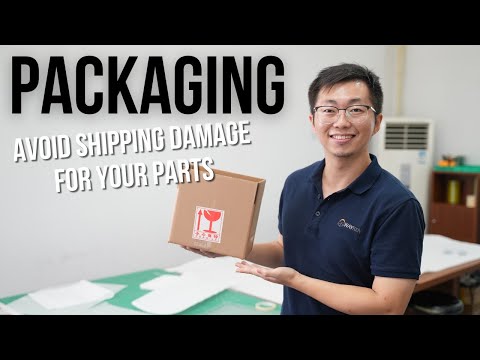
The four packaging failures to design out
| Failure mode | Why it happens | Control to specify | Receiving check |
|---|---|---|---|
| Scratches, dents or edge damage | Parts contact each other or move inside the inner pack. | Individual separation, edge protection or formed restraint suited to the geometry. | Inspect cosmetic and critical sealing/locating faces before moving parts to stock. |
| Corrosion or staining | Moisture, residues or incompatible packing materials remain against a susceptible surface. | Clean-and-dry release, corrosion-control method agreed for material, finish and transport environment. | Check sealed packs and exposed surfaces at opening; record any condition issue immediately. |
| Loose or mixed parts | Inner packs lack a count, part number or revision identity. | Label each inner pack and reconcile it to the packing list and purchase order. | Count and identify by inner pack before commingling inventory. |
| Outer-pack damage | The carton, pallet or crate is not matched to mass, geometry and handling method. | Specify gross weight, stacking/handling needs and outer-pack acceptance criteria. | Photograph visible external damage before unloading or disposal. |
The correct solution changes with the part. A polished aluminium housing, a ground steel shaft, a coated casting and a bag of non-cosmetic fasteners do not have the same contact, corrosion or identification risks. Start from the drawing and acceptance criteria rather than choosing a universal packaging material.
1. Prevent contact damage before you think about the outer box
Precision parts are often damaged after a good final inspection because adjacent pieces rub during vibration or a heavy part shifts into a thin feature. Protect the features that matter: cosmetic faces, threads, sealing lands, bearing bores, sharp edges, pins and datum surfaces. The objective is controlled separation and restraint, not excessive filler.
- Use individual compartments, separators or wraps where one part can mark another.
- Use geometry-matched restraint for heavy, delicate or irregular parts so the part cannot gain momentum inside the pack.
- Protect protrusions and edges that could either be damaged or puncture the packaging.
- Keep labels outside the protected surface area; adhesive on a finished surface may become its own quality risk.
2. Build a corrosion-control plan around material, finish and route
Do not promise that a bag, coating or desiccant will make a part corrosion-proof. Corrosion risk depends on the metal and finish, residual moisture or contamination, packing method, storage time and the real distribution environment. The practical control is a documented sequence: release only clean and dry parts, choose an agreed protective method, preserve the integrity of the pack, and define what the receiver should inspect.
For products that use volatile corrosion inhibitor (VCI) materials, the material compatibility and packing method should be agreed with the responsible packaging and corrosion specialists. VCI is a packaging method, not a universal substitute for cleaning, dry packing or a suitable finish. If the shipment uses wood pallets, crates or dunnage, destination rules also matter. For example, USDA APHIS states that regulated wood packaging entering the United States must meet ISPM 15 requirements; confirm the destination's current rule before dispatch.

3. Make every inner pack traceable
Wrong-item shipments are usually an identification failure before they are a freight failure. Similar brackets, left/right variants, revisions and mixed-lot orders need a label that lets the receiver reconcile each pack without guessing. The label should reflect the purchase order and the buyer's receiving system, not a supplier-only shorthand.
At a minimum, agree the part number, revision where applicable, quantity, lot or work-order reference, and any handling or storage instruction that the receiver needs. If you need certificates or inspection reports, ask that the document identifiers are linked to the pack or shipment reference. This makes a receiving discrepancy traceable without claiming that a carton label itself proves conformity.
4. Use the outer pack as a handling system
Cartons, pallets and crates must carry the protected inner packs through handling events without collapse, puncture or uncontrolled movement. The appropriate design depends on mass, centre of gravity, stackability, fork access, mode of transport and the shipper's distribution route. State whether the pack will ship by courier, air or ocean and whether it will be stored before dispatch.
Package testing can help validate a proposed design when the shipment risk justifies it. The International Safe Transit Association explains that its 1-Series procedures are screening tests, while 3-Series procedures simulate general distribution hazards; selecting a procedure should match the actual distribution environment. See ISTA's test-procedure guidance. A successful test programme is evidence for that defined pack and route—not a blanket guarantee against all transit damage.
A packaging specification you can add to an RFQ
- List the protected features. Identify cosmetic faces, threads, bores, seal surfaces, edges and features that must not touch another part.
- State the condition at release. Define cleaning, dryness, finish protection and any buyer-approved material restrictions.
- Define the inner pack. State separation/restraint method, quantity per pack and whether parts may be mixed.
- Define identification. Provide part number, revision, order reference, quantity, lot traceability needs and any document links.
- Define the outer pack and route. Give destination, transport mode, handling limits, pallet/crate requirements and required wood-packaging compliance.
- Define the acceptance evidence. Ask for packed photos, a packing list, gross weight and packed dimensions when those are needed for freight planning.
These requirements should appear in the RFQ or purchase order, with any customer packaging standard attached. They give engineering, quality and logistics teams the same definition of "ready to ship." For the transport choice after packing, see our air, ocean and express freight decision guide.
Before shipment: a buyer/supplier release checklist
- Part number, revision, quantity and pack count reconcile to the order.
- Critical and cosmetic surfaces are separated and immobilised.
- Specified cleanliness, dryness and corrosion-control measures are complete.
- Inspection reports, material records or certificates requested by the buyer are linked to the shipment.
- Outer packaging matches the agreed handling and freight method.
- Wood packaging requirements and destination documentation have been checked where applicable.
- Packed dimensions and gross weight are available for the freight quote.
Request packaging requirements with your quote
When you send your drawing through our request-a-quote form, include destination, shipment mode, cosmetic/functional features to protect, quantity per inner pack, labels, and any customer packaging specification. We can review those requirements with the manufacturing and quality requirements so the pack is planned before final inspection—not improvised at collection.
Frequently asked questions
How do you prevent precision parts from scratching in freight?
What is the best packaging for machined metal parts?
Do precision parts need corrosion protection for international shipping?
Do wooden crates and pallets need ISPM 15 marking?
What should be on a precision-parts packaging label?
Manufacturing next step
Apply this guidance to your part
Continue to the relevant service page for process scope and buyer inputs. If your design is ready, send the current files for engineering review and quotation.
Related manufacturing resources
Continue with the process or project stage most relevant to this topic: