Brushing, Graining & Satin Finishes on Metal
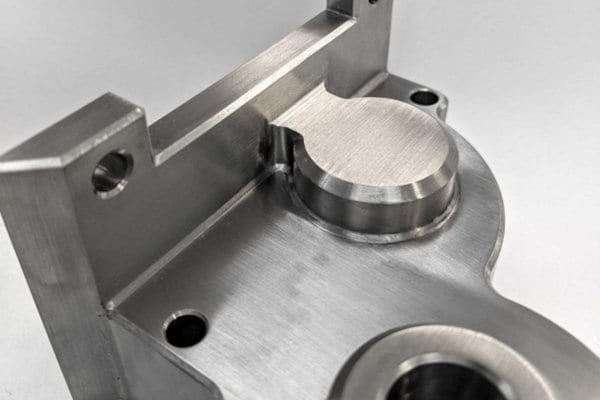
A brushed (grained / satin) finish is a uniform, directional texture of fine parallel lines produced by dragging an abrasive belt or pad across the metal. It's decorative, hides minor scratches and fingerprints, and is common on stainless steel and aluminum — the familiar 'No. 4' finish on appliances and trim.
See our parts finishing service and the surface roughness (Ra) chart.
Key takeaways
- Brushing creates a directional satin texture — fine parallel lines — using abrasive belts/pads (typically 120–320 grit).
- Typical finish is about Ra 0.4–1.6 µm; the grit sets how fine the grain looks.
- It's decorative and practical — hides machining marks, minor scratches and fingerprints better than a bright polish.
- The No. 4 finish is the standard brushed stainless finish (appliances, kitchens, trim).
- Unlike bead blasting, the texture is directional — orientation matters on assemblies. Request a quote.
What is a brushed / satin finish?
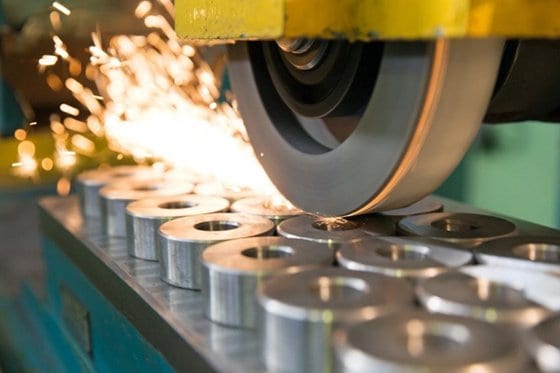
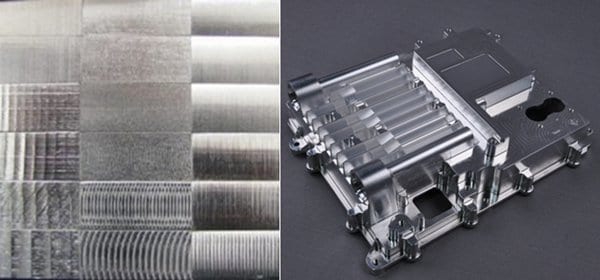
A brushed finish is made by moving an abrasive belt, wheel or non-woven pad across the surface in one direction, leaving a consistent pattern of fine parallel lines (the 'grain'). The result is a soft satin sheen — less reflective than a polish, more refined than a blast. Because the scratches are uniform and directional, they read as an intentional texture and hide minor surface defects.
Grit, grain and Ra
| Finish | Typical grit | Look | Ra |
|---|---|---|---|
| Coarse grain | ~120 grit | Visible lines, matte | ~1.2–1.6 µm |
| Standard satin (No. 4) | ~150–180 grit | Uniform fine grain | ~0.6–1.0 µm |
| Fine satin | ~240–320 grit | Soft, near-smooth sheen | ~0.4–0.6 µm |
The No. 4 finish
On stainless steel, the No. 4 finish is the standard brushed/satin finish — a uniform, directional grain you see on kitchen appliances, elevators, backsplashes and architectural trim. It balances appearance, cleanability and cost, which is why it's the default decorative finish for stainless.
Brushing vs bead blasting
Both give a non-glossy finish, but they differ in character. Bead blasting is a uniform, non-directional matte from all-angle impacts; brushing is a directional grain from one-way abrasion. Choose brushing for a refined, linear decorative look (and where you can control grain direction); choose bead blasting for an even matte that doesn't depend on orientation.
Applications
- Consumer products, appliances and electronics enclosures
- Architectural and decorative stainless and aluminum
- Any part where a refined, scratch-hiding satin look is wanted

Frequently asked questions
What is a brushed metal finish?
What is a No. 4 finish?
What is the difference between brushing and bead blasting?
What Ra does a brushed finish have?
Does grain direction matter?
Sources & further reading: British Stainless Steel Association — finishes · Products Finishing.
Manufacturing next step
Apply this guidance to your part
Continue to the relevant service page for process scope and buyer inputs. If your design is ready, send the current files for engineering review and quotation.
Related manufacturing resources
Continue with the process or project stage most relevant to this topic: