Metal Polishing & Mirror Finishing Explained
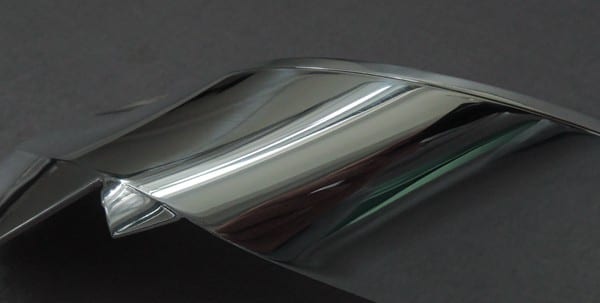
Polishing progressively smooths a metal surface to a bright, low-roughness finish. Mechanical polishing and buffing use finer and finer abrasives; electropolishing removes a thin layer electrochemically for a clean, bright surface; and a full mirror finish reaches about Ra 0.05 µm (ISO grade N1). Here's how each method works and the finish it achieves.
See our parts finishing service and the surface roughness (Ra) chart.
Key takeaways
- Polishing steps down roughness with progressively finer abrasives — from as-machined Ra ~3.2 µm to bright Ra ≤0.4 µm.
- Mirror finish ≈ Ra 0.05 µm (grade N1) — fully reflective, for optical, cosmetic and sealing surfaces.
- Electropolishing removes a thin layer electrochemically — deburrs, brightens, and passivates stainless in one step.
- Vibratory/mass finishing polishes small parts in bulk; buffing gives the final high gloss.
- Finer finishes cost more (more steps) — specify a mirror finish only where needed. Request a quote.
Metal polishing methods
| Method | How it works | Typical Ra | Best for |
|---|---|---|---|
| Mechanical polishing | Progressively finer abrasive belts/wheels | 0.2–0.8 µm | General bright finish |
| Buffing | Cloth wheel + compound (final gloss) | 0.05–0.2 µm | High gloss, mirror |
| Electropolishing | Electrochemical removal of a thin layer | 0.1–0.4 µm | Stainless, deburr + brighten + passivate |
| Vibratory / mass finishing | Parts + media in a vibrating bowl | 0.2–0.8 µm | Small parts in bulk |
| Mirror finishing | Fine mechanical + buffing to full reflect | ~0.05 µm (N1) | Optical, cosmetic, sealing faces |
Mechanical polishing & buffing
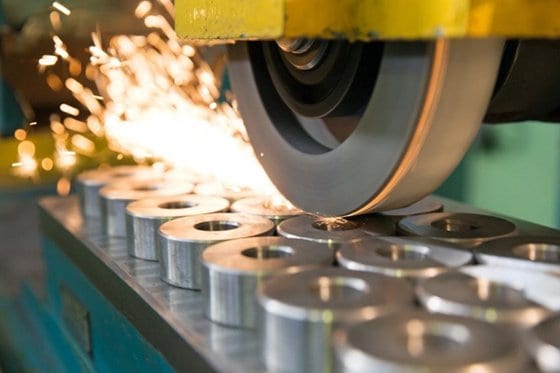
Mechanical polishing removes surface roughness with a sequence of progressively finer abrasives (belts, wheels or pads), each removing the scratches of the previous grit. Buffing is the final step, using a soft cloth wheel and polishing compound to bring the surface to a high gloss. Together they take an as-machined surface down to a bright, low-Ra finish.
Electropolishing
Electropolishing is the reverse of plating: the part is the anode in an electrolyte, and a controlled current dissolves a very thin surface layer, preferentially removing high points. It brightens and smooths the surface, deburrs micro-edges, and — on stainless steel — passivates it in the same step. It's ideal for hygienic and corrosion-critical parts. Compare methods in electropolishing vs mechanical polishing.
Mirror finishing
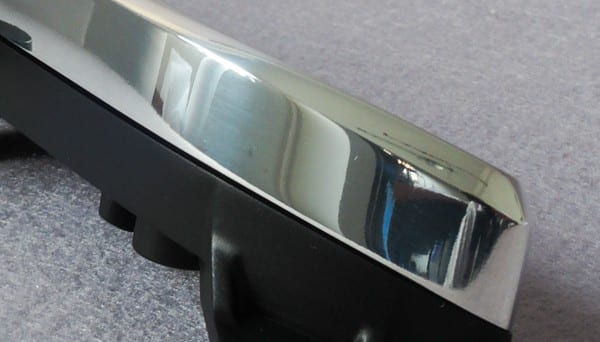
A mirror finish is the smoothest practical surface — around Ra 0.05 µm (ISO grade N1) — fully reflective. It's produced by careful mechanical polishing followed by buffing, and is used where reflectivity, cleanliness, sealing or appearance is critical (optics, molds, medical and decorative parts). Because it takes many steps, it's the most expensive finish — specify it only where the function needs it.
Applications
- Optical and reflective components; mold cavities for glossy molded parts
- Medical, food and pharmaceutical parts (cleanable, corrosion-resistant)
- Decorative and consumer products

Frequently asked questions
What Ra is a mirror finish?
What is the difference between polishing and electropolishing?
How smooth can polishing make a metal surface?
Is electropolishing better than mechanical polishing for stainless steel?
Does polishing remove much material?
Sources & further reading: Products Finishing — polishing reference · ISO 1302 surface texture indication.
Manufacturing next step
Apply this guidance to your part
Continue to the relevant service page for process scope and buyer inputs. If your design is ready, send the current files for engineering review and quotation.
Related manufacturing resources
Continue with the process or project stage most relevant to this topic: