Bead Blasting, Sandblasting & Media Finishing Guide
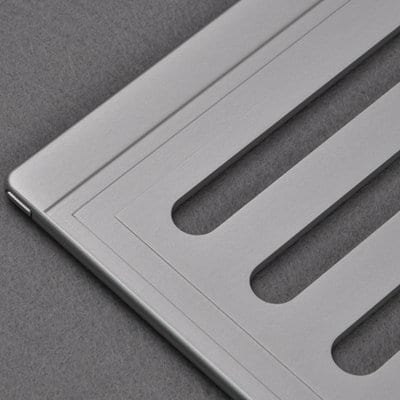
Blasting propels an abrasive media at a part to clean it, deburr it, and leave a uniform matte texture. Bead blasting (glass beads) gives a smooth, even satin-matte finish; sandblasting (angular grit like aluminum oxide) cuts faster and rougher; and media finishing (tumbling) deburrs and finishes small parts in batches. Here's how to choose.
See our parts finishing service and the surface roughness (Ra) chart.
Key takeaways
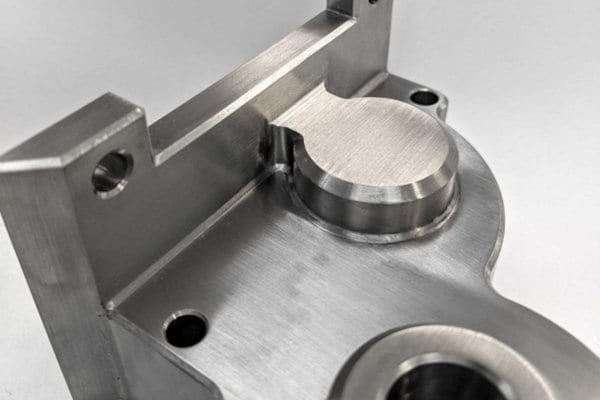
- Bead blasting (glass beads) = uniform, non-directional matte/satin finish, gentle, no dimensional change to speak of.
- Sandblasting (angular aluminum oxide / sand) = faster, rougher, more aggressive — cleaning, stripping, heavy texture.
- Blasting typically leaves Ra ~1–3 µm matte; media/grit size tunes the texture.
- Media finishing (tumbling/vibratory) deburrs and finishes small parts in bulk.
- It's mainly a texture/cleaning step — often a base before anodizing, painting or plating. Request a quote.
How blasting works
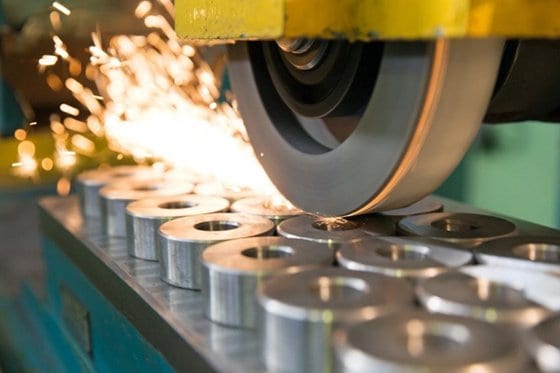
Compressed air (or a wheel) accelerates an abrasive media against the part surface. The impacts remove contaminants, burrs and machining marks and leave a uniform, non-directional matte texture. Unlike directional brushing, blasting hits from all angles, so it evens out the whole surface — which is why it's a popular cosmetic finish and a common pre-treatment before anodizing or paint.
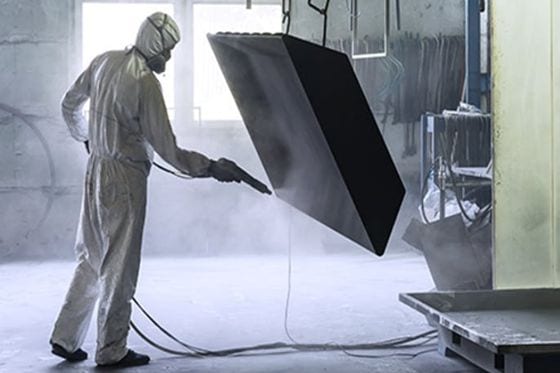
Blasting media compared
| Media | Effect / texture | Typical Ra | Best for |
|---|---|---|---|
| Glass beads | Smooth satin-matte, gentle | ~1–2 µm | Cosmetic matte finish, pre-anodize |
| Aluminum oxide (sand) | Rougher, aggressive, fast cutting | ~2–4 µm | Cleaning, stripping, heavy texture, tooth for coating |
| Ceramic beads | Fine, durable, consistent matte | ~1–2 µm | Repeatable cosmetic finish |
| Plastic / walnut | Very gentle, non-abrasive | Minimal | Deflashing, cleaning delicate parts |
Bead blasting vs sandblasting
Bead blasting uses spherical glass or ceramic beads that peen the surface to a smooth, uniform satin-matte without cutting much material — ideal as a cosmetic finish and the standard pre-treatment before anodizing. Sandblasting uses angular grit (commonly aluminum oxide) that cuts faster and leaves a coarser, more aggressive texture — better for stripping, cleaning, and creating tooth for a coating to grip.
Media finishing (tumbling & vibratory)
For small parts in quantity, media finishing tumbles or vibrates the parts with abrasive media in a bowl or barrel. It deburrs edges, removes machining marks and produces a consistent finish across a whole batch at once — efficient for high-volume small components.
Applications
- Uniform matte cosmetic finish on aluminum and steel parts
- Pre-treatment (surface prep) before anodizing, painting or plating
- Deburring and cleaning of machined and cast parts

Frequently asked questions
What is the difference between bead blasting and sandblasting?
Does bead blasting change part dimensions?
What surface finish does bead blasting produce?
Is bead blasting done before anodizing?
Can you bead blast plastic parts?
Sources & further reading: Products Finishing — blasting reference · ISO 8501 surface preparation.
Manufacturing next step
Apply this guidance to your part
Continue to the relevant service page for process scope and buyer inputs. If your design is ready, send the current files for engineering review and quotation.
Related manufacturing resources
Continue with the process or project stage most relevant to this topic: