
Vacuum Casting
Vacuum casting is a prototype manufacturing process that uses silicone molds to quickly create urethane casting parts for the production of small batches of functional parts.
What is Vacuum Casting?
Vacuum casting (also known as urethane casting) is an economical alternative to low-volume injection molding of plastic parts and can be used to closely simulate final molded parts or finished products. Generally, molds are made from silicone rubber and use CNC machining or SLA part as a master pattern. These molds duplicate intricate details and textures and give consistent finishes from one part to the next.
You can get production-like results including mechanical traits, wall thickness, colors, and surface finishes.
Advantages of Vacuum Casting
Cast urethane parts are made of cheap molds, eliminating the need to invest in expensive and time-consuming metal tooling. It is a cost effective method for making high quality prototypes and low volumes of parts.
Up to 50 functional cast urethane parts can be produced in 10 to 15 days when you choose vacuum casting.
Casting resins materials range from soft and flexible to rigid and impact-resistant, as well as colored and clear.
Vacuum casting provides end-use parts of high precision and fine details with production-level quality.
Urethane casting can provide better surface textures compared with CNC prototyping or 3D printing.
Vacuum Casting Service
Fast Short-Run Production Option For Low Volume Plastic Prototype Parts
Use silicone tooling and production-like urethane materials to bridge the gap between prototype validation and low-volume manufacturing.
Instant Quotes On Vacuum Casting ServiceHow Vacuum Casting Works
The vacuum casting process has three steps: master pattern, molding, and casting.
Step 1. Master Pattern Making
The quality of the casting urethane parts is determined by the quality of the master pattern, which is best machined by CNC when you need to hold tight tolerance, glossy finish, or even optically clear. In addition, we also will consider making the master by SLA for those parts with more complex shapes and structures.
We can paint parts surface for texture or satin effect to simulate the final mold texture of the product. The silicone molds will copy the details and textures from the original master, so the cast urethane parts will come out the same as the master model without any extra finish on the surface.
Step 2. Silicone Mold Making
Casting molds are made from liquid silicone resin, also known as RTV molds. The chemical stability, self-releasing properties and flexibility of silicone rubber are excellent in that it gives minimal shrinkage and carries fine details effectively from master to mold.
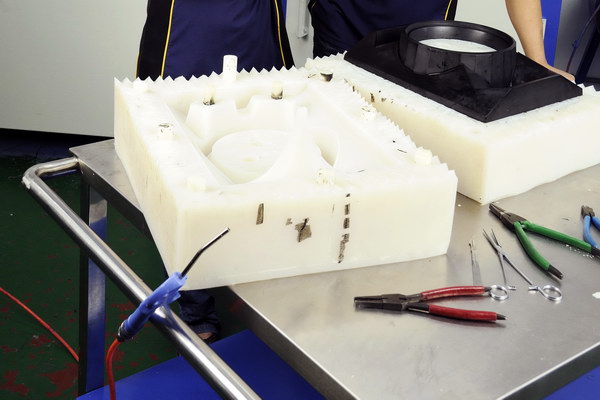
- Paste tape in a flat position around the master, so that it is easy to open the mold later, which will also become the parting surface of the final mold.
- The master model is suspended in a casting box and placed with plastic rods to set gates and vents.
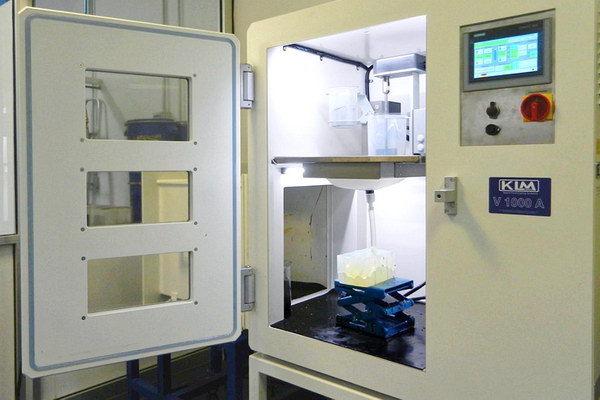
- Liquid silicone is poured around the master and all air is removed in a vacuum chamber. The mold is cured in an oven at 40C and generally takes 8-16 hours depending on the mold volume.
- Once the silicone rubber is cured, cut open the casting box and remove the master model from the silicone to form an empty cavity.
Step 3. Casting Process
Sendot Technology standardized operational procedures assure accurate part replication and consistent mechanical properties. Our vacuum casting technicians control mixing, de-gassing, stirring, preheating, casting and de-molding to create near-perfect copies of the master pattern.
- First, put the silicone mold into the oven and preheat it to 60-70C.
- Choose a suitable release agent before closing the mold and use it correctly to avoid stickiness and surface defects.
- Prepare the polyurethane resins by preheating them to about 40C. Mix the two-component casting resins in exact proportions, then fully stir and degas for 50-60 seconds under vacuum to avoid bubbles.
- The resin is poured into the mold inside the vacuum chamber under computer control and cured again in the oven. Average cure time: 1-3 hours for small parts and 3-6 hours for big parts.
- Remove the casting part from the silicone mold after curing and repeat the vacuum casting cycle.
Vacuum Casting Materials
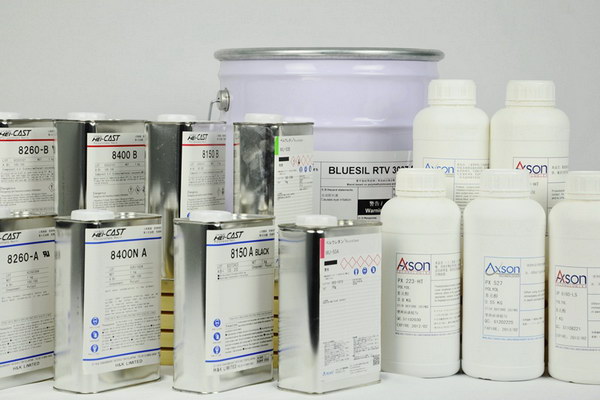
Urethane resins are polymers with a wide range of properties and use. Sendot Technology offers various urethane materials to meet your applications, including Hei-Cast from Japan and Axson from France.
Materials with certain properties are similar to engineering production plastics, such as ABS, PMMA, PC, PP and PA. Casting parts can be varied from transparent, translucent to colored, and from soft rubber to hard plastic. Various materials include impact-resistant, high-temperature resistant (120C) or fire-resistant (UL94-V0), glass-filled resins, and different hardness silicone.
Technical Guide for Vacuum Casting
Standard accuracy
Standard tolerance on +/-0.15mm/100mm, with the highest precision able to reach +/-0.05mm.
Maximum part dimensions
The vacuum equipment can hold mold specifications up to 2.0m x 1.2m x 1.0m.
Minimum wall thickness
The minimum wall thickness is 0.5mm. The best range is 1.5mm-2.5mm to ensure the mold is filled properly.
Lifetime of the silicone mold
Typical quantities are up to 20-25 copies per mold. For clear or complex parts, one mold may only make 12 or even 10 casting parts.
Standard lead time
Up to 50 copies can be produced in 7 to 10 days, depending on the mold complexity and production volume.
Surface textures and other functions
Colored, textured, painted, coated, clear polished, insert and over-molding options are all supported.
Vacuum Casting Samples
 Cast urethane
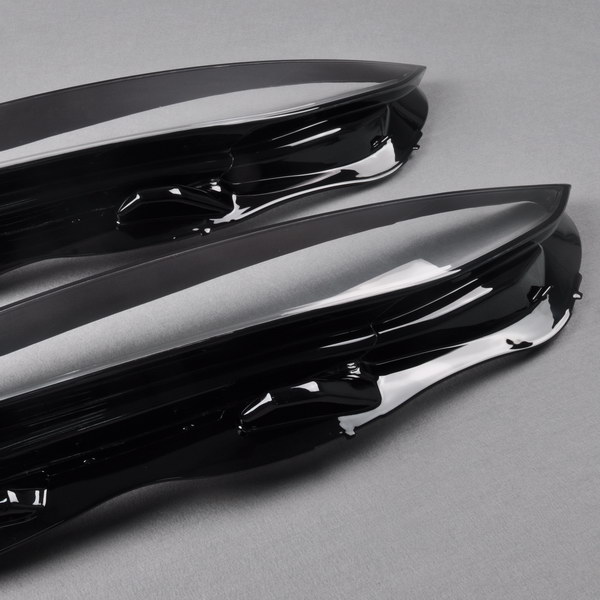
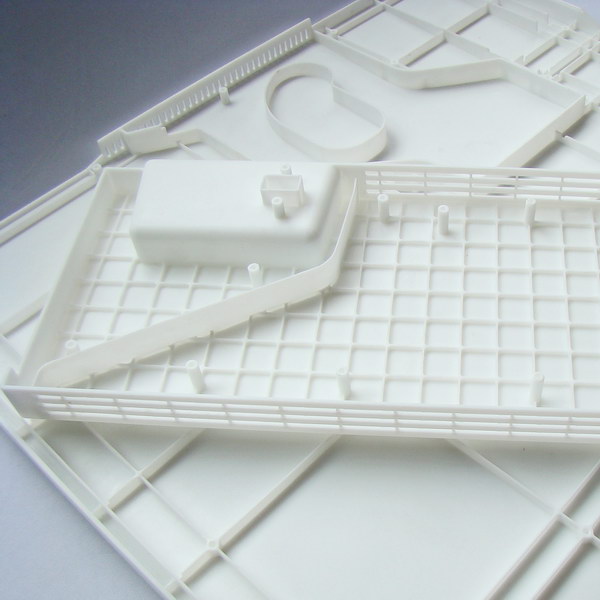 Casting polyurethane
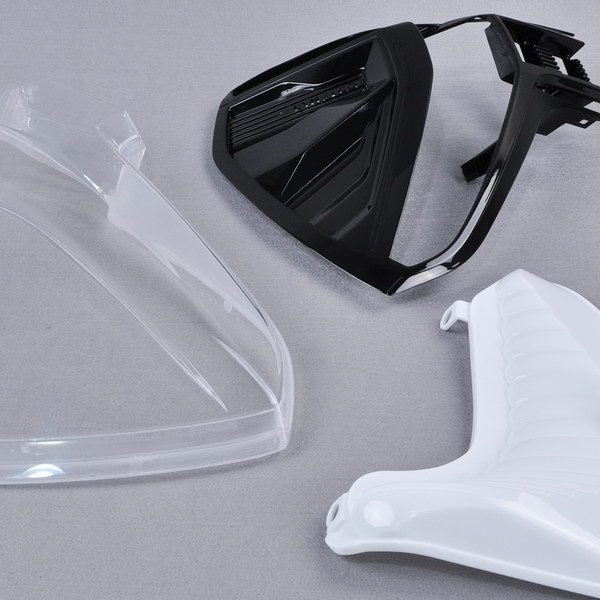 Casting parts
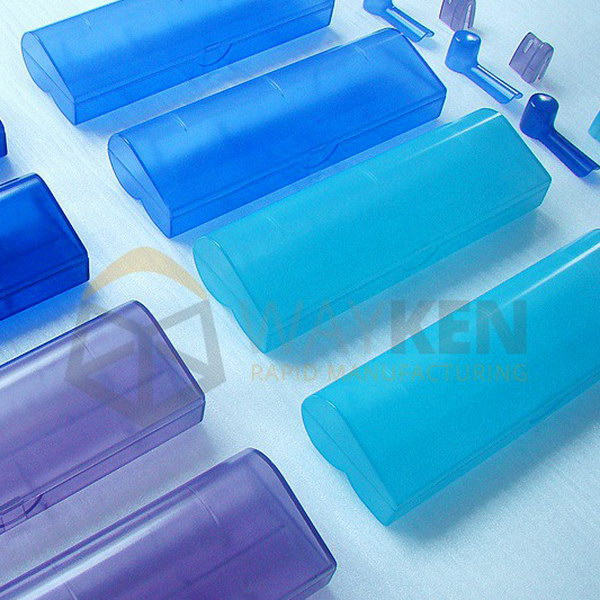 Small series of plastic prototype parts
The Applications of Vacuum Casting
Vacuum casting is a great method to manufacture low-volume production runs for functional prototypes and plastic parts and helps you strike the right balance between high-quality, end-use parts and production lead-time.
Low Volume Manufacturing / Short Production Runs
The urethane casting is perfect for high-quality plastic prototypes. When volumes do not justify investment in injection molding and short-run production parts, it can complete weeks before production tooling is ready. Our advanced rapid prototyping manufacturing services help you create custom and complex production parts in low volumes faster than traditional tooling and molding.
Aesthetic Models / Color & Texture Studies
The casting urethane part can be a full set aesthetic model with various colors, textures and surface finishes under the same design idea. If you have no idea which color is most suitable for a final product, you can make a silicone mold to produce 10-15 castings and paint each cast part with different design colors and textures for internal review.
Engineering Verification / Functional Testing
The vacuum casting process and relatively inexpensive tooling involved make it easy and economical for engineering verification and design changes. These parts can be used to perform functional testing before mass production and help support reports or certification approval.
Marketing Ready / Display Models
End-user functionality and a high-quality finish make urethane cast parts ideal for consumer testing and user evaluation. At trade shows or exhibitions, several modeled pieces can be displayed to clients, and the same parts are also useful for photography, brochures and official website promotion.
How Vacuum Casting Benefits Your Project
We’d like to hear about your projects and see how we can help.
Start Your Project With A Free Quote