
Finishing Services
Sendot Technology provides a variety of finishing services that can be tailored to meet the specifications of your product design.
Our Parts Finishing Capabilities
Whether it is CNC machined, urethane cast, or 3D printed parts, to gain an accurate appearance of your final product, the prototype must undergo a rigorous post finishing process before it can be truly brought to life.
Sendot Technology provides an integrated parts finishing service to meet diverse needs. With experienced in-house skills and advanced facilities, we work to control color, texture, gloss, and surface finish to match the design intent.
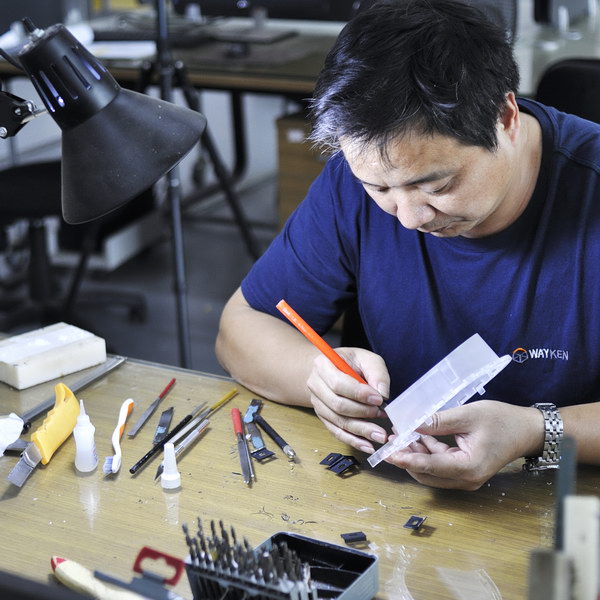
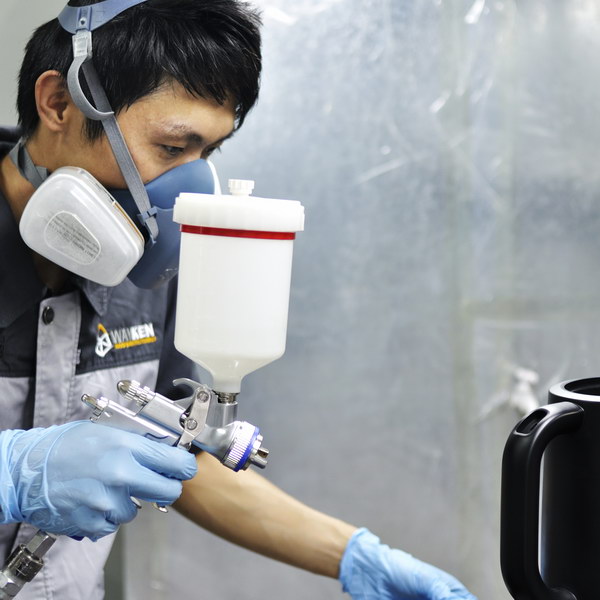
Choose the Right Post Finishing for Your Prototype Parts
Sendot Technology’s in-house prototype processing can provide hand-finishing, sanding, blasting, polishing, painting, and printing. We also offer specialty surface finishing such as laser etching, anodizing, powder coating, metal plating, vacuum metalizing, chromate, chemical finishing, passivation, and heat treatments.
Common Post Processing
Contact us to learn more about how Sendot Technology can help you with the parts finishing processes outlined below.
Sanding and Polishing
Sanding removes machining marks, burrs, machine lines, and adhesive marks. High polishing creates mirror finishes on plastic, metal, acrylic and polycarbonate parts, or improves the optical clarity of clear parts.
Sanded to 600 grit surface finish is about Ra 0.8 μm; sanded to 1000 grit is about Ra 0.4 μm; mirror polished and clear polished surface finish is around Ra 0.1-0.05 μm.
Hand Finishing
From de-flashing to gluing, filling, modifying, adding inserts, pre-fitting, measuring, and assembling, our handcraft specialists focus on every engineering detail and design specification.
These steps often reveal engineering hurdles that are not apparent in CAD design. We help solve them and turn the part into a finished project.
Machined Finish
Machined parts will have marks that follow the path of the cutting tool. This finish is smooth and quick to deliver because it requires minimal extra handwork after machining.
Standard machined roughness is Ra 3.2-1.6 μm; smooth machined finish is Ra 1.6-0.8 μm; super-finished surface roughness is Ra 0.8-0.2 μm.
Blasting
Bead blasting creates a uniform matte finish, removes tool and sanding marks, and can also roughen or clean the surface. Glass beads typically range from #80 to #220 depending on the result required.
Painting
We use Pantone and RAL color systems to match custom colors or paint samples. Matte, flat, semi-gloss, gloss, satin, Mold-Tech-like textures, soft-touch coatings, UV protection and EMI shielding are all available.
Integrated Surface Finish Support
Match appearance, feel and function before you commit to production.
Finishing choices change how a prototype looks, feels, resists wear and communicates quality. We help choose the right route based on cosmetic targets and functional requirements.