
Product Background
With the rapid growth of the global electric vehicle (EV) market, integrated vehicle systems have become key to improving performance and efficiency. The air conditioning system not only cools the cabin but also directly affects overall energy consumption and driving range. In this system, the design and manufacturing of the refrigerant flow plate are critical for thermal efficiency and reliability. As the EV market continues to expand, the demand for high-performance, lightweight, and airtight flow plates is increasing.
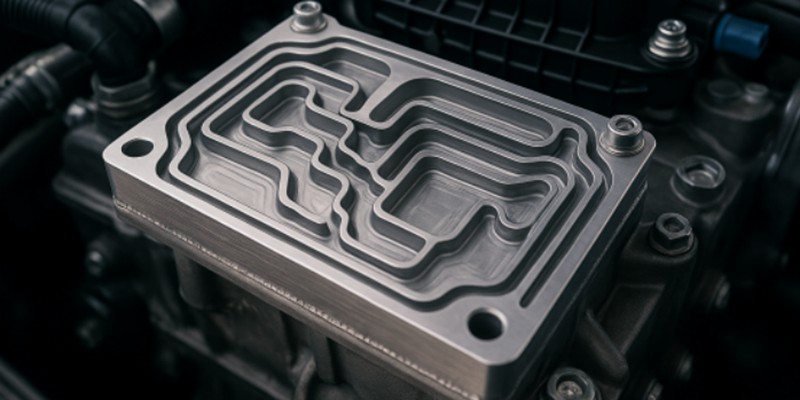
However, the complex geometry of flow plates presents manufacturing challenges: thin multi-layer channels, high-airtight welding, and precise interfaces for assembly. Sendot Technology addressed this by combining CNC precision machining with friction stir welding (FSW). Optimized machining paths, accurate clamping, and controlled welding ensured high-precision, strong, and airtight flow plates, supporting energy-efficient, lightweight EV designs.
Analysis of Flow Plate Structure and Performance Requirements
Key structural features and performance demands define manufacturability and system efficiency.
Structure Analysis
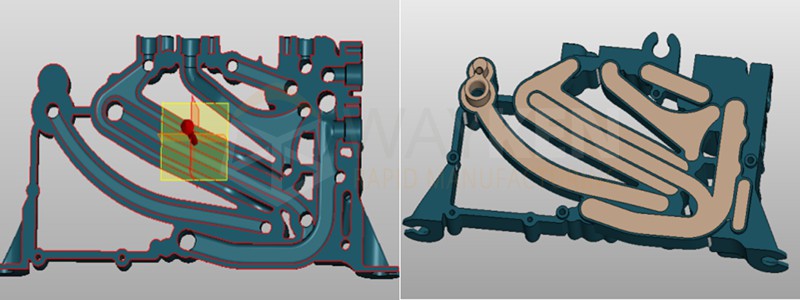
The flow plate in an automotive air conditioning system integrates multiple independent refrigerant channels with complex, overlapping paths. These channels are distributed at varying depths and orientations, with some forming interleaved “upper” and “lower” layers.
Machining the structure from a single solid block would require top-down cutting, which risks damaging upper channels or reducing wall thickness beyond safe limits. To avoid this, a layered machining strategy is adopted. The upper plate (blue surface) and lower plate (brown surface) are machined separately, then welded together to form a complete and sealed internal flow network.
Airtightness Requirements
In EV air conditioning systems, any refrigerant leakage from the flow plate directly impacts cooling efficiency and overall energy consumption, making airtightness a critical requirement.
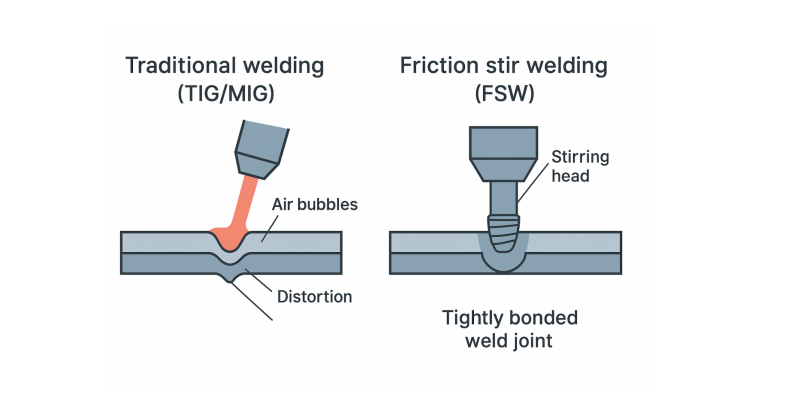
However, the thin-walled, multi-layer design presents challenges for conventional welding or assembly methods, which often struggle to achieve both dimensional accuracy and reliable sealing. Friction Stir Welding (FSW), with its low thermal distortion, high joint strength, and excellent sealing performance, is therefore adopted as the key process to ensure airtight integrity.
Machining Precision Analysis
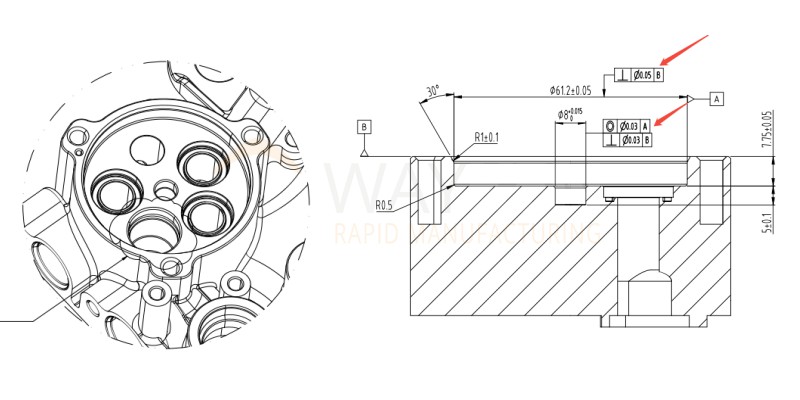
The flow plate must ensure not only airtightness but also precise assembly with other air conditioning system components. The geometry, hole positions, and critical interface dimensions directly influence assembly accuracy and overall system performance.
For example, the mounting features for the five-way valve require hole perpendicularity and coaxiality to be controlled within 0.03 mm. Such tight tolerances place high demands on machining stability, toolpath strategy, and fixturing accuracy. These precision requirements must be fully considered throughout the machining process to ensure consistent quality and reliable downstream welding performance.
CNC & FSW Integrated Manufacturing for Complex Flow Plates
To meet the dual challenges of high airtightness and tight precision in complex flow plate structures, Sendot Technology customized an innovative process combining CNC precision machining with friction stir welding (FSW). Using a staged, closed-loop approach, this method achieves high-precision and highly sealed flow plates.
CNC Rough Machining
Before machining, sealing tests were planned for both semi-finished and finished parts. Critical sealing areas and acceptance criteria were clearly defined to guide subsequent operations.
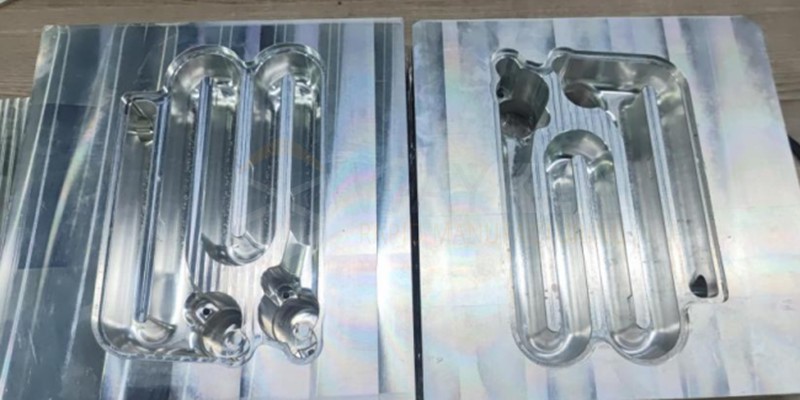
CNC rough machining was then performed to remove excess material, followed by secondary roughing to relieve internal stress while forming the channel structures of the upper and lower plates. Machining allowances were intentionally retained at key holes and installation interfaces to reduce the impact of welding on final precision.
Friction Stir Welding (FSW)
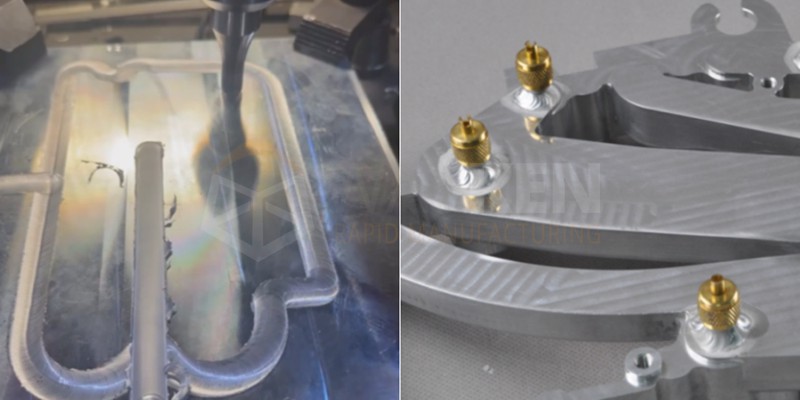
After separate machining, the upper and lower plates were joined using FSW to form a complete flow plate. The rotating tool generates frictional heat, enabling solid-state material flow that minimizes distortion while delivering high joint strength and excellent sealing performance.
Post-weld flatness was controlled within 0.3 mm, and design optimizations were implemented to further improve weld quality. The resulting welds are free from porosity and cracks, with minimal deformation, meeting both mechanical strength and airtightness requirements.
CNC Fine Machining
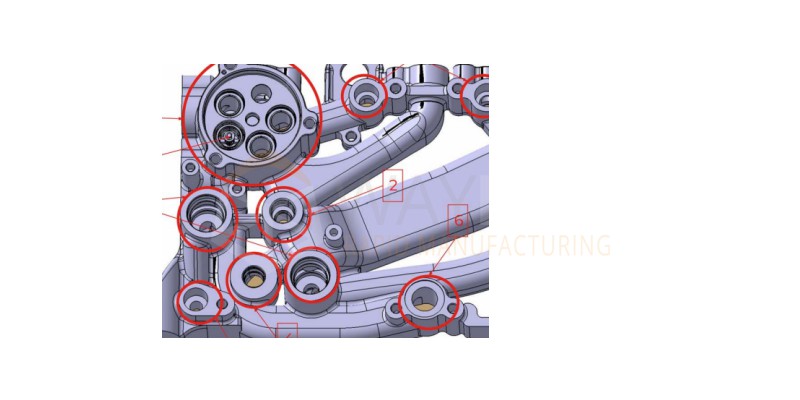
Following welding, precision machining was applied to critical holes and interfaces to ensure accurate assembly with the vehicle air conditioning system.
During welding, these features were protected to prevent debris contamination. Final machining was then carried out to achieve the required tolerances and ensure interface accuracy.
Multiple Airtightness Tests
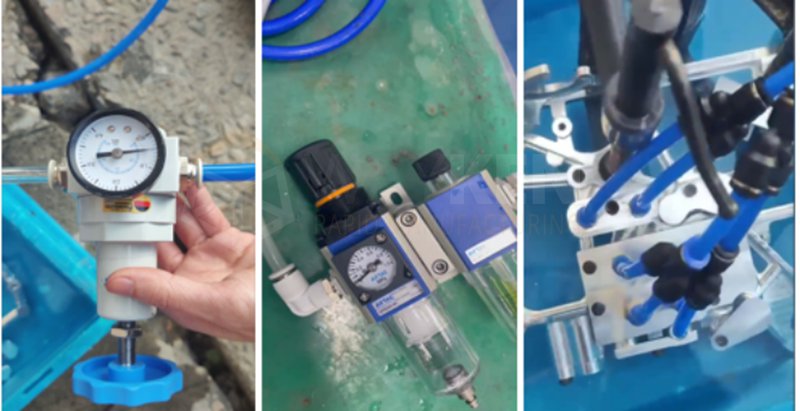
A multi-stage sealing verification strategy was implemented to ensure product reliability:
- Post-weld testing: Verifies weld integrity and sealing performance of welded zones
- Post-fine machining testing: Confirms airtightness is maintained after precision machining of critical features
- Final testing: Validates the complete sealed flow network, ensuring welds, base material, and interfaces meet design requirements under actual working conditions
This layered verification approach ensures consistent airtight performance throughout the entire manufacturing process.
Project Result
By addressing thin multi-layer channels, precision interfaces, and airtightness, Sendot Technology delivered high-precision, structurally robust, and fully sealed flow plates. Optimized processes minimized distortion, while multiple airtightness tests verified stable performance under real operating conditions.
We combine CNC precision machining with Friction Stir Welding to manufacture complex, thin-walled components with tight tolerances and reliable sealing. Our integrated process control, fixturing expertise, and validation methods ensure consistent quality from prototype to production.