
3D Printing Services
Professional rapid prototyping 3D printing service, whether it is accurate SLA 3D printing or durable SLS 3D printing, you can perfectly realize your design without any restrictions.
What is 3D Printing Prototype?
3D Printing is a broad term used to describe additive manufacturing, which includes a series of rapid prototyping technologies that combine multiple layers of materials to create parts.
Rapid prototyping 3D printing is the quick, easy and cost-effective way to turn great ideas into successful products. These 3D printing prototypes help verify the design, reveal issues early and feed directly into design fixes before the product enters full production.
Why Choose Sendot Technology for 3D Printing Service?
Sendot Technology is an expert in rapid prototyping manufacturing in China, providing a wide range of 3D printing services, including SLA 3D printing and SLS 3D printing.
Our dedicated engineers and project managers work with you to verify CAD designs, product functions and dimensional tolerances. We understand prototype and production needs and deliver parts worldwide with quality guarantees at practical lead times.
Shorten Delivery Times
Parts can typically be shipped within a few days, speeding up design iterations and time to market.
Build Complex Geometry
Create unique parts with more complex geometries and precise details without increasing costs.
Reduce Manufacturing Costs
Eliminate tooling and reduce labor, making fast prototype development more affordable.
Ready to Start Making 3D Printed Prototypes?
Upload your 3D files and get a rapid printing quote.
Move from CAD to reviewable hardware fast with SLA or SLS, then transition into machining, casting or molding when the design matures.
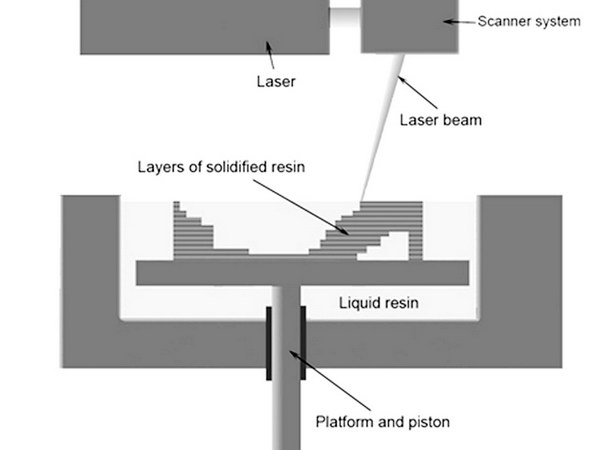
What is SLA 3D Printing?
SLA 3D Printing uses an ultraviolet laser that draws on the surface of liquid thermoset resin to create thousands of thin layers until final parts are formed. A wide selection of materials, extremely high feature resolutions, and quality surface finishes are possible with SLA.
How Does SLA 3D Printing Work?
- Import the 3D model into slicing software and add support structures when needed.
- Send the STL file to the SLA machine with the tank filled with liquid photosensitive resin.
- Lower the build platform into the tank while the UV laser scans the cross-section contour.
- Cure one layer at a time, then lower the platform by 0.05–0.15mm for the next layer.
- Repeat until the full part is built.
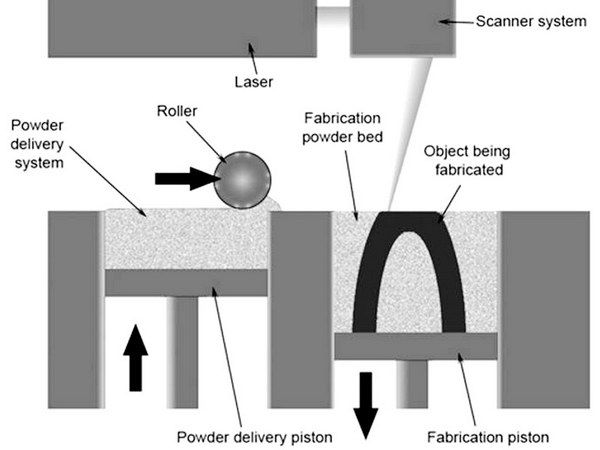
What is SLS 3D Printing?
SLS 3D Printing uses a high power laser that fuses small powder particles layer by layer to produce complex and durable geometric parts. SLS builds robust parts with filled nylon materials suitable for functional prototypes and end-use parts.
How Does SLS 3D Printing Work?
- Disperse powder in a thin layer across the platform inside the build chamber.
- Heat it just below melt temperature and scan the contour with the laser.
- Use unsintered powder to support cavities and overhangs.
- Lower the platform after each layer and spread fresh powder for the next pass.
- Repeat until the entire solid model is complete.
Advantages and Applications of SLA & SLS
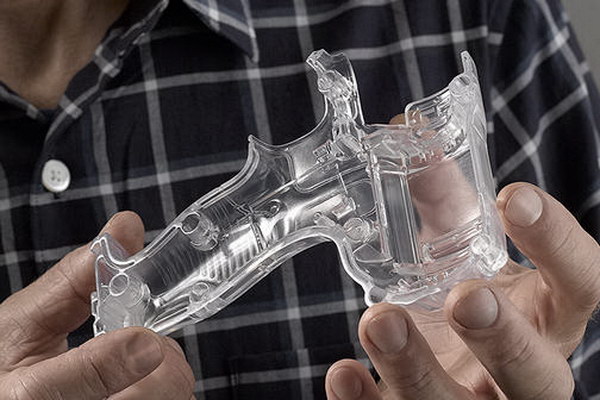
Advantages of SLA 3D Printing
- Lower layer thickness and higher accuracy.
- Complex shapes and precise details.
- Smooth surfaces and post-processing options.
- Various material property options.
Applications of SLA 3D Printing
- Concept Models
- Presentation Prototypes
- Prototyping Clear Parts
- Master Patterns for Silicone Molding
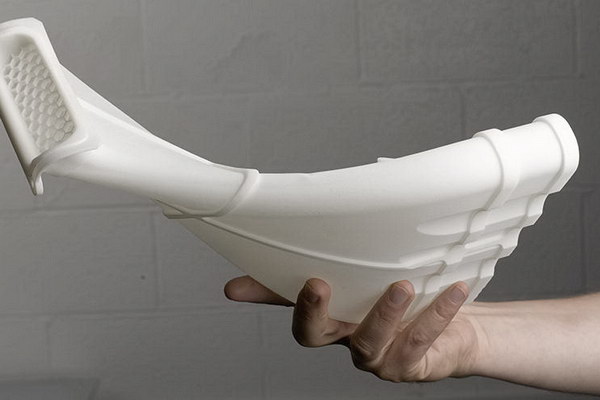
Advantages of SLS 3D Printing
- Engineering-grade thermoplastics such as Nylon, mineral-filled nylon and glass-filled nylon.
- Excellent mechanical properties and layer bonding.
- No support structures, enabling complex geometries.
- Temperature, chemical and abrasion resistance.
Applications of SLS 3D Printing
- Functional Prototypes
- Engineering Test Parts
- End-use Production Parts
- Complex Ducts, Snap Fits and Living Hinges
Ready to Get Started?
Upload your 3D printing files to get a free quote.
Compare the following capabilities of SLA and SLS to choose the right 3D printing service
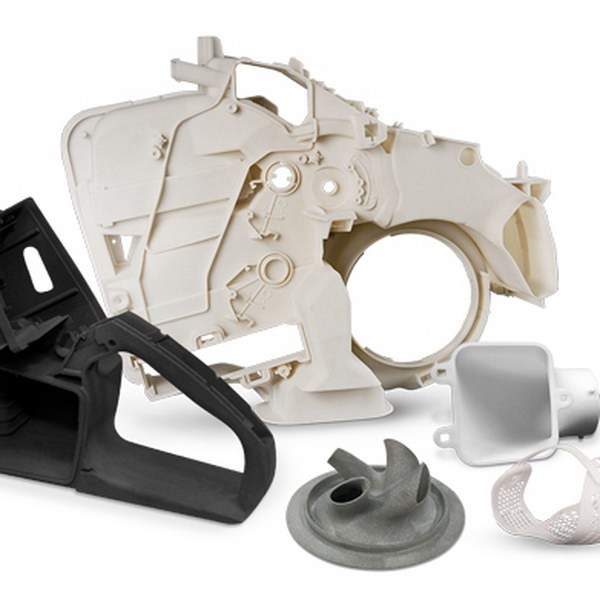
- Material Properties: SLS supports thermoplastic powder materials with better environmental and functional performance, while SLA is focused on photosensitive resin with higher visual fidelity.
- Surface Finish: SLA provides smoother surfaces and clearer detail, while SLS parts are rougher and more porous.
- Glue Bonding Strength: SLS surfaces bond more easily because their pores allow adhesive penetration.
- Master Patterns: SLA is ideal for silicone molding masters because of smooth surfaces and dimensional stability.
- Resistance to the Environment: SLS prototypes behave more like thermoplastics in heat, humidity and chemical exposure.
- Mechanical Processing Performance: SLS parts are easier to mill, drill and tap; SLA parts need more care to avoid breakage.
- Dimensional Accuracy: SLA offers finer resolution and thinner minimum wall thickness, making it the better choice for detailed cosmetic prototypes.
3D Printing vs CNC Machining: Which is right for your prototype and production?
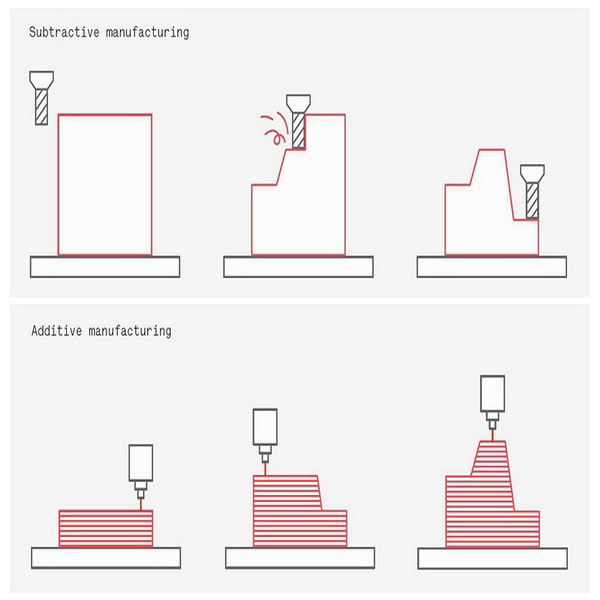
- Subtractive & Additive Manufacturing: 3D printing builds parts layer by layer while CNC machining cuts away material from a blank.
- Materials & Availability: 3D printing minimizes waste, but CNC machining supports a wider range of production-grade plastics and metals.
- Accuracy, Surface Quality & Geometric Complexity: 3D printing excels at complex hollow geometry, while CNC offers tighter tolerances and better finishes for high-performance parts.
- Cost, Quantity & Delivery Time: 3D printing is ideal for low quantities and fast iteration without tooling, while CNC becomes attractive when functionality, finish or larger volumes matter more.