How to Vet an Overseas CNC Supplier: A 12-Point Checklist
TL;DR
Vet an overseas CNC supplier on evidence, not adjectives. Ask for a certificate number you can verify with the accreditation body, a completed FAI report from a previous job, CMM data with the machine and calibration status named, and a written out-of-spec policy. Then buy one paid first-article order before you commit volume. Anything unverifiable is a claim, not a qualification.
- Verify, don't trust: check the certificate number on the accreditation body's database, not the PDF the supplier sent
- Read the scope line: an ISO 9001 certificate covers named activities at a named address — the logo says nothing
- Paid first article: spend 1–3% of programme value before releasing production
- Ask who else touches the part: undisclosed subcontracting of anodising and heat treat is the commonest hidden risk
- Get the failure path in writing: what happens at 4% out of spec decides whether the relationship survives
If you already have three or four candidate shops in your inbox, your problem is not finding a supplier — it is proving which can hold your tolerances, document what they did, and behave predictably when a batch goes wrong. Most "how to choose a machine shop" advice stops at "look for experience and good communication." That is not a test. This is: twelve points, each with the evidence to request and the answer that should make you walk away.
The quick answer: qualification produces artefacts
After a real vetting process you should hold: a certificate number you checked yourself on an accreditation register, one completed FAI report, one CMM output with the equipment identified, a mill certificate, an NDA your lawyer has read, a list of subcontracted operations, and parts you measured yourself.
If your process produced only emails, a brochure and a factory video, you have had a sales conversation — which tells you how a supplier communicates, not whether the parts will be in tolerance. If you are still weighing the offshore decision itself, our comparison of domestic and overseas CNC machining cost covers where landed cost breaks even.
Why the usual criteria fail
Experience, equipment, certifications, price — every item is self-reported, and every serious supplier reports them identically. Ask ten Chinese CNC shops whether they hold ±0.05 mm and ten say yes; some mean "on a 40 mm aluminium feature in one setup," some mean "on every feature of a 300 mm stainless housing." The second failure is weighting capability above behaviour. Capability problems surface in the first two orders and get fixed; behaviour problems — a machine goes down and nobody tells you, a batch ships at 6% marginal — surface in month nine, with your customer waiting. Points 6 to 12 are behaviour tests.
The 12-point checklist
1. Certification scope — read the scope, ignore the logo
Ask for: certificate number, issuing body, the accreditation body behind it, validity dates, and the scope statement. Check the number yourself on IAF CertSearch or a national register such as ANAB or UKAS. The scope names the activities and address covered: "design and manufacture of CNC machined components" at a named site is meaningful; a scope covering trading or assembly at a head office is not a manufacturing quality certificate. Bad answer: a JPEG with the number cropped; a certificate in a parent company's name at another address; "we work to ISO 13485 standards" used to imply certification.
Worked example: Sendot holds ISO 9001 and nothing else — not ISO 13485, IATF 16949 or AS9100. We can supply the documentation those supply chains require from a machining vendor, and status should be confirmed with us directly rather than read off a website. If a candidate is less specific, the vagueness is the finding.
2. Quality documentation — a report, not a template
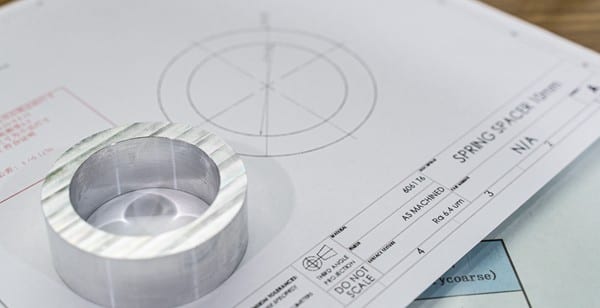
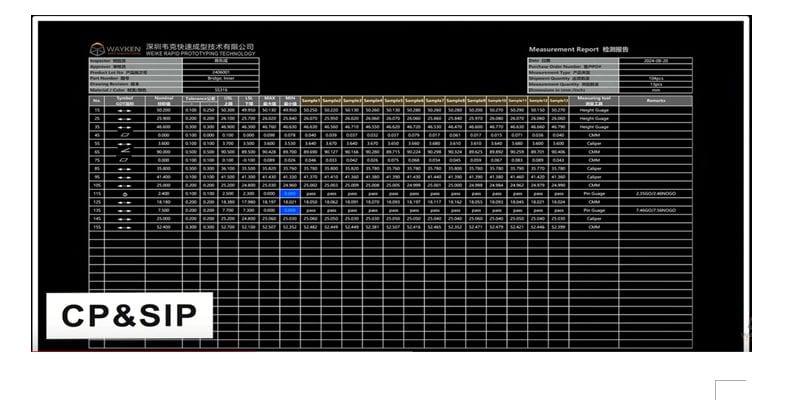
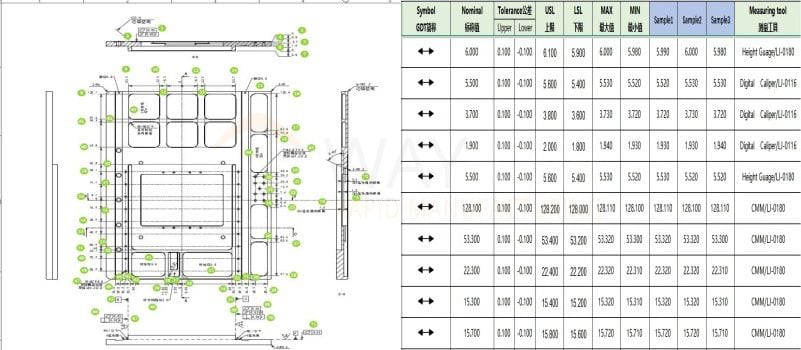
Ask for: a redacted FAI from a comparable job — measured values, ballooned drawing, dispositions, inspector and date. Our inspection and quality documentation shows the equivalent. Bad answer: "we do 100% inspection" with nothing behind it, or every value exactly on nominal across 80 characteristics.
3. CMM data — which machine, and when calibrated
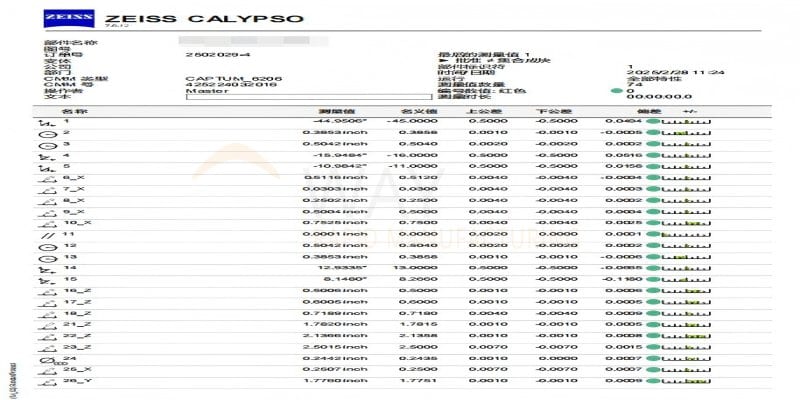
Ask for: a CMM output plus make, model, stated accuracy, and the date of the last calibration — and whether it is traceable to a national standard (NIST explains traceability). Bad answer: "we have CMM" with no model; calipers used for true position callouts; a calibration sticker eleven months expired.
4. Material certificates — trace one back to the mill
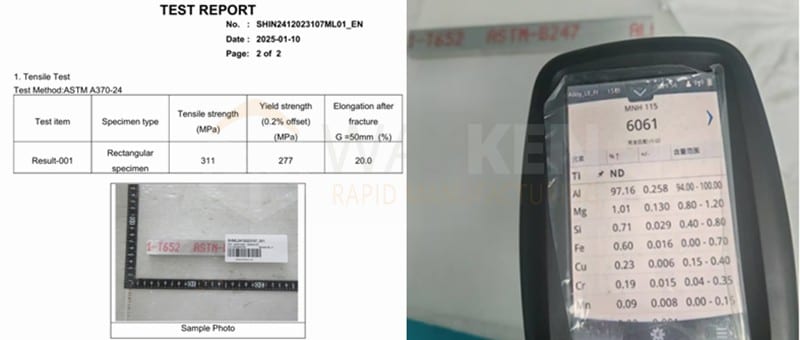
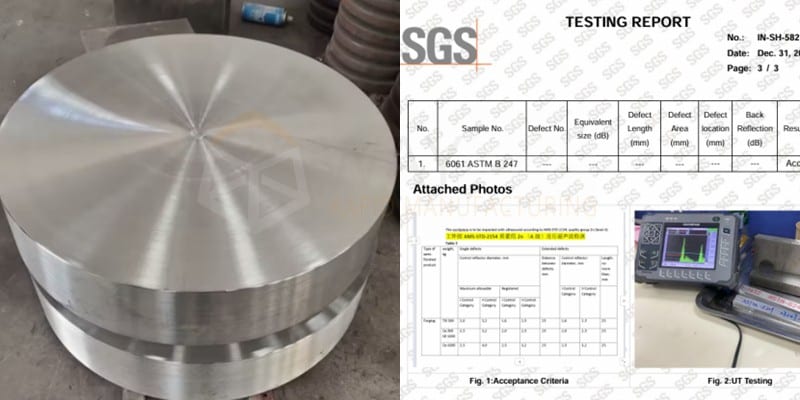
Ask for: a mill certificate (EN 10204 3.1 or equivalent) in your alloy, then ask which purchase order and finished lot it belongs to; real traceability answers in a day. Bad answer: a heat number that also appears on two unrelated jobs, or a certificate for 6061-T6 when the drawing calls for 6061-T651.
5. Capability match — test your worst part
Ask for: a written tolerance commitment on your hardest drawing, feature by feature. A strong supplier returns a DFM markup: this bore holds ±0.02 mm, this 6:1 deep pocket floor is realistically ±0.08 mm, this Ra 0.2 µm callout needs grinding and here is the cost. Our CNC machining capability is 3–5 axis milling and turning to ±0.05 mm and Ra 0.2 µm across 30+ materials with no MOQ. Bad answer: "no problem" on every feature within four hours and no questions about datums — that means nobody engineering-reviewed it.
6. Inspection method — how, not whether
Ask for: the inspection plan — which characteristics are 100% checked, which are sampled and at what AQL, and whether inspection is in-process or only at final. Bad answer: final inspection only — defects then appear after all the value is added, which motivates the supplier to argue about your drawing rather than scrap the lot.
7. Communication test — grade the content
Ask one deliberately hard question: "position tolerance on the four M6 holes references datum B, but datum B is machined in the second setup — how will you control the stack-up?" A twelve-hour reply with a real answer, or an honest "we will check with the machinist," beats a twenty-minute restatement; citing ASME Y14.5 is a useful filter. Bad answer: warm, fluent English that answers a different question. Politeness is trained; engineering judgement is not.
8. IP and NDA handling
Ask for: their standard NDA, then three operational questions — who internally can access your CAD, where files are stored, and whether the NDA binds subcontractors. In the document, look for a definition of confidential information covering drawings and tooling, who owns tooling you paid for, and a governing-law clause you can live with. I am an engineer, not a lawyer: have a qualified lawyer review anything binding (WIPO's trade secrets material is a primer). Bad answer: "we never signed one, but you can trust us," or an NDA that binds only you.
Settle export control here too: if your parts are ITAR-controlled, an overseas supplier is wrong regardless of the other eleven points. Sendot does not accept ITAR or export-controlled work. Check your obligations against the US Directorate of Defense Trade Controls and take advice.
9. A paid first-article order before volume
Always pay for it. A free sample gets the best machinist, a fresh tool and no time pressure — not what your production order will get. A paid first article at roughly 1–3% of programme value, run on the intended process, is the most informative thing you can buy. Measure the parts yourself or use an ISO/IEC 17025 accredited lab; disagreement with their report, even within tolerance, means your measurement systems do not match. Bad answer: resistance to a paid FA, or a sample made by a different process than production.
10. Subcontracting disclosure
Ask which operations are in-house and which are outsourced, by name. Anodising, plating, heat treatment and wire EDM are commonly subcontracted by good shops — that is fine, undisclosed subcontracting is not. Follow up: "how do you qualify that vendor, and what happens if they are full?" Bad answer: "everything is in-house" from a 20-person shop — nobody runs all five in-house at that size.
11. Lead-time honesty
Ask for: the quoted lead time, three months of on-time delivery data, and current machine loading — then "what would have to go wrong for this date to slip, and when would you tell me?" Calibrate: samples in 3–5 working days and simple sheet metal parts in 3–7 working days are realistic, as is quoting within 12 hours of receiving CAD. Bad answer: a lead time that never varies with quantity, and no delay-notification protocol.
12. Out-of-spec policy, and references
Get in writing, before the first order: who pays for re-work and return freight, the replacement timeline, whether deviation requests are accepted, and what happens if the failure is found at your customer rather than your dock. The discipline behind AIAG's PPAP and 8D is a fair benchmark outside automotive.
References: ask for two customers in your region and, more usefully, one who has had a quality problem with them. Bad answer: "this has never happened." It has happened to everyone.
Claim, verification, failure signal
| Supplier claim | Evidence to request | How to verify | Bad answer signal |
|---|---|---|---|
| ISO 9001 certified | Number, body, scope line, dates | Search the number on IAF CertSearch | Cropped number; scope covers trading, not manufacturing |
| CMM equipped | Make, model, accuracy, calibration date | Look up the published accuracy spec | No model named; expired calibration; calipers for GD&T |
| Material traceability | Mill certificate tied to a PO and lot | Cross-check heat numbers across two jobs | Same heat number on unrelated orders |
| Holds ±0.05 mm | Feature-by-feature commitment | Measure the first-article parts yourself | "No problem" everywhere, no datum questions |
A vetting sequence you can run in three weeks
- Day 1 — send an identical RFQ package to 4–5 shortlisted suppliers. STEP file, dimensioned drawing, quantity, material and temper, finish, inspection expectations.
- Day 1 — embed the communication test. Put one hard technical question in the RFQ email and note who answers it.
- Days 2–3 — score on engineering content, not price. Rank by DFM feedback and whether tolerances were addressed feature by feature.
- Day 4 — request the document pack from the top three. Certificate details, one completed FAI, one CMM output, one mill certificate, inspection plan, NDA.
- Days 5–7 — verify independently. Check certificate numbers on the register and send the NDA to your lawyer.
- Week 2 — place a paid first-article order with the top two. Same process as intended production; two suppliers, because the comparison is the data.
- Week 3 — measure the parts and compare to their report. Dimensions, finish, edge condition, and whether paperwork arrived without chasing.
- Week 3 — negotiate the failure path before price. Re-work responsibility, freight, replacement timeline, deviation process.
Common mistakes buyers make
Treating a factory video as evidence. A tour shows machines exist, not whether they are calibrated. Ask for documents.
Letting payment terms go unexamined. Terms reveal risk appetite. A supplier demanding 100% before production has either been burned or has no working capital; one offering unusually generous terms may be buying work it cannot afford to service. A deposit against tooling plus balance against inspection-passed goods is normal.
Vetting the salesperson, not the process. Ask who your engineering contact becomes after the first order, and keep vetting through order three — the first is watched by everyone, the second shows normal behaviour.
Not knowing when to stay domestic. If your part is export-controlled, if annual spend is a few thousand dollars, or if your programme cannot absorb a two-week slip, an overseas supplier is the wrong tool — and we would rather say so at quotation than take the job. Our guide to choosing a CNC supplier in China covers the selection stage before this checklist.
Frequently asked questions
How do I check whether an ISO 9001 certificate is genuine?
Does a supplier need ISO 13485 to make my medical parts?
How much should a paid first-article order cost?
What files should I send when requesting a quote?
Is it a red flag if a supplier subcontracts anodising or heat treatment?
KEY TAKEAWAYS
- Verify certificate numbers and scope statements yourself on the accreditation register — never accept a PDF as proof.
- Ask for completed FAI and CMM reports from real jobs, with equipment and calibration status named.
- Test tolerance feature by feature on your hardest drawing — "no problem" everywhere means nobody reviewed it.
- Buy a paid first-article order at 1–3% of programme value and measure the parts yourself.
- Get the out-of-spec policy and delay-notification protocol in writing before you negotiate price.
To run this checklist against us, send a STEP file and a drawing and start at point 5 — we will come back inside 12 hours with a feature-by-feature tolerance response, not a single number. Questions on scope or documentation go to LUKE@sendottech.com or +86 158 1887 0852 on WhatsApp.
Manufacturing next step
Apply this guidance to your part
Continue to the relevant service page for process scope and buyer inputs. If your design is ready, send the current files for engineering review and quotation.
Related manufacturing resources
Continue with the process or project stage most relevant to this topic: