De Minimis Ended: Prototype & Sample Orders (2026)
TL;DR
US buyers can no longer treat a low-value prototype or sample shipment as automatically duty-free. De minimis duty-free treatment ended for China on May 2, 2025 and globally on August 29, 2025. Before shipping, confirm the part description, origin, value, and appropriate entry with your customs broker. This is practical sourcing information, not legal or customs advice.
- Before PO: give your broker 4 inputs: part description, material/function, country of origin, and declared value.
- Before dispatch: confirm the appropriate entry process; do not assume every shipment needs a formal entry.
- On paperwork: keep the commercial invoice, packing list, and origin details consistent.
- On cost: add duty, brokerage, and clearance handling to the prototype budget.
- On timing: resolve classification and documents before the parts leave the factory.
For US hardware teams ordering a first article, engineering sample, or low-volume prototype from abroad, the practical change is simple: a shipment below $800 no longer has automatic duty-free treatment. The US ended de minimis treatment for products of China on May 2, 2025 and ended it globally on August 29, 2025. CBP announced the global enforcement change in its official de minimis enforcement release.
That does not mean every prototype follows one identical customs process, or that every shipment requires a formal entry. The right approach is to prepare accurate commercial information and ask your broker or carrier which appropriate entry applies to your shipment. This article is for US buyers sourcing custom machined samples and prototypes; it explains the operational checklist, not a substitute for customs, legal, or tax advice.
What changed for prototype and sample orders?
De minimis was a duty-free treatment for qualifying low-value imports. Once that treatment ended, the value of a sample no longer decides the customs outcome by itself. Buyers now need to make the same disciplined checks they would make for a larger order: what the item is, where it originates, how it is valued, and how it should be entered.
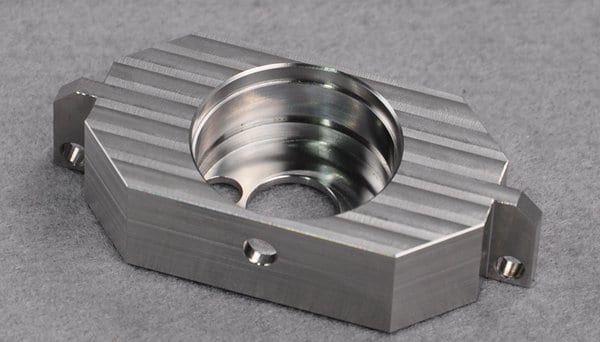
For a CNC prototype, a usable description is more useful than a vague label such as “sample.” State what the part is, what it is made from, and what it is for. For example: “machined aluminum housing prototype for product testing, not for retail sale.” Your broker may request further detail to determine classification and the appropriate entry.
CBP’s customer guidance on imports and customs declarations is a useful starting point, but your broker remains the right person to confirm the live requirements for your exact shipment.
The four facts to prepare before your prototype ships
| Information | What to provide | Why it matters |
|---|---|---|
| Part description | Plain-language item name, material, and intended function | Gives the broker a factual basis to review classification. |
| Country of origin | Where the part was manufactured, not merely where it shipped from | Origin can affect the customs treatment and documentation. |
| Declared value | The transaction value shown consistently on commercial documents | Customs valuation should be accurate and supportable. |
| Shipment details | Quantity, weight, carrier, Incoterm, consignee, and delivery timing | Lets the broker or carrier advise on the appropriate entry and clearance path. |
Send these facts to your broker before pickup, rather than asking them to reconstruct the shipment after it is moving. A factory can prepare a commercial invoice and packing list, but should not guess the classification, duty, or entry type on your behalf.
Prototype import checklist: a five-step flow
- Describe the actual part. Record material, process, function, quantity, and whether it is a test sample, first article, or production part. Do not use “prototype” as the entire description.
- Confirm origin and value. Ask the factory for the manufacturing country and make sure the commercial invoice reflects the actual transaction value. Keep the invoice and packing list aligned.
- Ask about the appropriate entry before dispatch. Share the shipment facts with your customs broker or carrier. They can advise on the entry process that applies; do not assume every shipment requires a formal entry.
- Budget the import layer. Build any applicable duty, brokerage, clearance, and carrier charges into your sample budget. For the wider framework, see our guide to import duties on machined parts.
- Keep a shipment record. Save the quote, purchase order, commercial invoice, packing list, shipping record, and broker correspondence. This makes a repeat order easier to prepare and helps resolve questions quickly.
How to avoid the three most common sample-order mistakes
Assuming the $800 threshold still solves the problem. It does not restore duty-free treatment. Start the conversation with your broker as soon as you have the part description and shipping value, not after the carrier has collected the box.
Using an incomplete commercial description. “Metal sample” gives a broker too little to work with. A concise but factual description of the material and use supports a faster classification discussion and reduces back-and-forth.
Separating customs cost from the prototype decision. A sample is still an imported business purchase. Compare suppliers using the total landed cost, then use the right Incoterm for custom parts so responsibility for freight and import handling is clear.
What your factory should provide — and what it should not decide
A capable manufacturer should supply accurate part and shipment facts: material, process, quantity, country of manufacture, commercial invoice, packing list, and shipment dimensions. Those documents help your broker prepare the shipment correctly.
But a factory should not promise a duty result, select a customs classification as legal advice, or tell you that a package will automatically clear because it is a sample. Customs requirements depend on the importing country and the specific goods. For US importers, have your broker confirm the appropriate entry and the current treatment before you ship.
Frequently asked questions
Is a prototype under $800 still duty-free in the US?
Does every prototype shipment require a formal customs entry?
What should the commercial invoice say for a prototype?
Who decides the customs classification for my machined sample?
How should I budget a prototype import after de minimis ended?
KEY TAKEAWAYS
- De minimis duty-free treatment ended for China on May 2, 2025 and globally on August 29, 2025.
- For every sample order, prepare the part description, origin, value, and shipment facts before dispatch.
- Ask your broker or carrier for the appropriate entry; do not assume every shipment requires a formal entry.
- Use factual, consistent commercial documents and retain the shipment record.
- This guide is informational only: confirm current customs details with your broker before shipping.
We can quote your prototype from the CAD, prepare accurate manufacturing and shipping documents, and give your broker the factual part information they need. Send the drawing, material, quantity, and destination through our request-a-quote page; we respond within 12 hours. For the related sourcing decision, read whether China is still cheaper after tariffs before you compare quotes.
Manufacturing next step
Apply this guidance to your part
Continue to the relevant service page for process scope and buyer inputs. If your design is ready, send the current files for engineering review and quotation.
Related manufacturing resources
Continue with the process or project stage most relevant to this topic: